
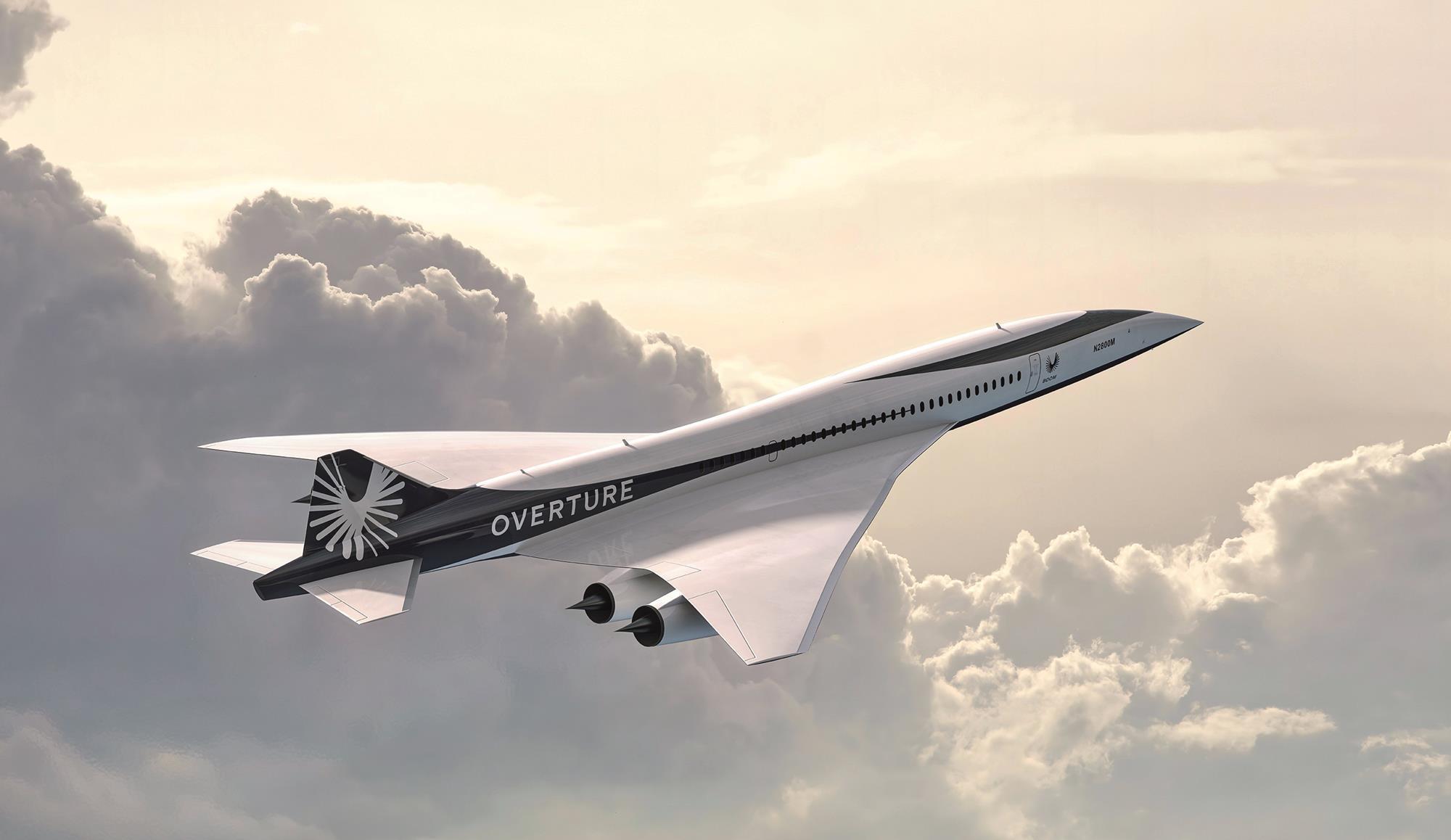
A US aviation company developing a successor to Concorde says supersonic passenger flights could become widely accessible before 2040, with future aircraft potentially travelling at three times the speed of sound.
Blake Scholl, founder and chief executive of Boom Supersonic, said the company wants high-speed air travel to become an ordinary option rather than a luxury available to a small number of passengers.
Speaking to aviation content creator Captain Steve, Scholl said his long-term ambition was to reach speeds of Mach 3 by 2040.
He argued that the real measure of success would be reaching a point where future generations struggle to understand why crossing a country once required six hours.
Scholl also said Boom hoped to restore some of the excitement and prestige associated with aviation’s “golden age,” contrasting that era with today’s airport experience, which many passengers regard as stressful.
Race to succeed Concorde
Commercial aviation has lacked a supersonic passenger service since Concorde was retired in 2003. Boom Supersonic is among several companies attempting to fill that gap with aircraft designed to shorten long-distance journey times dramatically.
The company is developing Overture, a proposed supersonic airliner frequently described as a potential successor to Concorde. Its plans form part of a broader effort to revive commercial supersonic travel more than two decades after Concorde’s final flight.
NASA is pursuing a related project with Lockheed Martin through the experimental X-59 Quesst aircraft. Unlike conventional supersonic planes, the X-59 is designed to reduce the disruptive sonic boom produced when an aircraft breaks the sound barrier, replacing it with a much quieter sound resembling a soft thump.
The technology could help regulators reconsider restrictions on supersonic flights over populated areas, one of the major obstacles facing the industry.
A long history of supersonic flight
The sound barrier was first broken in 1947 by US pilot Chuck Yeager aboard the experimental Bell X-1 rocket plane.
The North American F-100 Super Sabre made its first flight in 1953 and later became the first operational fighter capable of maintaining supersonic speed in level flight.
In civilian aviation, the Soviet Tupolev Tu-144 became the first supersonic passenger aircraft to fly when it took to the air in 1968, around two months before Concorde’s maiden flight.
Concorde entered commercial service in 1976 and remained an icon of high-speed international travel until its retirement in 2003. Boom Supersonic now hopes advances in aircraft design, propulsion and noise reduction can open a new chapter in passenger aviation.