
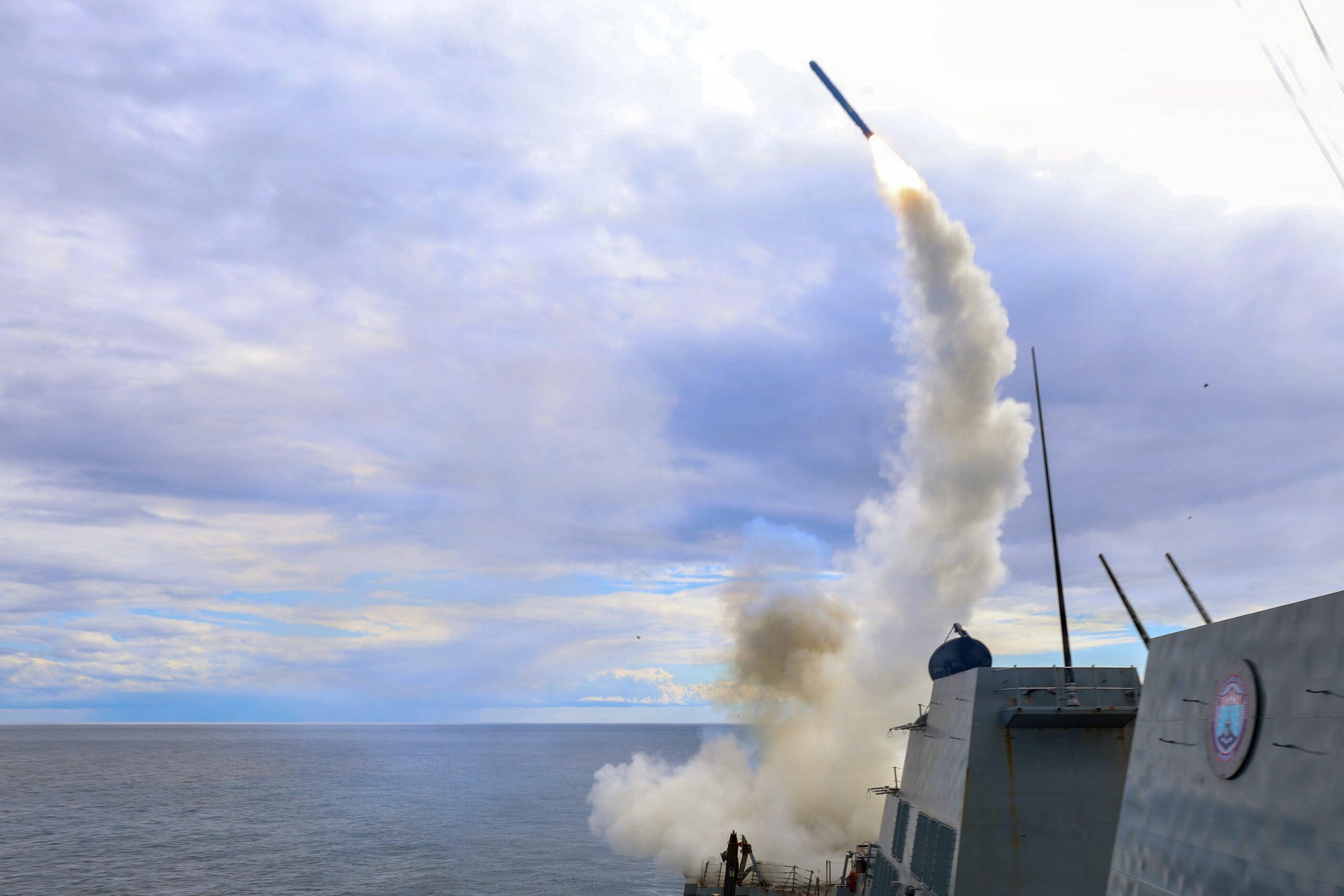
The Pentagon is pursuing a new generation of inexpensive, long-range weapons that can be produced in large quantities as concerns grow over declining US stocks of costly precision-guided munitions, according to a report by Defense News.
The report said recent operations against Iran exposed the risks of relying heavily on expensive long-range missiles such as the Tomahawk, prompting the US Department of Defense to seek more affordable alternatives.
At the centre of the initiative is a proposed ground-launched, autonomous weapon system known as the Ground-Based Affordable Munition, or GBAM.
The Pentagon wants each GBAM unit to cost less than $250,000, significantly below the price of many conventional long-range missiles.
Officials are seeking demonstrator systems within three months and aim to begin large-scale production within 18 months.
The initiative is intended to provide military commanders with affordable, scalable precision weapons capable of striking targets over long distances while expanding the range of missions that can be carried out without rapidly exhausting high-end missile inventories.
The US government has allocated up to $250 million to support follow-on development and transition activities linked to the programme.
Defense officials have not specified whether GBAM will take the form of a missile or an unmanned aircraft. In either case, the military is seeking a system that delivers an effective strike at a sustainable cost while reducing logistical, training and maintenance requirements.
The proposed weapon must have a minimum range of 600 nautical miles and carry a payload of at least 35 pounds, with a maximum payload capacity of around 100 pounds.
The Pentagon also wants the system to operate without specialised launch equipment, with remotely controlled launch methods preferred.
Alongside GBAM, the US military is examining other lower-cost offensive weapons that could be manufactured rapidly and in large numbers as it seeks to reduce its dependence on expensive conventional missiles.