
The United States has launched new strikes on Iran after President Donald Trump accused Tehran of downing an American Apache helicopter near the Strait of Hormuz. Explosions followed. Warnings followed. Military statements followed.
But the real question is not whether Trump is preparing for war.
It is how long before he announces that, at the request of Pakistan, he has decided to give peace another chance.
Trump’s foreign policy has always lived somewhere between a casino slogan and a television teaser. A deal is always coming. Maybe next week. Maybe Thursday. Maybe in the next two days. Maybe after one more meeting, one more call, one more “very productive” exchange that nobody else seems able to confirm.
Now the same routine appears to be playing out in the Gulf.
Pakistan calling
A strike allows Trump to look strong for a news cycle. A pause allows him to look restrained. A mediator allows him to climb down while pretending he was dragged toward peace by the sincere appeals of world leaders. In this script, Pakistan may be less a diplomatic actor than the perfect exit ramp.
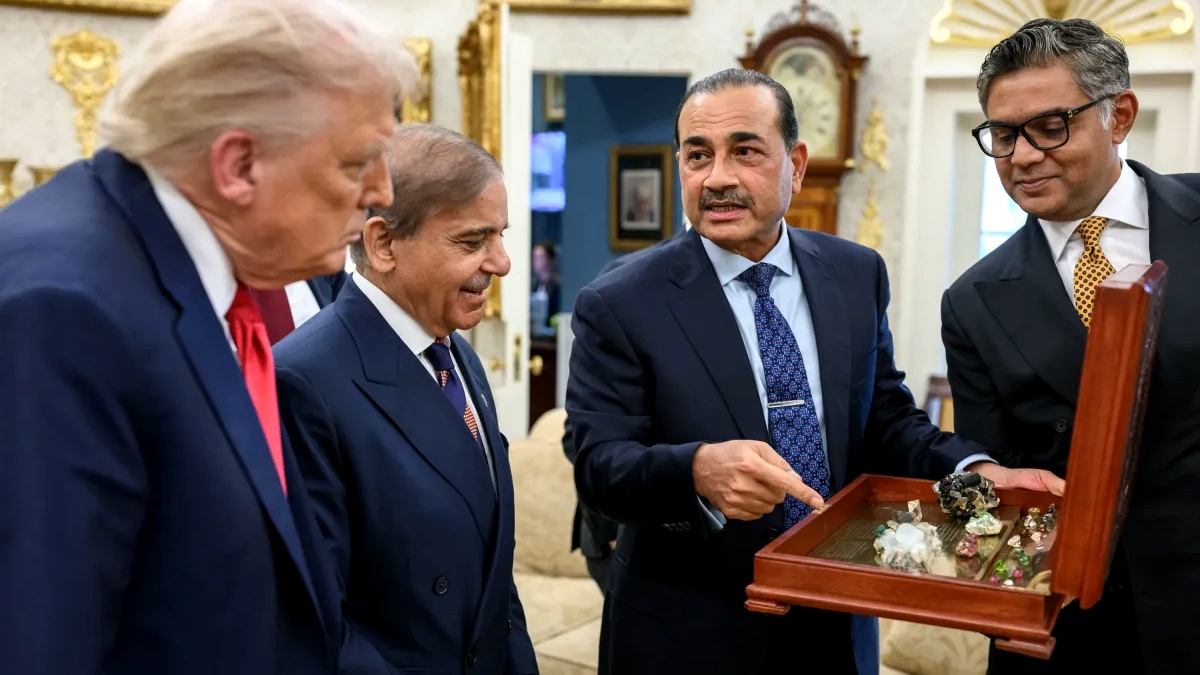
Islamabad is already close enough to the story to play the part. Pakistan has spent recent weeks positioning itself as a channel between Washington and Tehran, with officials involved in efforts to shape proposals aimed at ending the confrontation and reopening the Strait of Hormuz. Prime Minister Shehbaz Sharif has also called for restraint, urging the sides to “give peace a little more chance.”
That is exactly the kind of language Trump needs when he wants to stop without saying he blinked.
The military logic points in the same direction. The reported US targets — radar sites, air-defense systems and drone-linked infrastructure — suggest a punitive operation designed to send a message, not necessarily the opening stage of a full-scale war. Washington can say it responded. Tehran can say it will retaliate. Both sides can then wait for a third party to provide the vocabulary of de-escalation.
The pattern is almost too predictable. First comes the threat. Then comes the strike. Then comes the warning that more is coming. Then, just as everyone waits for the “big one,” Trump discovers diplomacy.
Not diplomacy as a serious process, necessarily. Diplomacy as branding. Diplomacy as a press line. Diplomacy as a way to transform a limited military response into another episode of “only I can make the deal.”
For Trump, this formula is politically convenient. It avoids the cost of a major war. It gives him a headline of military toughness. It lets him claim Iran was taught a lesson. And if Pakistan, Oman, Qatar or anyone else picks up the phone, he can present restraint as generosity rather than hesitation.
For Iran, a mediator also offers cover. Tehran can avoid appearing to negotiate under direct American pressure while testing whether sanctions relief, maritime guarantees or a limited de-escalation package might be available. For Pakistan, the role brings prestige, relevance and a chance to appear central to a crisis that has placed the Gulf on edge.
But for everyone else, the spectacle is hard to miss.
Trump talks like war is always one order away, then governs like the off-ramp is already being paved. He threatens fire, promises historic deals, announces impossible timelines and then waits for someone else to give him the language to step back.
So the coming hours may not bring the opening of a major regional war. They may bring something much more Trumpian: another countdown to a deal that may or may not exist, another claim that peace is suddenly “very close,” another announcement that talks are moving fast because someone, somewhere, made a call.
The next phase of the crisis may not begin with missiles.
It may begin with Pakistan calling, or at least with Trump saying it did.