
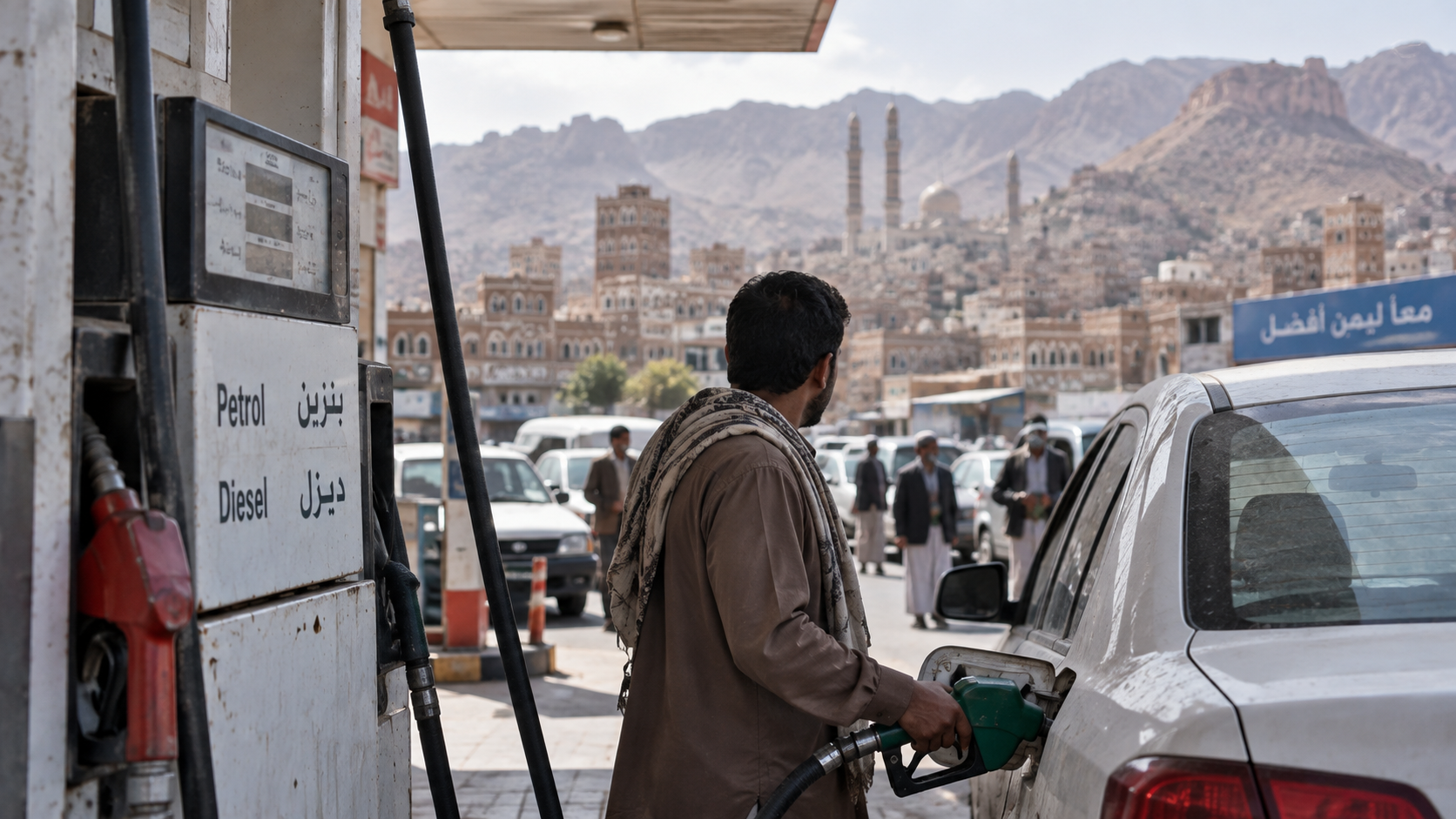
Fuel prices have risen in Houthi-controlled areas of Yemen as renewed fighting and higher transport costs put more pressure on households.
Petrol prices increased by about 10% this week. The price rose from 4,750 Yemeni riyals to 5,250 riyals for 10 litres.
The previous price had remained unchanged for about four years in Houthi-controlled areas, including the capital, Sanaa.
The Houthi-run Yemen Petroleum Company said higher global fuel prices caused the increase. It also said the measure would be temporary, according to Al Jazeera.
Yemen fuel prices add to household costs
The increase comes as many Yemeni families already face high food and living costs.
About 18 million people in Yemen face acute food insecurity, according to figures cited by Al Jazeera.
Meanwhile, renewed fighting has disrupted transport routes across parts of the country.
Truck drivers are avoiding roads near areas of fighting. As a result, some journeys between northern and southern Yemen are taking longer.
A shopkeeper in Sanaa told Al Jazeera that some deliveries now take up to a week. Before the latest fighting, similar journeys could take three days or less.
Higher transport and fuel costs can then affect the prices of food and other goods.
Conflict continues to pressure Yemen’s economy
Years of conflict have severely damaged Yemen’s economy.
An International Monetary Fund report in April said the country’s internal conflict had created major economic pressures and reduced income per person.
The IMF also said more than half of Yemen’s population needed urgent humanitarian assistance.
In addition, the conflict has contributed to food insecurity, displacement, disease outbreaks and limited access to clean water.
Businesses also face higher costs
Higher fuel prices can affect more than transport.
Agriculture relies on diesel for irrigation in many areas. Some electricity and water services also depend on fuel-powered generators.
Small businesses can also face higher operating costs.
Wafiq Saleh, an economic researcher and executive director of the Taiz Centre for Yemeni-Gulf Studies, told Al Jazeera that higher fuel prices could increase costs across several parts of the economy.
The impact could include higher transport fares and food prices.
Meanwhile, renewed violence is creating further humanitarian pressure.
The UN Refugee Agency has warned that the latest violence could deepen Yemen’s humanitarian crisis as displacement increases.
For households already facing economic hardship, rising fuel and transport costs are adding another challenge to meeting basic needs.