
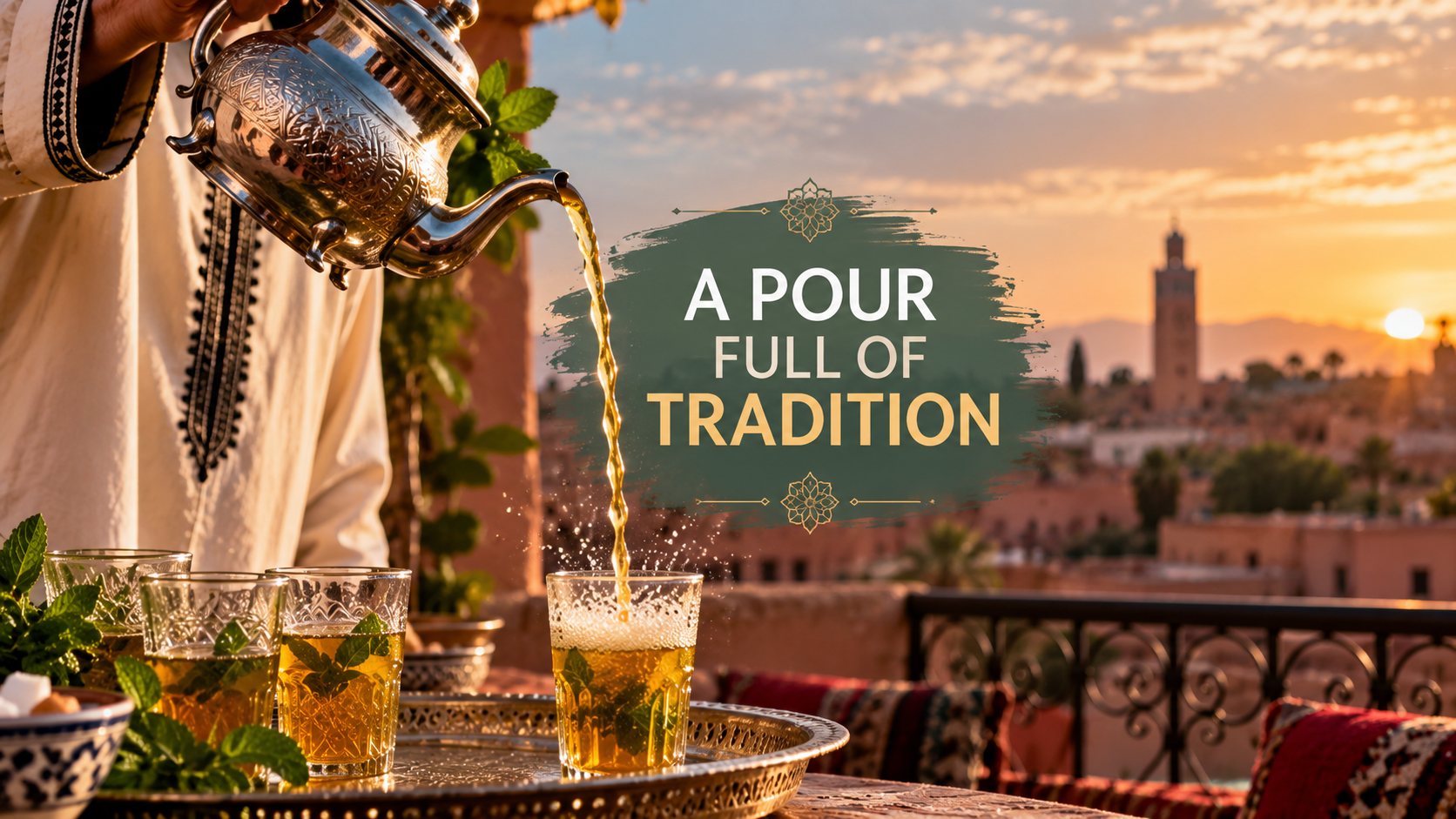
One of Morocco’s most recognisable traditions happens around a small glass of tea.
Moroccan mint tea is often poured from a teapot held high above the glass. The stream can sometimes travel a surprisingly long distance before reaching its target.
But the dramatic pour is not simply for show.
It helps create the layer of foam traditionally associated with a well-poured glass of Moroccan tea. It is also part of a much wider tradition of hospitality and sharing. Morocco’s official tourism office describes mint tea as a ceremonial drink deeply rooted in the country’s traditions.
Why is the teapot held so high?
During the traditional preparation, green tea is combined with mint and sugar.
Once the tea has infused, the server raises the teapot above the small glass and pours in a long, controlled stream.
Morocco’s National Tourist Office says the pot can be held around 30 centimetres above the glass during the tea ceremony specifically to help froth the drink. Its general guide to Moroccan cuisine says tea is traditionally poured from even greater heights in some settings.
The result is a layer of bubbles or foam at the top.
Pouring accurately from that height also takes practice, making the serving itself a distinctive part of the experience.
More than just a drink
Tea has a much bigger cultural role in Morocco.
It is strongly associated with welcoming guests, conversation and spending time together.
Morocco’s tourism authority describes mint tea as an expression of hospitality. Guests may be offered tea at home and in other social settings, often alongside food or sweets.
The ceremony can also involve pouring tea into glasses and returning it to the pot. This helps mix the mint, sugar and tea before serving.
A tradition found across Morocco
The details of preparation can differ between families and regions.
Different herbs or flavourings may also be added. Morocco’s tourism office notes that rosebuds, saffron or verbena are used in some regions.
But the image of a teapot held high above a small glass has become closely associated with Moroccan tea culture.
So when Moroccan tea is poured from high in the air, the flourish has a practical purpose — creating its characteristic frothy top — while the ceremony surrounding it reflects something broader: hospitality, conversation and sharing.