
Ethiopian government forces and allied fighters have reportedly expanded their control in the northern Tigray region. Meanwhile, growing tensions with neighbouring Eritrea have raised fears of a wider conflict.
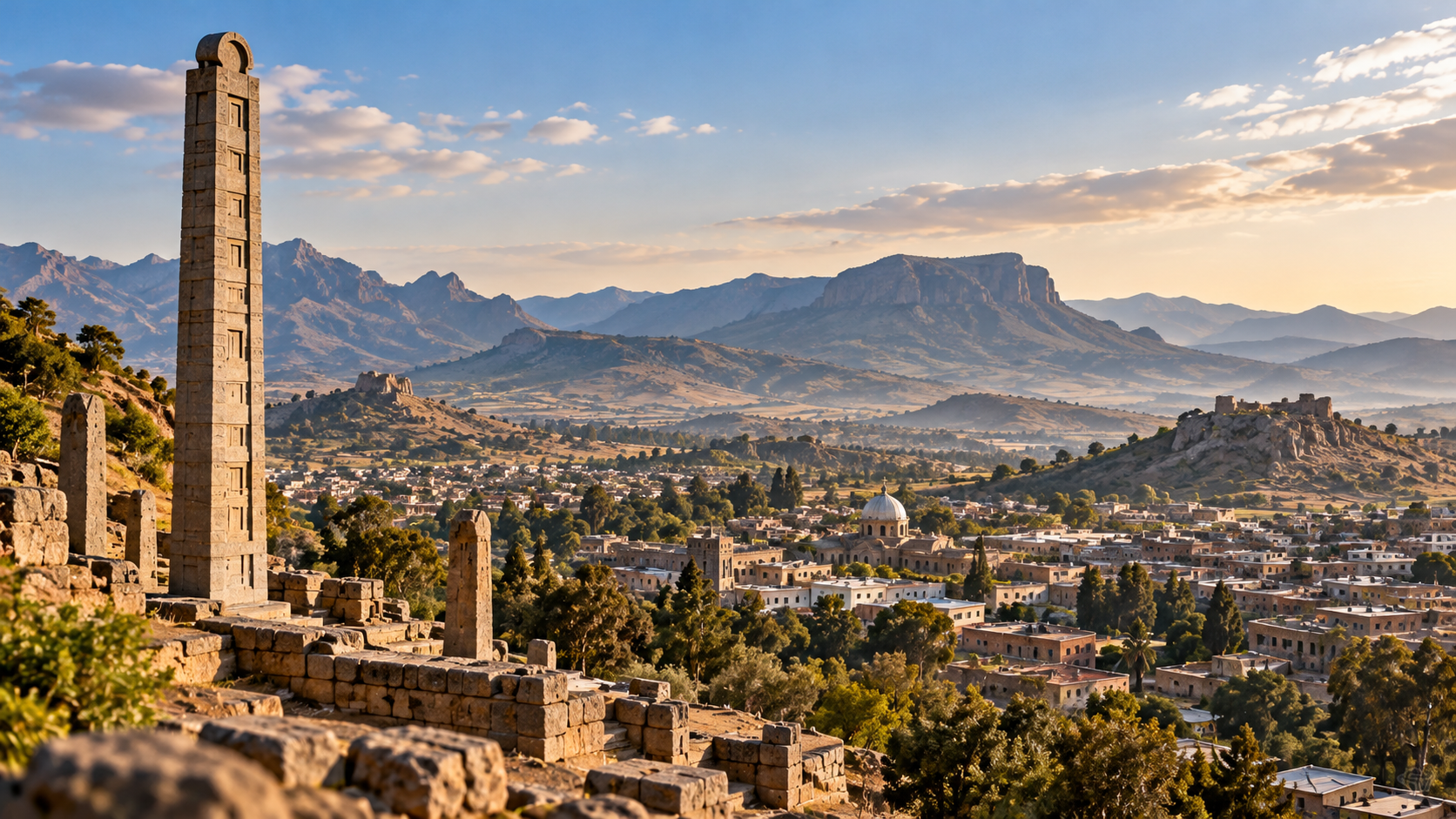
The advances include the historic city of Aksum, where Ethiopian troops and allied fighters have reportedly entered.
According to Al Jazeera, citing AFP and Anadolu, a pro-government militia has also claimed that Eritrean troops suffered heavy losses and withdrew towards the border.
However, Eritrea has rejected those claims. Independent verification of the reported casualties remains unavailable.
Ethiopian forces enter Aksum
The Armed Conflict Location & Event Data Project (ACLED) reported that Ethiopian government forces and allied Tigray Peace Force (TPF) fighters entered Aksum.
Meanwhile, rival Tigrayan fighters remained in mountainous areas surrounding the city.
The TPF supports Ethiopia’s federal government in its campaign against armed groups linked to the Tigray People’s Liberation Front (TPLF).
Earlier this month, Ethiopian forces captured Mekelle, the regional capital of Tigray.
The TPLF confirmed its withdrawal from the city and said it had temporarily relocated its regional administration.
Government forces also regained control of Adwa and Adigrat without fighting, according to the report.
In addition, reports indicate further Ethiopian advances near Rama, close to the Eritrean border.
Eritrea rejects claims of military losses
TPF spokesperson Solomon Hailemariam claimed that Eritrean troops had suffered significant casualties during recent clashes.
He also said Eritrean forces were retreating towards the border.
However, Eritrean Information Minister Yemane Gebremeskel dismissed the claims as false.
The reported casualty figures could not be independently confirmed.
ACLED separately documented Eritrean troops withdrawing across the border through Zalambessa.
It also reported Ethiopian tanks and heavy weapons moving towards the border on Tuesday.
These developments have increased concerns about a possible confrontation between Ethiopia and Eritrea.
Civilians face uncertainty near the border
Residents in border communities are facing growing uncertainty as military tensions continue.
A resident of Zalambessa told AFP that Ethiopian and Eritrean forces were positioned on opposite sides of the border.
Although fighting had stopped in the town at the time of the report, residents had been without electricity and water for a week.
The disruption has added to concerns about civilian safety and access to essential services.
Meanwhile, reports of damaged homes in other parts of Tigray highlight the risks facing communities affected by renewed fighting.
Ethiopia and Eritrea exchange accusations
Ethiopia has accused Eritrea of supporting armed opposition groups fighting Prime Minister Abiy Ahmed’s government.
Addis Ababa has also accused Sudan and Egypt of backing an alliance of seven rebel groups.
However, Eritrea, Sudan and Egypt have denied the allegations.
Eritrea has also rejected claims that its troops entered Tigray to support armed opposition groups.
Instead, Eritrean authorities have accused Ethiopia of threatening their country’s sovereignty.
The dispute has further damaged relations between the neighbouring countries.
Eritrea previously fought alongside Ethiopian federal forces during the 2020–2022 Tigray war.
However, the two governments have since experienced a serious diplomatic breakdown.
US calls for de-escalation
The United States has urged Ethiopia and Eritrea to reduce tensions and avoid further conflict.
On Wednesday, October 14, US Secretary of State Marco Rubio spoke with Ethiopian Prime Minister Abiy Ahmed.
According to the US State Department, Rubio stressed the need for de-escalation.
He also warned that the region could not withstand another major conflict.
The diplomatic appeal came amid reports of military movements near the border.
Fears grow over wider regional conflict
The latest developments have raised concerns about renewed instability in the Horn of Africa.
Although Ethiopian forces have reportedly gained territory in Tigray, the situation remains uncertain.
Meanwhile, Eritrea continues to reject allegations about its military involvement and reported losses.
The movement of heavy weapons near the border has added to fears of a wider confrontation.
For civilians, the immediate priorities remain safety, access to essential services and an end to further violence.
As tensions continue, diplomatic efforts to prevent escalation will remain important for both countries and the wider region.