
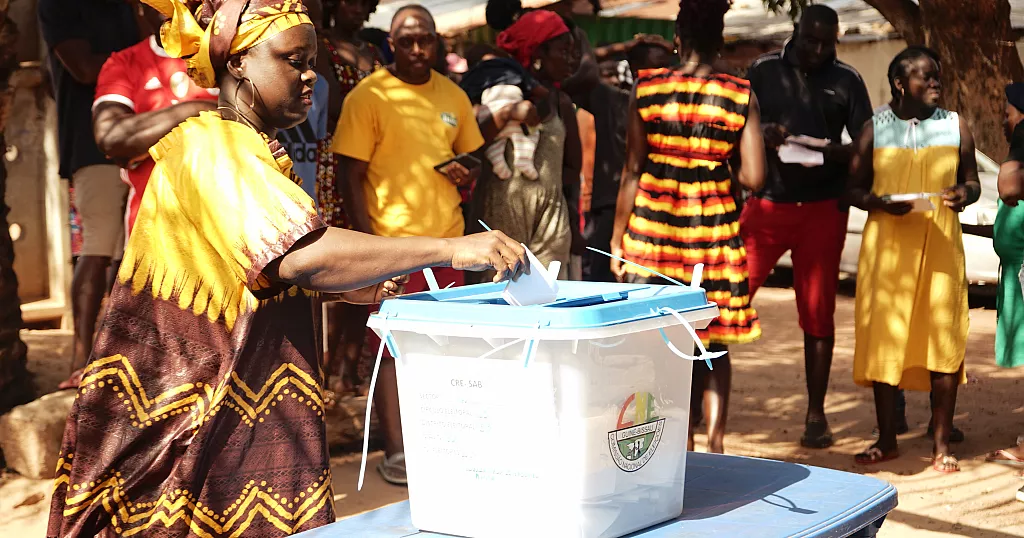
Guinean authorities say the first results from the country’s presidential election are expected to be announced shortly, following a vote that could see military leader Mamadi Doumbouya transition into a civilian president.
The election follows a four-year transition period that began after Doumbouya seized power in a coup that removed former president Alpha Condé. He is contesting the vote against eight other candidates in an electoral process widely seen as consolidating military rule rather than ending it.
Several prominent opposition figures were barred from the race on technical grounds, including former prime minister Lansana Kouyaté and former minister Ousmane Kaba. Long-standing opposition leaders Cellou Dalein Diallo and Sidya Touré remain in exile, significantly weakening political competition.
Djenabou Touré, head of the General Directorate of Elections, said vote counting was under way and that results were being centralised both manually and electronically. She said preliminary figures could be released as early as Monday.
Officials said voter turnout reached around 85 percent, a figure that has drawn scrutiny given the absence of key opposition candidates and restrictions on political activity.
A total of nine candidates are contesting the election, with Doumbouya’s main challenger reportedly Yero Baldé of the Democratic Front of Guinea, a relatively little-known figure who previously served as education minister under Condé.
The vote follows a constitutional referendum held in late September that approved changes allowing members of the ruling military authorities to run for office. The new constitution also extended presidential terms from five to seven years, renewable once, clearing the path for Doumbouya’s candidacy.
Guinea is rich in natural resources, including bauxite, iron, gold, and diamonds, yet more than half of its population lives below the poverty line, according to international estimates.
Since gaining independence in 1958, Guinea has experienced repeated periods of military intervention and authoritarian rule, with the latest election viewed by critics as another test of whether the country can move toward genuine civilian governance.
Nearly 6.8 million voters were eligible to participate in the election, including around 125,000 Guineans living abroad.