
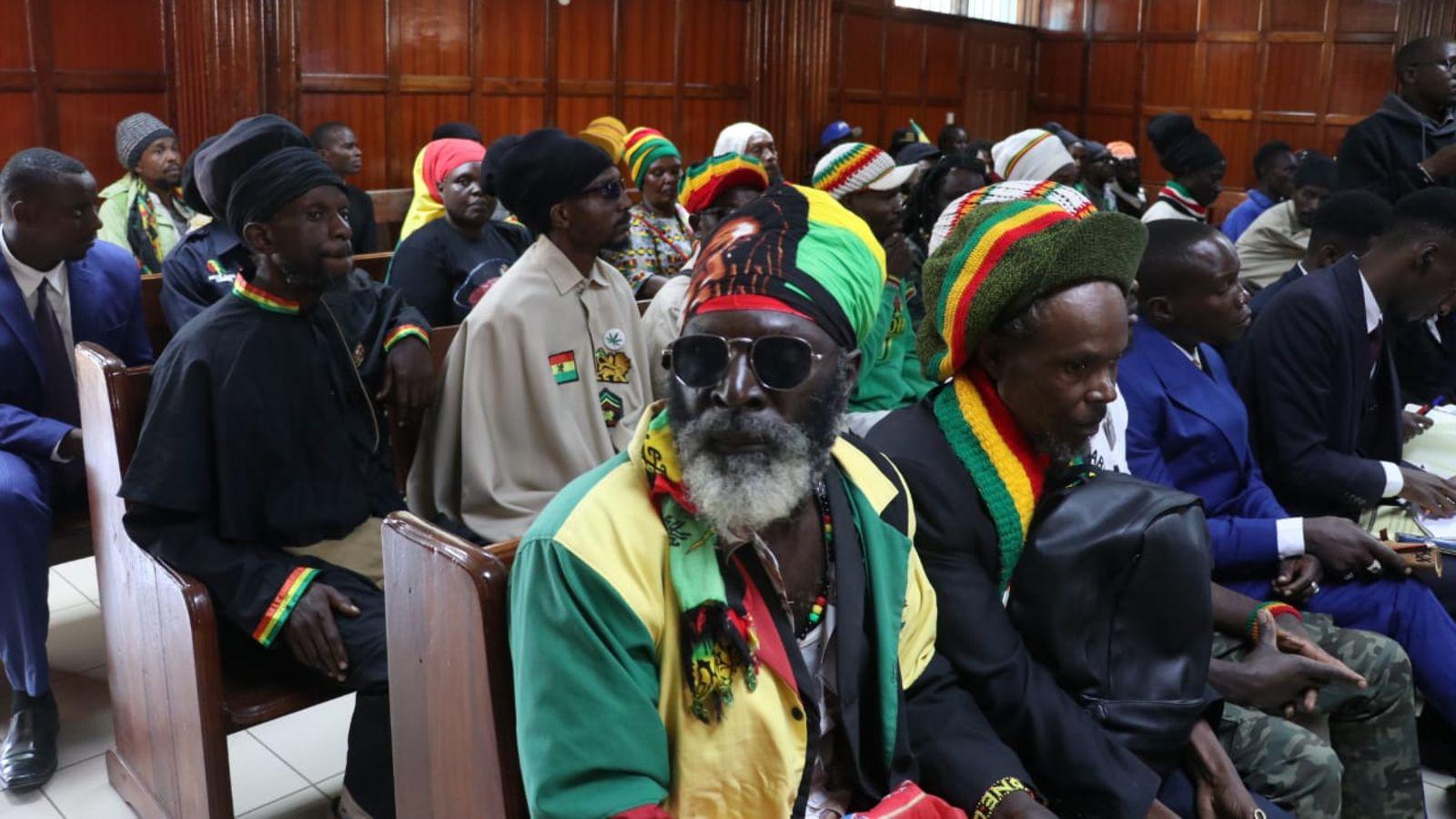
Kenya’s High Court has rejected an attempt by the country’s Rastafarian community to secure legal protection for the religious use of cannabis, ending a six-year court battle while leaving open the possibility of an appeal.
The Rastafari Society of Kenya argued that cannabis is a sacred part of its religious practice and that laws criminalising its cultivation, possession and consumption violated constitutional protections for freedom of religion and belief.
The group was not seeking the full legalisation of cannabis. Instead, it asked the court to allow Rastafarians to grow, possess and consume the drug privately in their homes and designated places of worship without facing arrest or prosecution.
Justice Bahati Mwamuye, however, ruled that the petitioners had failed to demonstrate that Kenya’s narcotics laws infringed their constitutional rights.
The judge also found that the evidence presented by the group was inconsistent and did not sufficiently establish that cannabis use was an essential and indispensable element of the Rastafari faith.
He therefore upheld the constitutionality of laws prohibiting the cultivation, possession and consumption of cannabis.
Kenyan authorities had opposed the proposed religious exemption, warning that it could weaken the enforcement of anti-drug legislation and create loopholes that might be exploited by cannabis traffickers.
Under Kenya’s Narcotic Drugs and Psychotropic Substances Control Act, possession of cannabis for personal use can result in a prison sentence of up to five years or a fine of approximately $800.
Cannabis cultivation is punishable by a fine of about $1,900, or three times the market value of the plants, whichever is higher, as well as a possible prison term of up to 20 years. Harsher penalties apply in trafficking cases.
Despite dismissing the petition, Justice Mwamuye said Kenya should hold a wider public discussion about the future of cannabis policy.
“We ought to have frank conversations on cannabis and which directions we should take,” he said.
“This is not a question for the Rastafarian community only. It is a national question that cuts across the entire spectrum of our society.”
Lawyer Danstan Omari, representing the Rastafari Society of Kenya, said the community planned to appeal.
“Kenya cannot be the only country that is harassing the Rastafarian people,” Omari said, adding that the group was determined to overturn the decision and restore what he described as the dignity and respect of Rastafarians in the country.
The ruling comes amid growing calls for Kenya to reconsider its cannabis laws. Supporters of legalisation argue that regulated cultivation and trade could generate tax revenue, create employment and support medicinal and industrial production.
Seven years earlier, another High Court judgment formally recognised Rastafarianism as a protected religion in Kenya. That ruling found that a school had violated a student’s constitutional rights by expelling her because she wore dreadlocks.
The size of Kenya’s Rastafarian community is not officially known, although the movement is believed to be attracting increasing numbers of young people.
Its tradition of wearing dreadlocks also carries historical resonance in Kenya, where some Mau Mau fighters wore long, matted hair as a symbol of resistance during the struggle against British colonial rule in the 1950s.