
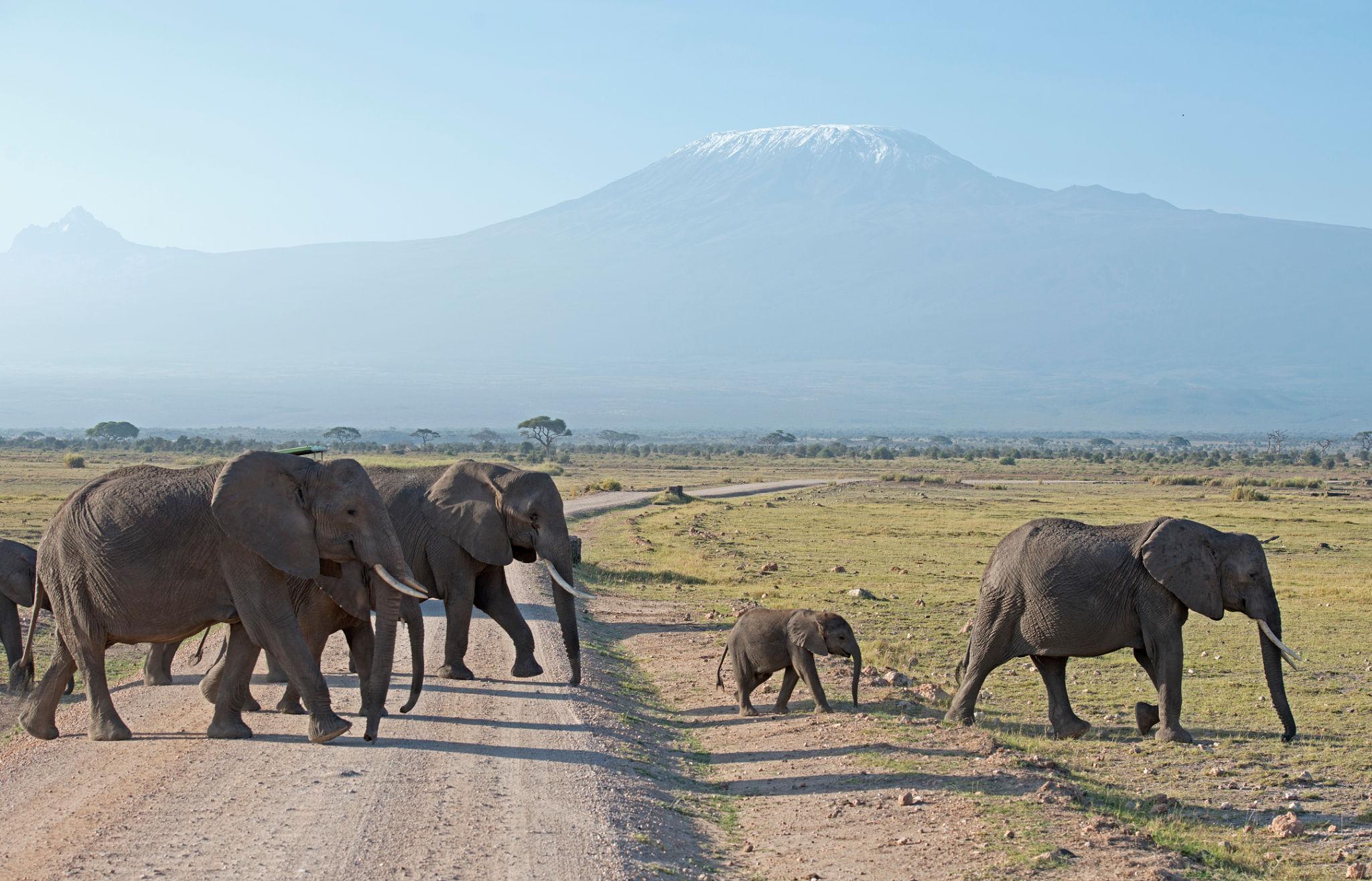
Fifteen elephants found dead near Kenya’s Amboseli National Park are believed to have been poisoned after eating tomatoes treated with agricultural pesticides, wildlife authorities have said.
The elephants died in southern Kenya outside the boundaries of the national park after apparently entering nearby farms in search of food and water.
Preliminary laboratory tests detected cyanide in samples collected from the animals’ carcasses, according to the Kenya Wildlife Service.
Ten of the elephants were initially found alive but showing signs of paralysis. They died within two days, while five others were already dead when wildlife officers reached them.
Investigations into the deaths are continuing, although officials have so far ruled out deliberate poisoning or other forms of foul play.
Wildlife authorities said the elephants are suspected to have consumed tomatoes that had recently been sprayed with pesticide on farms surrounding the park.
Officials have sought to reassure nearby communities that the substances believed to have killed the elephants do not pose an immediate danger to people.
The deaths have renewed concerns over the rapid expansion of farming around protected wildlife areas. Elephants regularly leave the park and move onto agricultural land, particularly during periods when food and water are scarce.
Amboseli National Park forms part of the wider Amboseli ecosystem, a major wildlife corridor that stretches across the Kenya-Tanzania border and supports one of East Africa’s best-known elephant populations.
The Kenya Wildlife Service said the deaths occurred over a one-month period between June 24 and July 24, 2026.
The carcasses included elephants of different ages and sexes, indicating that the deaths were not confined to a single family group.
Officials said it was the first time in decades that such a large number of elephant deaths had been recorded in the Amboseli region, where anti-poaching efforts have significantly reduced illegal killings.
More than 2,000 elephants were estimated to be living in the Amboseli ecosystem in 2025, according to the Amboseli Trust for Elephants, which tracks and monitors the animals.