Author name: yasir

Commodity prices mixed, agriculture up last week

 Commodity prices followed a mixed trend last week due to political turmoil and geopolitical tensions, with the agricultural sector diverging positively. South Korea imposed martial law on Dec. 3, which was short-lived as it was unanimously lifted the same night. Additionally, North Korea’s defense agreement with Russia officially came into force. Meanwhile, the French government collapsed following a no-confidence vote, prompting President Emmanuel Macron to accept the resignation of Prime Minister Michel Barnier. However, Macron announced that he would not resign and would instead appoint a new prime minister soon. Analysts noted that the US dollar gained strength due to positive labor market data and expectations of interest rate cuts. The US Dollar Index climbed to 106.1, further supported by President-elect Donald Trump’s announcement of 100% tariffs on BRICS nations in response to their efforts to de-dollarize trade. The US labor market exhibited mixed signals, with non-farm payrolls increasing by 227,000 in November, surpassing expectations, while the unemployment rate rose to 4.2% from 4.1%. Analysts stated that this increase in employment alleviated concerns about weakening labor demand and reinforced expectations for gradual Federal Reserve rate cuts. The OPEC group maintained its global economic growth forecast at 3.4% for 2024. Concurrently, China’s economy is projected to grow by 4.9% in 2024 and 4.7% in 2025, according to recent data. The People’s Bank of China (PBoC) also announced the resumption of gold purchases in November after a six-month hiatus, increasing its reserves from 72.80 million fine troy ounces to 72.96 million. JP Morgan projected that the average price of gold per ounce would reach $2,950 in 2025, potentially rising to $3,000, driven by a depreciating US dollar and inflationary economic policies. Silver and platinum are also expected to perform strongly in the coming years. Last week, gold fell 0.7% as the Indian rupee weakened and buyers sold physical gold at discounted prices. In contrast, silver gained 1.1%, while platinum and palladium declined by 1.7% and 2.2%, respectively. Nickel prices rose 1.7%, following Vale Base Metals’ $2.94 billion expansion of its Voisey’s Bay mine in northern Labrador. The project transitioned from open-pit to underground mining, boosting nickel concentrate production to 45,000 tons (40,823 metric tons) per year. Copper prices edged up 0.4%, driven by India’s copper demand, which increased 13% year-on-year in 2024, reaching 1,700 kilotons (1.87 million tons), according to the Indian International Copper Association. The US Treasury imposed sanctions on Russia’s Gazprombank, jeopardizing Uzbekistan’s $4.8 billion mine expansion project that aims to nearly double copper production. Zinc prices slipped 0.4% after the UK’s Critical Minerals Intelligence Centre added it to its critical minerals list. In the energy sector, OPEC+ announced a delay in planned production increases, extending current cuts of 2 million barrels per day (bpd) until the end of 2026. Total production by member countries is expected to remain at 39.7 million bpd for 2025 and 2026. Brent crude oil prices rose 1.9% last week, while natural gas prices fell 4.4% amid volatile weather conditions in the US and Europe. US commercial crude oil stocks increased by 1.2 million barrels last week, contrary to market expectations of a 2-million-barrel decline, according to the American Petroleum Institute. Oilfield services firm Baker Hughes also reported a rise in US oil drilling rigs, with the total reaching 482, up by 5 from the previous week. In the agricultural sector, wheat prices rose 1.7% after Sovecon revised its estimates for Russian grain and wheat exports for the 2024–2025 fiscal year downward, citing potential reductions in export quotas by the Russian Ministry of Agriculture. Corn prices increased by 1.6%, while soybeans and rice dropped by 0.5% and 1%, respectively. Coffee prices experienced sharp declines last week after reaching multi-decade highs in previous weeks. Increased selling by traders in Vietnam and higher export supplies from Brazil contributed to the drop. However, coffee still ended the week with a 3.9% gain. Cocoa prices surged 4.9% per ton (0.91 metric tons) due to dry weather conditions in West Africa, which are expected to impact the early development of mid-year cocoa crops harvested in April. Seasonal Harmattan winds are forecasted to exacerbate the situation, according to Maxar Technologies. Meanwhile, sugar prices rose 0.6%, and cotton gained 1.4%.

Commodity prices mixed, agriculture up last week Read More »

Congo’s Okapi wildlife reserve threatened by illegal gold mining

A UN-protected wildlife reserve in Congo is facing growing threats from illegal gold mining, with a Chinese company accused of significantly damaging the environment. For eight years, Kimia Mining, a Chinese-owned firm, has expanded its operations inside the Okapi Wildlife Reserve, a UNESCO World Heritage Site. Local communities and conservationists say the company’s activities are wreaking havoc on the area’s biodiversity. Established as a protected area in 1996, the Okapi Wildlife Reserve covers over 13,000 square kilometers (5,000 square miles) of rainforest and is home to unique species, including the okapi, a forest giraffe. The reserve holds about 15% of the world’s remaining okapi population, estimated at just 30,000 animals. It also plays a crucial role in mitigating climate change, as part of the Congo Basin rainforest, a major carbon sink. However, over the years, the boundaries of the reserve have been gradually reduced under unclear circumstances, allowing mining companies like Kimia Mining to operate within its limits. Despite being a protected area, the reserve has long been a site for illegal mining, with authorities cracking down only after the arrival of the Chinese firm. Kimia Mining has allowed limited access for locals to mine leftover materials, but many cannot afford the fees. Muvunga Kakule, a 44-year-old former artisanal miner, says he has lost nearly all his income since the Chinese arrived. He no longer mines or sells produce, as the company refuses to buy from local farmers. “Our life has not been the same since the Chinese came and chased us out of the bush. We can no longer work or send our children to school,” he says. Conservation groups are working to protect the reserve, but they face difficulties in enforcement due to unclear legalities surrounding the boundaries. Kimia Mining has recently renewed its mining permits until 2048, according to government records. While the Congo government’s mining registry claims it is working with the ICCN (the body responsible for managing protected areas) to update the reserve’s boundaries, it is unclear when action will be taken. An internal government memo from August indicated that all mining operations in the reserve, including Kimia Mining, would eventually be shut down, but no timeline has been set. Aime Vusike Kiruzi, director of Epulu Radio, based inside the reserve, expressed concern over the loss of wildlife. “We are no longer seeing some species that used to be well protected here,” he said. “In our time, we saw okapi, elephants, antelopes, even monkeys. But it is no longer easy to see them.” Kiruzi called on Congolese authorities to protect the reserve for future generations, so they can witness the same wildlife he saw growing up.

Congo’s Okapi wildlife reserve threatened by illegal gold mining Read More »

Thousands search for loved ones at Syria’s Saydnaya prison

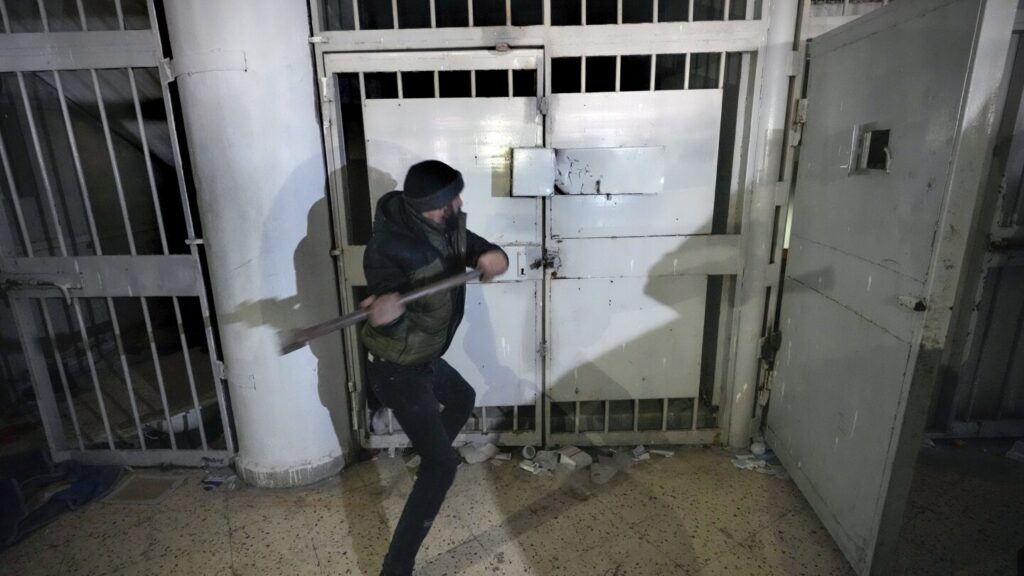
Thousands of Syrians gathered on Monday outside Saydnaya military prison, just north of Damascus, hoping to find their loved ones. Civil defense workers and teams from the White Helmets were seen digging inside the prison, searching for hidden cells or underground chambers. The notorious prison, known as the “human slaughterhouse,” has long been a symbol of fear and suffering for the Syrian people. Ghazwan Hussein, who came to search for relatives, said, “We have detainees who were taken since 2011, 2012, and 2013.” During the early days of the Syrian conflict, as insurgents made rapid advances across the country, they broke into prisons and security facilities to release political prisoners and many of those who had disappeared since the war began. On Sunday, reports emerged of women detainees, some with children, screaming as men forcibly broke the locks off their cell doors. Syria’s prisons have gained a horrific reputation for their brutal conditions. Human rights organizations, whistleblowers, and former detainees report systematic torture, while secret executions have been carried out at more than two dozen facilities controlled by Syrian intelligence. Amnesty International estimates that up to 13,000 people were secretly executed at Saydnaya between 2011 and 2016. In 2013, a Syrian military defector known as “Caesar” smuggled out over 53,000 photographs, which human rights groups say provide clear evidence of widespread torture, disease, and starvation within Syria’s prison system.

Thousands search for loved ones at Syria’s Saydnaya prison Read More »

China vows economic reforms, global cooperation

Chinese Premier Li Qiang pledged Monday to deepen economic reforms and expand domestic demand while reinforcing international cooperation, according to statements released by China’s State Council. Li held a 1+10 Dialogue with the heads of major international economic organizations, including representatives from the New Development Bank, the World Bank, the World Trade Organization (WTO) and the International Monetary Fund (IMF). He emphasized that strengthening global cooperation is crucial “against the backdrop of an international landscape fraught with instability and changes.” Li expressed support for expanding cooperation with international financial institutions, signaling a willingness to collaborate on project financing, development loans and addressing global challenges like climate change. He stressed the importance of economic globalization and free trade while promising to contribute to global financial stability. He also indicated China’s commitment to supporting developing economies, particularly the BRICS group’s members, thorough economic initiatives.

China vows economic reforms, global cooperation Read More »

Assad fleeing Syria marks the end of decades-long family rule

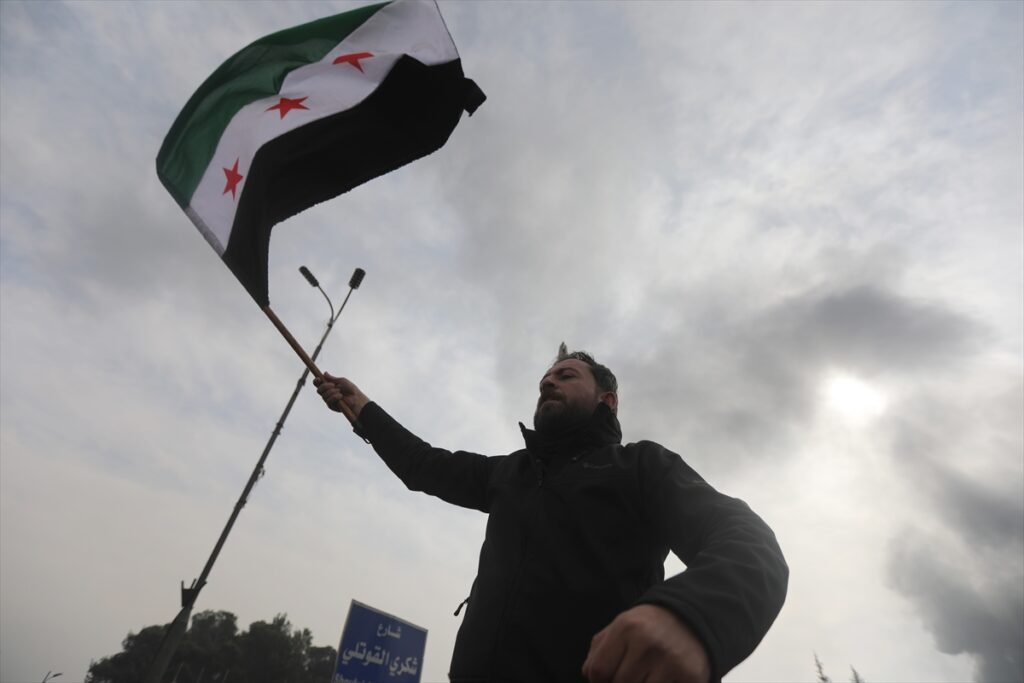
Syrian President Bashar al-Assad fled the country on Sunday, bringing a dramatic end to his nearly 14-year struggle to maintain control amid a brutal civil war that turned Syria into a proxy battleground for global powers. Assad’s departure marked a stark contrast to his initial rise to power in 2000, when he was seen as a potential reformist following the three-decade rule of his father, Hafez al-Assad. At the age of 34, Bashar, a Western-educated ophthalmologist, was considered a mild-mannered and tech-savvy leader. However, when protests against his rule erupted in 2011, he resorted to the harsh tactics of his father to suppress dissent, eventually plunging the country into civil war. Over the years, Assad’s government, backed by Iran and Russia, unleashed devastating military campaigns, resulting in widespread torture and extrajudicial killings. The war has killed nearly half a million people and displaced millions. In recent years, Assad regained control over most of Syria, but the northwest remained under opposition control, and the northeast was governed by Kurdish forces. Despite enduring Western sanctions, many neighboring countries had started to accept Assad’s continued grip on power, with Syria’s membership in the Arab League restored in 2023. However, the situation changed quickly when opposition groups in northwest Syria launched a surprise offensive in late November. Assad’s forces quickly collapsed, and his allies, distracted by other conflicts like Russia’s war in Ukraine and the Israeli-Hamas war, were reluctant to intervene. Bashar Assad’s rise to power was unexpected. His father, Hafez, had groomed his older son Basil to be his successor, but Basil’s death in a 1994 car crash led Bashar, then living in London as an ophthalmologist, to return to Syria. He was rapidly groomed for leadership, undergoing military training and elevated to the rank of colonel. When Hafez died in 2000, the Syrian parliament lowered the age requirement for the presidency to 34, allowing Bashar to take power through a nationwide referendum where he was the sole candidate. Hafez’s nearly 30-year rule had been marked by tight control over the country’s economy and political life, and his alliance with Iran and resistance to Israel defined Syria’s foreign policy. Bashar, in contrast to his father’s hard-edged authoritarianism, appeared more open and even liberal in his early years. He allowed some political discourse and briefly encouraged reforms in what was dubbed the “Damascus Spring.” However, after intellectuals pushed for political reform, Assad’s regime cracked down, imprisoning activists and shutting down reform efforts. By the time the Arab Spring protests spread to Syria in 2011, Assad dismissed the possibility of unrest in his own country, claiming his government was in tune with the people. However, as the protests escalated, Assad turned to brutal force to suppress opposition, with his regime using military power to crush uprisings, particularly in cities like Homs and Aleppo. While initially relying on his father’s old allies, Assad increasingly turned to his inner circle, including his brother Maher, who headed the Presidential Guard, and his wife, Asma, who played a key role in his government until she stepped back in 2023 due to health issues. The outbreak of civil war forced millions of Syrians to flee the country, while the violence and suffering persisted for over a decade. Despite numerous attempts to oust him, Assad managed to hold onto power, backed by Russia and Iran, while the international community remained divided over how to respond. As Assad exits the scene, the end of his family’s rule over Syria marks the collapse of a decades-long dynasty that shaped the country’s politics and identity for nearly half a century.

Assad fleeing Syria marks the end of decades-long family rule Read More »

Israel, Hamas close to reaching ‘small’ cease-fire deal

Israel and Hamas are close to reaching a “small” cease-fire deal, the Israeli Broadcasting Authority reported Sunday, citing political sources. The broadcasting authority quoted the unnamed Israeli sources as saying that the two sides are close to finalizing a deal that would include a two-month cease-fire. The deal would also involve the release of prisoners under “humanitarian cases,” including the elderly, women, the wounded and the sick, and the withdrawal of the Israeli army from parts of the Gaza Strip, the sources said, without providing further details. Hamas and mediating countries Egypt and Qatar have not commented on the report. A Hamas delegation led by deputy leader Khalil al-Hayya left Cairo late Sunday after a meeting with the head of Egypt’s General Intelligence Service, Maj. Gen. Hassan Rashad, during which they discussed efforts to implement a cease-fire in the Gaza Strip. The delegation emphasized its commitment to ensuring the success of these efforts and ending the aggression against the Palestinian people. Israeli Prime Minister Benjamin Netanyahu claimed earlier in a conversation with families of Israeli hostages in Gaza that the fall of Syria’s Bashar al-Assad regime on Sunday might contribute to an agreement on a hostage swap in Gaza. Israel estimates that there are currently 101 Israeli prisoners held in Gaza. Mediation efforts led by the US, Egypt and Qatar to reach a cease-fire and prisoner swap agreement between Israel and Hamas have failed due to Netanyahu’s refusal to halt the ongoing conflict. Israel has been conducting a genocidal war on the Gaza Strip, resulting in the deaths of more than 44,600 people, the majority of whom are women and children, since a cross-border attack by the Palestinian group Hamas on Oct. 7 last year. Last month, the International Criminal Court issued arrest warrants for Netanyahu and former Defense Minister Yoav Gallant for war crimes and crimes against humanity in Gaza. Israel is also facing a genocide case at the International Court of Justice for its actions in Gaza.

Israel, Hamas close to reaching ‘small’ cease-fire deal Read More »

Two killed in Ghana presidential election violence

Gana’da 7 Aralık’ta düzenlenen cumhurbaşkanı ve milletvekili seçimlerinde yaşanan şiddet olaylarında 2 kişinin hayatını kaybettiği bildirildi. Bağımsız Seçim Hizmetleri Direktörü Benjamin Bano-Bio, yaptığı açıklamada, ülkede dün düzenlenen seçimler sırasında farklı seçim bölgelerinde şiddet olaylarının yaşandığını belirtti. Bano-Bio, çıkan olaylar nedeniyle dün başkent Akra ve Tolon bölgesinde 2 kişinin öldüğünü, çok sayıda kişinin de yaralandığını kaydetti. Diğer yandan, ulusal basındaki haberlere göre de Damango bölgesinde bugün oy sayımı sırasında yaşanan şiddet olaylarında 1 kişi hayatını kaybetti, bölgedeki seçim komisyonu ofisi kundaklandı. Resmi olmayan sonuçlara göre, ülkede dün yapılan seçimlerde ana muhalefetteki Ulusal Demokratik Kongre (NDC) adayı eski Cumhurbaşkanı John Dramani Mahama, oyların yüzde 55,1’ini alarak önde gidiyor. İktidardaki Ulusal Vatansever Partisi (NPP) adayı mevcut Cumhurbaşkanı Yardımcısı Mahamudu Bawumia ise yüzde 41,7 oyla ikinci sırada yer alıyor. Ülkede dün düzenlenen cumhurbaşkanı seçiminde 12 aday yarışmıştı.

Two killed in Ghana presidential election violence Read More »

Burkina Faso Junta appoints new prime minister

Lorem ipsum dolor sit amet, consectetur adipiscing elit, sed do eiusmod tempor incididunt ut labore et dolore magna aliqua. Ut enim ad minim veniam, quis nostrud exercitation ullamco laboris nisi ut aliquip ex ea commodo consequat. Duis aute irure dolor in reprehenderit in voluptate velit esse cillum dolore eu fugiat nulla pariatur. Excepteur sint occaecat cupidatat non proident, sunt in culpa qui officia deserunt mollit anim id est laborum.

Burkina Faso Junta appoints new prime minister Read More »

50 Somali migrant survivors return to Mogadishu after tragedy

Nearly 50 Somali survivors of a migrant boat tragedy arrived in Mogadishu on Saturday, where they were greeted by government officials. The group had been rescued after two boats they were traveling on capsized off the coast of Madagascar, leaving around 25 people dead. Emotional scenes unfolded at the airport as survivors were reunited with family members. Haboon Deeqa, whose sister perished in the tragedy, expressed her grief: “I send my condolences to those who died, including my sister Hanan. I’m relieved my brother Ahmed has returned safely,” she said. “I’m very thankful to everyone who helped bring them home.” The survivors had spent nearly a month at sea, hoping to reach the French island of Mayotte, about 1,600 kilometers away. “We were 75 in total, and 28 people died. My cousin was among the victims. Forty-seven of us, myself included, survived,” said Ahmed Hussein Mahadalle. Many young Somalis are driven to undertake such perilous journeys due to unemployment, poverty, and drought in the Horn of Africa, hoping for a better life in Europe. Somalia’s foreign affairs minister recently urged youth to consider the risks and prioritize their safety. Maryan Yasin, Somalia’s presidential advisor on refugee affairs, expressed relief at the group’s safe return and emphasized the government’s commitment to addressing the root causes of such dangerous migration. “They assured me they will never take the same risk again,” she said, adding that solving the issue will require a collective effort. The United Nations has raised alarms about the increasing numbers fleeing conflict and drought in the Horn of Africa.

50 Somali migrant survivors return to Mogadishu after tragedy Read More »

Passenger attempts to hijack Mexican flight, divert it to US

 A passenger on board a domestic flight in Mexico attempted to forcibly divert the plane to the US but was stopped by flight crew and passengers. After being detained, the man allegedly confessed that the failed bid was triggered after a close relative of his was kidnapped and his life was threatened by criminals. On Sunday morning, Volaris, one of the country’s main airlines, said that on flight 3401 from El Bajio in central Mexico to the border city of Tijuana in Baja California, the 31-year-old man attempted to divert the plane to the United States “through the use of force.” He attacked a flight attendant and attempted to break into the cockpit and take control of the plane before being restrained. The plane made an emergency landing at Guadalajara International Airport, around 1,380 miles (2,220 kilometers) from its destination, where members of the National Guard were already waiting for him. The man was traveling with his wife and two children and could face three to 20 years in prison as Volaris decided to press charges against him.

Passenger attempts to hijack Mexican flight, divert it to US Read More »

Scroll to Top