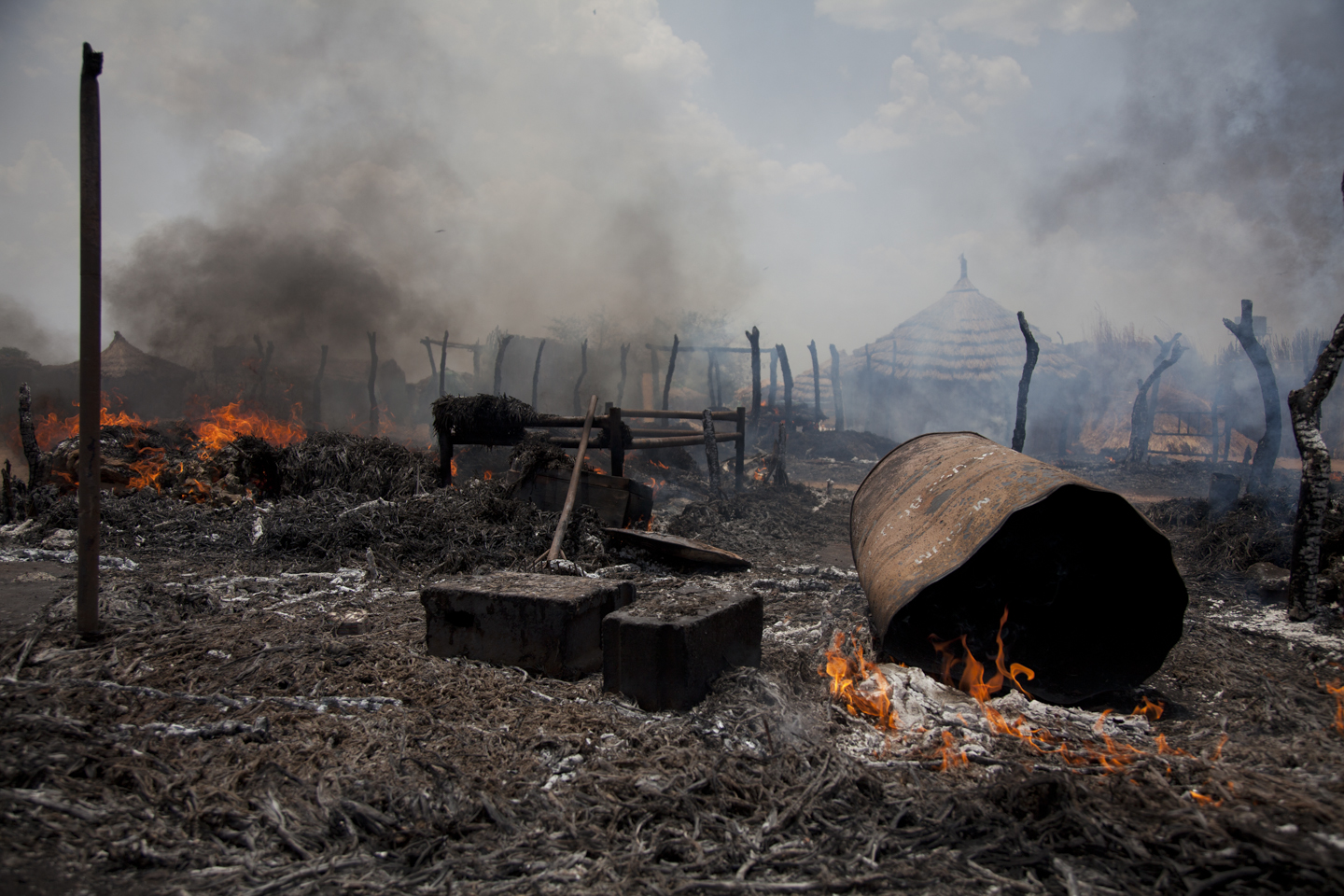
Families struggle to survive amidst South Sudan floods
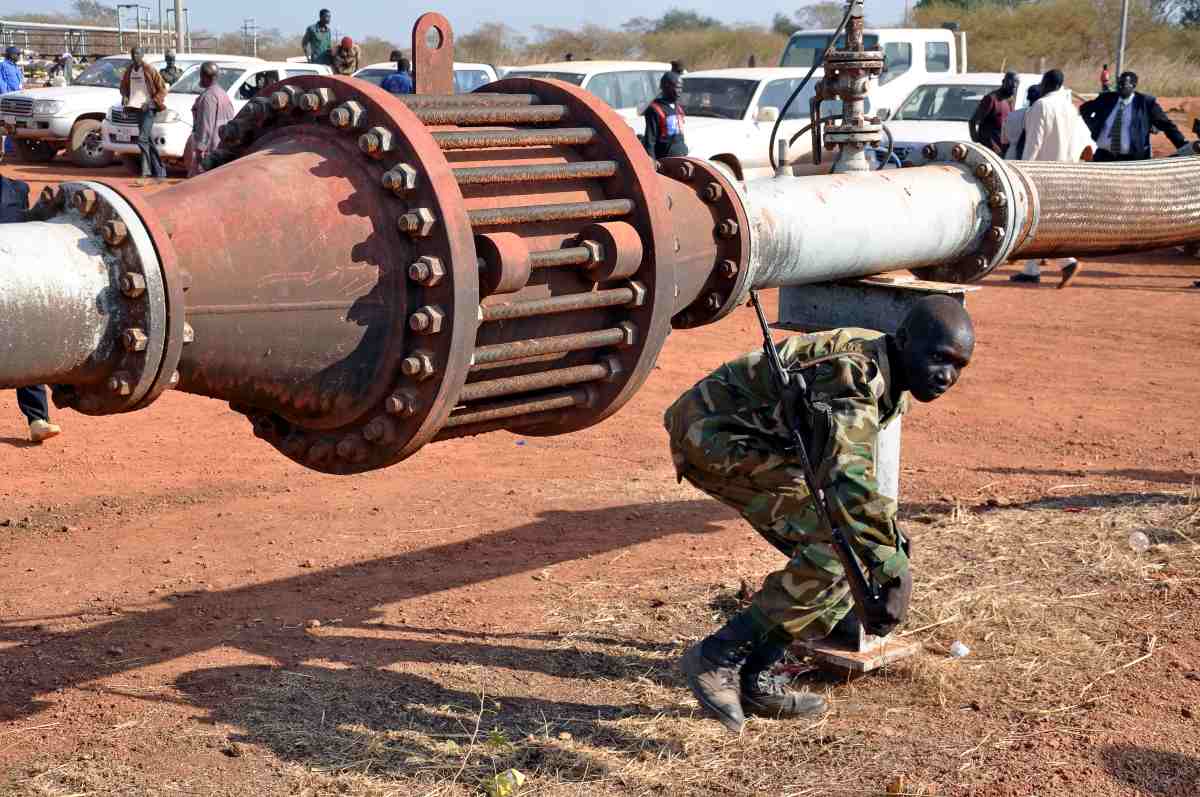
Floods have become a yearly occurrence in South Sudan, forcing thousands of people to flee their homes.
Security council renews mandate for UN mission in DRC
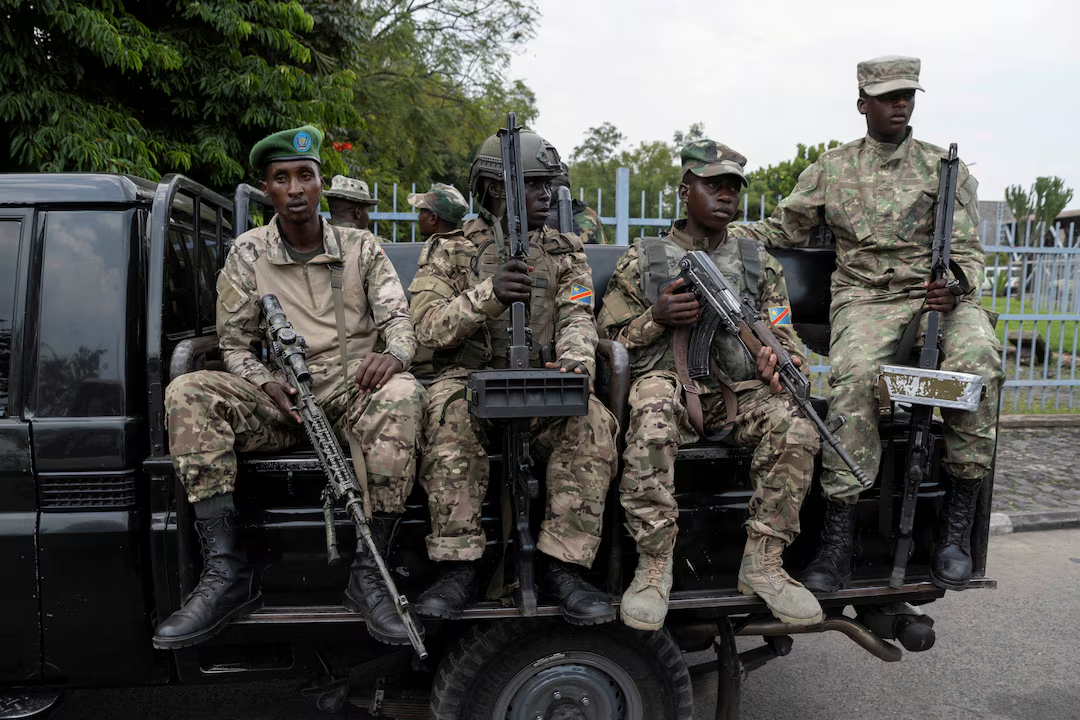
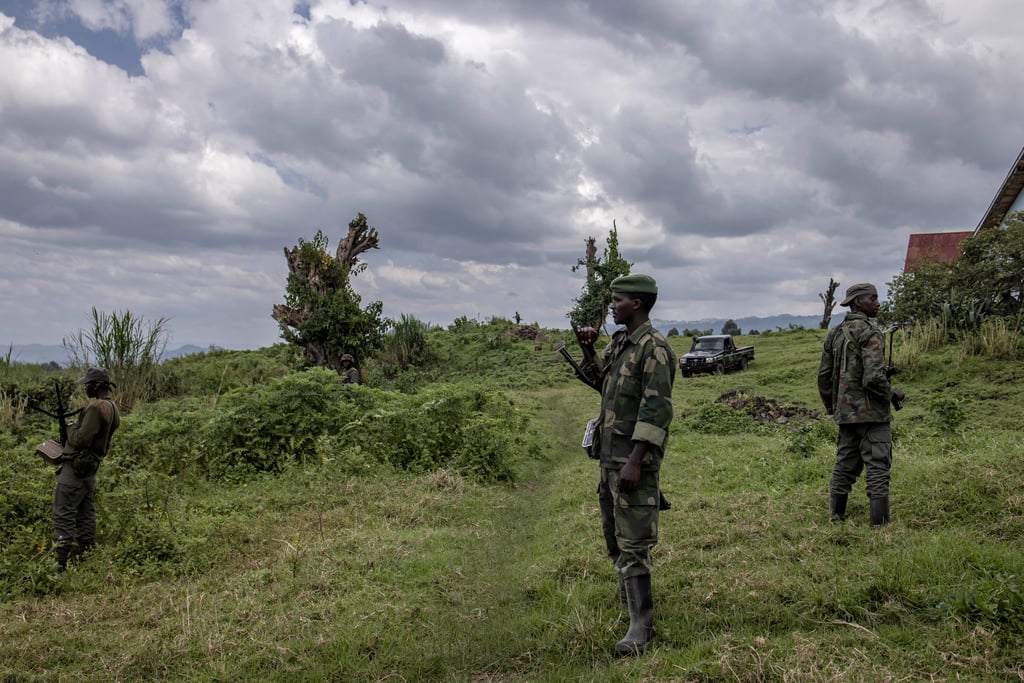
The United Nations Security Council has voted to extend the mandate of the UN peacekeeping mission in the Democratic Republic of Congo (DRC) for another year.
Niger accuses Nigeria of destabilization efforts
Niger has summoned the Nigerian charge d’affaires, accusing Nigeria of “serving as a rear base” to destabilize the country.
Over 80,000 Sudanese flee to South Sudan as conflict intensifies
The UNHCR warns of a deepening humanitarian crisis, with limited resources and a surge in arrivals overwhelming border services.
Sudan’s RSF hints at establishment of new gov’t against Burhan
Rapid Support Forces (RSF) in Sudan have declared plans to work with a new civilian-led government in territories they control, raising concerns about a potential partition of the country.
WFP condemns killing of three staff in Sudan airstrike
The World Food Programme (WFP) has confirmed the deaths of three of its staff members in an aerial bombardment in Sudan.
Cyclone Chido death toll in Mozambique hits 73
Disaster management agency appeals for global support to establish exact number of fatalities
Cyclone-hit Mayotte residents confront Macron, demand urgent aid
Macron extended his trip to assess the aftermath of the storm, the worst to hit Mayotte in 90 years
Morocco’s goat cheese: A taste of tradition
Morocco is home to a centuries-old culinary treasure: traditional goat cheese
Benin grants citizenship to descendants of slaves
When Nadege Anelka first arrived in Benin from her home island of Martinique, a French overseas territory in the Caribbean, the 57-year-old travel agent experienced a profound sense of déjà vu. “A lot of the people reminded me of my grandparents — the way they wore their headscarves, their mannerisms, their mentality,” she said. Feeling an immediate connection to the country, Anelka decided to settle in Benin last July and open a travel agency. She now hopes to become a citizen under a new law passed in September, which grants citizenship to individuals who can trace their lineage to the transatlantic slave trade. The law, introduced by President Patrice Talon, is part of a larger effort by Benin to come to terms with its historical role in the slave trade. It allows those over 18 who do not already hold another African nationality to apply for citizenship by providing proof that an ancestor was forcibly taken from sub-Saharan Africa during the slave trade. DNA tests, family records, and testimonies are accepted as proof. Anelka used a website called “Anchoukaj” (“Affiliation” in Antillean Creole), recognized by Benin, to trace her family’s history and confirm that her ancestors were slaves in Martinique. If her application is successful, she will receive a provisional certificate of nationality, valid for three years, during which she must spend at least one year in Benin to obtain full citizenship. Benin is not the first country to offer citizenship to descendants of slaves. Earlier this month, Ghana naturalized 524 African Americans, inviting them to “come home” as part of a commemoration of the 400th anniversary of the arrival of the first enslaved Africans in North America. However, Benin’s law holds particular significance due to the country’s central role in the slave trade. European merchants deported an estimated 1.5 million slaves from the Bight of Benin — an area covering modern-day Benin, Togo, and parts of Nigeria. The town of Ouidah was one of the busiest slave-trading ports in Africa during the 18th and 19th centuries, where nearly a million enslaved individuals were shipped out, primarily to the United States, Brazil, and the Caribbean. Benin has faced difficulty addressing its complicity in the slave trade, as local kings captured and sold slaves to European merchants for over 200 years. The remnants of these kingdoms still exist today in the form of tribal networks, alongside the groups who were raided. Rumors that President Talon may be a descendant of slave merchants sparked controversy during his 2016 presidential campaign, though he has never commented on the matter. In contrast to many other African countries that participated in the slave trade, Benin has openly acknowledged its history. In the 1990s, the country hosted a UNESCO-sponsored international conference examining the sale of slaves. In 1999, President Mathieu Kérékou publicly apologized to African Americans for Africa’s role in the trade, even kneeling during a visit to a church in Baltimore. Alongside this national reckoning, Benin has also embraced “memorial tourism” as a way to attract visitors and address its legacy. Many memorial sites are located in Ouidah, including the “Door of No Return,” which marks the point where many enslaved people were shipped across the Atlantic. There is also the “Tree of Forgetfulness,” where enslaved individuals were symbolically made to forget their past lives before boarding the ships. “Memories of the slave trade are present on both sides of the Atlantic, but only one of these sides is well known,” said Sindé Cheketé, head of Benin’s state-run tourism agency. Nate Debos, a 37-year-old American musician from New Orleans, learned about Benin’s citizenship law while attending the Porto Novo mask festival. Though he had never visited West Africa, his interest in Vodun, the religion practiced by millions in Benin, brought him to the country. Debos, president of the New Orleans National Vodou Day association, said the Vodun Day festival on January 10 in Ouidah mirrors the celebrations in New Orleans. Vodun, which originated in the Kingdom of Dahomey (now southern Benin), revolves around the worship of spirits and ancestors. During slavery, Vodun evolved into Vodou in the Americas and the Caribbean, blending with Catholicism. “Vodou is one of the chains that connects Africa to the Americas,” said Ana Lucia Araujo, a professor of history at Howard University. “For enslaved Africans, it was a way of resisting slavery.” Debos emphasized that Vodun was a sophisticated, noble spiritual practice that European colonizers and slave owners sought to suppress. “Our African ancestors were not tribal savages,” he said. “They had beautiful spiritual traditions.” Debos now plans to apply for citizenship, but he does not intend to move to Benin permanently. “At the end of the day, I am an American, even when I’m dressed in the wonderful fabrics and suits they have in Benin,” he said. For Anelka, her decision to pursue Beninese citizenship is more symbolic. “I know I will never be completely Beninese,” she said. “I will always be considered a foreigner. But I’m doing this for my ancestors. It’s a way to reclaim my heritage, a form of reparation.”
Mauritania, EU sign €100M agreement to combat irregular migration
Mauritania and the European Union signed a €100 million ($103.6 million) agreement Thursday aimed at promoting development and combating irregular migration. The agreement was signed during a meeting in the capital Nouakchott between Mauritanian Minister of Economy and Finance Sidi Ahmed Ould Abouh and European Commissioner for International Partnerships Jozef Sikela, according to the Mauritanian News Agency. Ould Abouh said the funds will be allocated to support development, enhance social cohesion and stability, boost economic growth, improve health care and address the root causes of migration. He emphasized that the agreement also aims to strengthen the capacity of institutions combating irregular migration while protecting the fundamental rights of refugees and migrants. “This direct budget support reflects the confidence the international community has in our national mechanisms,” he added. Sikela noted that the funding will prioritize the development of green hydrogen as a driver of economic growth and job creation. He highlighted its potential to open new opportunities for Mauritania and European investors. “This funding demonstrates the EU’s swift commitment to fulfilling its promises to Mauritania,” he added. The EU’s interest in Mauritania has grown recently, particularly as relations between Western nations and several Sahel countries have become strained. Mauritania serves as a key transit point for African migrants, with the northern city of Nouadhibou becoming a hub for those seeking to cross into Europe in recent years. The country has established agreements with several European nations, notably Spain, to curb irregular migration.
Egyptian, Iranian presidents discuss regional developments
At least 10 Palestinians were killed and three injured, two critically, in an Israeli attack on the Al-Shati refugee camp in western Gaza City, health sources said Friday. Israeli forces targeted a group of Palestinians who were waiting in line for water at the camp, the sources said. The strike adds to the mounting toll from Israeli attacks on Gaza since Oct. 7 last year. Israel has systematically targeted civilian facilities including schools, hospitals and places of worship in its offensive on Gaza, repeatedly claiming, often without evidence, that they were striking targets belonging to the Palestinian group Hamas. Under the rules of war, targeting civilian facilities can constitute a war crime. Israel’s war on Gaza has led to the deaths of more than 45,100 people following a cross-border attack on Israel by Hamas on Oct. 7, 2023. The UN estimates that 70% of the dead in Gaza have been women and children. Around 1,200 people were killed in the Hamas attack, and 250 were taken to Gaza as hostages. Roughly 100 remain. The International Criminal Court issued arrest warrants last month for Israeli Prime Minister Benjamin Netanyahu and his former Defense Minister Yoav Gallant for war crimes and crimes against humanity in Gaza. Israel also faces a genocide case at the International Court of Justice for its war on Gaza.
Morocco mediates release of French nationals from Burkina Faso
Four French nationals detained in Burkina Faso for a year have been released following successful mediation efforts by Morocco.
Libya warns of foreign interference as Russia transfers weapons
Libyan Prime Minister Abdulhamid Dbeibah has expressed concern over reports of Russia transferring military equipment to eastern Libya.
Kenya declares gender violence a top threat
The government has formed a specialized unit to combat femicide and is implementing new measures to address this pressing issue.
Mysterious illness in DR Congo likely malaria: Africa CDC
A mysterious illness that has claimed dozens of lives in the Democratic Republic of Congo is likely malaria, according to the Africa CDC.
Deadly stampede at Nigerian carnival kills dozens of children
A tragic stampede at a carnival in Ibadan, Nigeria, has resulted in the deaths of at least 32 children.
Ex-defence minister sentenced to five years for corruption in Guinea
Diane has been in custody since May 2022, following the military junta’s anti-corruption campaign launched after its 2021 seizure of power
UN peacekeepers protect farmers in conflict-torn Eastern Congo
The U.N. mission, known as MONUSCO, has faced growing criticism over the years for its perceived inability to quell violence in the region
Macron visits cyclone-hit Mayotte, urged to provide aid
French president meets victims and officials, promises step-by-step recovery
38 children in South Africa have died from food poisoning
Since February, 38 children in South Africa have tragically died from food poisoning. According to South African police, food poisoning incidents have been reported nationwide, particularly in Gauteng province, due to contaminated products sold at local “spaza” shops. The police confirmed that a total of 41 people, including 38 children, have lost their lives to food poisoning, and three individuals are currently under prosecution in connection with the cases. Most of the poisonings have been linked to items such as chips and biscuits sold at spazas. In response, Velenkosini Hlabisa, Minister of Cooperative Governance and Traditional Affairs, announced that the deadline for spazas to renew their operating licenses has been extended to February 28, 2025, as part of a broader effort to improve inspections. The term “spaza” refers to small convenience stores in informal settlements, derived from the Sotho word “zula,” meaning “to hustle.” These stores, often operated by foreign nationals, have become central to the food poisoning issue since February. In light of the ongoing crisis, the government declared a national state of disaster last month and has been ramping up regulations and inspections of spazas. The initial 21-day deadline for license renewals ended on December 17.
The cheetah: Africa’s speed king and nature’s marvel
In the vast savannas of Africa, a true champion of speed reigns supreme: the cheetah
Death toll in Mozambique from Cyclone Chido rises to 45
The death toll in Mozambique from Cyclone Chido has risen to 45, officials said Wednesday. Luisa Meque, chairperson of the National Disaster Risk Management Institute (INGD), said the storm has also left 500 people injured and destroyed around 35,000 homes in the northern provinces of Niassa, Nampula and Cabo Delgado, which have suffered massive destruction. “Much as the storm has calmed down, there is a likelihood that the number of fatalities is going to rise, as we are still assessing the extent of the damage,” Meque said. Around 2.5 million people are said to be affected by the cyclone, she added. According to Louise Eagleton, UNICEF Country Representative in Mozambique, around 90,000 children have been “worst affected” by the cyclone. “Almost in all the affected communities, there are growing numbers of affected children. These are children who are struggling to find sustenance and shelter. Children are bearing the blunt of the cyclone. The current situation in the country is heart-rending,” Eagleton said. On Wednesday, the UN Office for the Coordination of Humanitarian Affairs (OCHA) disbursed $4 million in an emergency response to the cyclone. In neighboring Malawi, according to the country’s Department of Disaster Management Affairs (DoDMA), the death toll has reached 13 and 45,000 people in five districts of the southern region have been rendered homeless. On Dec. 15, Tropical Cyclone Chido made landfall in Mozambique, bringing strong winds, thunderstorms and heavy rainfall exceeding 250 millimeters (9.84 inches) in 24 hours. The cyclone then moved to Malawi.
Tragic stampede at funfair in Nigeria leaves several children dead
Several children tragically lost their lives in a stampede on Wednesday at a funfair in southwestern Nigeria, authorities confirmed. The incident occurred at the Islamic High School in Basorun, Oyo State, near Lagos. Security personnel responded promptly to the scene, and the event organizers were arrested, according to Oyo State Governor Seyi Makinde. “Earlier today, a tragic event occurred at the Islamic High School Basorun, where a family-oriented event was taking place. Sadly, a stampede at the venue resulted in multiple fatalities and injuries. This is a deeply sorrowful day,” Governor Makinde said in a statement. He expressed condolences to the families of the victims, stating, “We extend our sympathies to the parents whose joy has been turned to mourning due to this tragedy.” Nigeria’s national emergency services have deployed a team to assist the victims, and injured children were taken to local hospitals. Parents were urged to check for missing children. Videos from the scene showed a large crowd of mainly children watching as some were carried away from an open field. Local media identified the event organizers as the Women In Need Of Guidance and Support Foundation, which had also hosted a similar event for children the previous year. The foundation was preparing to accommodate up to 5,000 young people at this year’s gathering, offering prizes such as scholarships and other gifts, according to reports from Oyo-based Agidigbo FM. Governor Makinde announced that an investigation into the cause of the stampede has been launched, and vowed that anyone found responsible, either directly or indirectly, would be held accountable.
Ghana’s supreme court clears path for Anti-LGBTQ bill
In a significant blow to the LGBTQ community in Africa, Ghana’s Supreme Court has dismissed two cases challenging the constitutionality of the Human Sexual Rights and Family Values Bill, paving the way for the president to sign the highly controversial bill into law. The ruling marks a key step toward the enactment of what is considered one of the continent’s most restrictive anti-LGBTQ laws. All seven judges on the Supreme Court panel rejected petitions filed by broadcast journalist and lawyer Richard Dela Sky and academic Amanda Odoi, who had sought to block the bill. The bill, passed by Ghana’s lawmakers earlier this year, criminalizes same-sex relationships, with penalties of up to three years in prison for individuals identifying as LGBT, and five years for those involved in forming or supporting LGBT groups. President Nana Akufo-Addo, whose term ends in January, had delayed signing the bill pending the outcome of the Supreme Court challenge. However, the court ruled that the case could only be reviewed once the bill had been signed into law. Despite international criticism from human rights organizations and the United Nations, the bill has garnered support from Ghana’s political leadership, including opposition leader and incoming president, John Mahama. Odoi and Sky expressed their disappointment with the court’s decision and indicated they would review their options after studying the full judgment. If the bill becomes law, further legal challenges are anticipated.
Sudan slams EU sanctions on 2 army generals
Sudan has condemned a decision by the European Union to impose sanctions on two army generals, describing the move as “flawed and defective.” The EU on Monday added four Sudanese individuals to its sanctions list for “threatening the peace, stability and security of the country.” The individuals include director of military intelligence Gen. Mohamed Ali Ahmed Sabir, and former National Intelligence and Security Service chief Salah Abdallah. Two others are commanders of the Rapid Support Forces (RSF). Fighting is ongoing between the Sudanese army and the RSF in the country since April 2023. The Sudanese Foreign Ministry in a statement on Wednesday condemned the EU sanctions on the two army generals, saying the decision is “baseless” and reflects the EU’s “flawed and defective approach” on the ongoing conflict. It urged the 27-member bloc to reverse its decision, review its approach in dealing with what’s going on in the country, and take “a positive stance” toward supporting Sudan in confronting “aggression and terrorism.” The fighting has resulted in more than 20,000 deaths and displaced over 14 million people, according to estimates from the UN and authorities.
Libya agrees to form unified government
Representatives of Libya’s parliament and High Council of State announced a preliminary agreement Wednesday to form a unified government and establish special committees to address contentious issues. The deal was disclosed by House of Representatives member Sara Al-Sweih at a news conference following the first day of meetings in the city of Bouznika in northern Morocco. The discussions, which began Wednesday and are set to conclude Thursday, aim to resolve Libya’s political crisis. Al-Sweih said the two bodies agreed to form a joint committee to reevaluate the criteria for sovereign appointments, establish a candidate application process and outline a selection mechanism. Morocco previously hosted six rounds of talks with Libyan factions, culminating in a January 2021 agreement on the allocation of sovereign positions. It has also been a venue for discussions on Libya’s electoral laws and diplomatic visits from Libyan officials. The deputy head of the UN Support Mission in Libya (UNSMIL), Stephanie Koury, announced the formation on Sunday of a technical committee of Libyan experts to prioritize steps toward forming a unified government with broad consensus. The efforts are to pave the way for presidential and parliamentary elections to end a political deadlock between two rival administrations — the eastern-based government led by Osama Hamad, appointed by the House of Representatives in 2022, and the UN-recognized Government of National Unity under Abdul Hamid Dbeibah operating from Tripoli in the west.