


Bitcoin drops to $53,000, hitting 1-month low
Ethereum, world’s largest altcoin, falls 8.2%
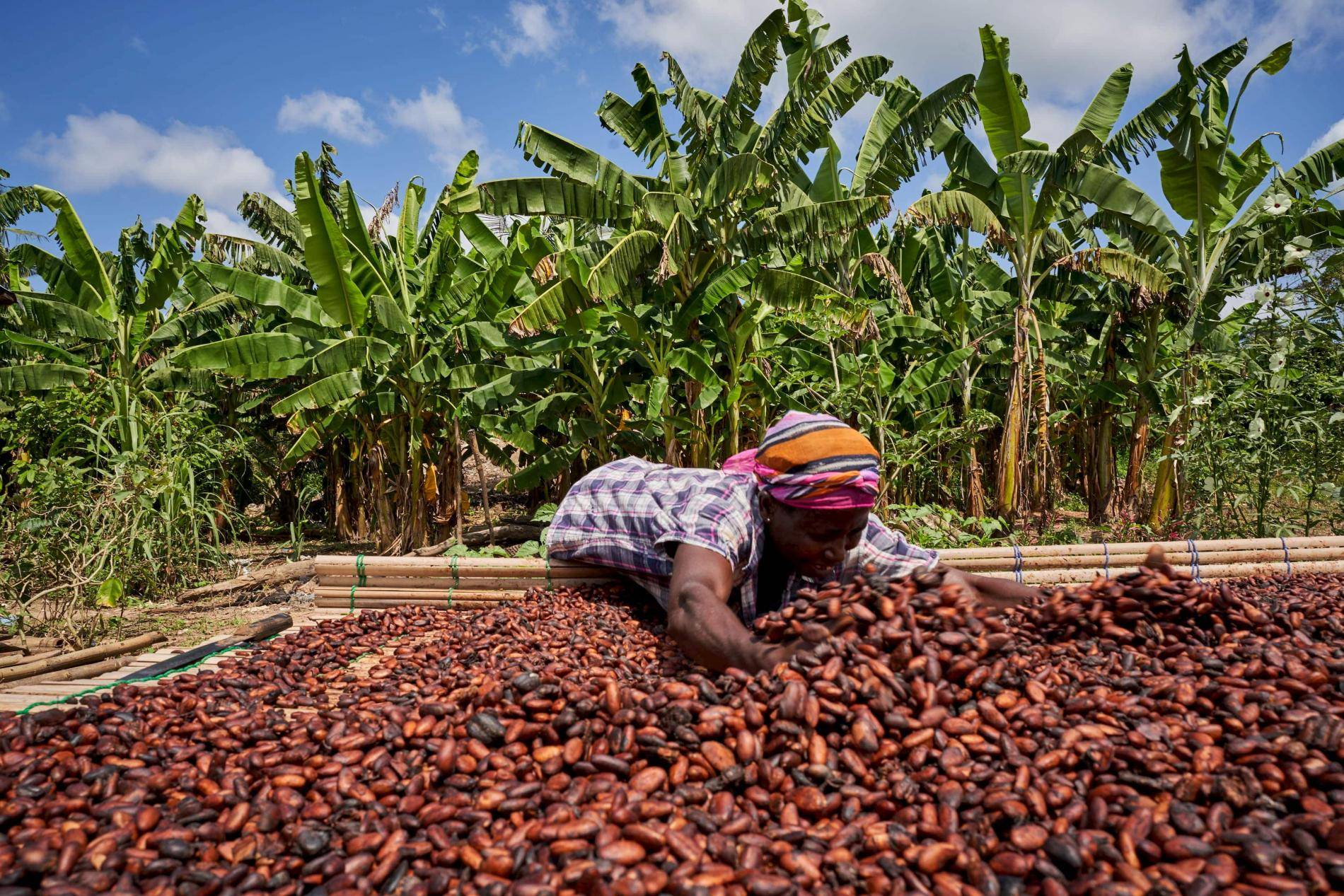
Ghana prepares for EU deforestation ban with cocoa traceability
The new traceability system is a key component of the country’s efforts to comply with the EU’s deforestation law.

China Pledges $50 Billion to Africa
China’s President Xi Jinping Thursday pledged more than $50 billion in funding to the African continent, and announced elevating ties with all member nations to “strategic level.” The Chinese government “will provide RMB360 billion yuan ($50.7 billion) of financial support through the next three years” to African nations, Xi told the 9th Summit of the Forum on China-Africa Cooperation (FOCAC) in Beijing. Beijing is hosting the largest diplomatic gathering with leaders and representatives of nearly 53 African nations attending the three-day summit which began Wednesday. Xi boasted China’s relations with African nations were “now at its best in history.” “With its future growth in mind,” Xi told the summit, “I propose that bilateral relations between China and all African countries having diplomatic ties with China be elevated to the level of strategic relations.” He added: “The overall characterization of China-Africa relations be elevated to an all-weather China-Africa community with a shared future for the new era.” Referring to the pledges of new funding, the Chinese leader said more than half of $50 billion will be in credit while nearly $11 billion will be given in various types of grants. It also includes $10 billion investments through Chinese firms, said the 71-year-old Xi, who also leads Chinese Communist Party. In the Action Plan adopted at the Beijing summit, Xi announced 10 areas where China will cooperate and work with African nations in jointly advancing “modernization that is just, equitable, open, win-win, eco-friendly, featuring diversity and inclusiveness and underpinned by peace and security.” Besides, he said China will partner with the African continent in industrial chain cooperation, green development as well as common security. The FOCAC summit has been held every three years since 2000 when it was founded. Xi also met UN Secretary-General Antonio Guterres, who also attended the summit. “China seeks no selfish interest in Africa, and the new cooperation initiatives and actions announced at FOCAC (summit) are all aimed at turbocharging African countries’ development and making lives better for the African people,” Xi told Guterres. The Chinese leader told the world body chief that China was “ready” to work more closely with the UN to jointly support Africa’s effort for peace, stability, development and prosperity. In the past 22 years since 2000 when FOCAC was established, China has built some 100,000 kilometers (62,138 miles) of highways and 10,000KM of railways in Africa. Besides, China built over 200 schools, over 130 hospitals, nearly 100 ports as well as 50 stadiums on the continent. According to the Boston University Global Development Policy Center database, Chinese lenders provided 1,306 loans amounting to $182.28 billion to 49 African governments and seven regional borrowers from 2000 until last year. Beijing also founded the China-Africa Development Fund in 2006.
IMF expects South Africa’s growth to stabilize at 1.4% in medium term
The International Monetary Fund (IMF) said Wednesday that it expects South Africa’s economic growth to stabilize at 1.4% in the medium term. Economic growth slowed to 0.7% in 2023, partly due to widespread power shortages and disruptions at rails and ports, the IMF said in a report after its executive board concluded post financing assessment discussions with South Africa. Growth is forecast to reach 1% in 2024 with improved investor sentiment and electricity generation, according to the IMF. “The new government of national unity that took office in June faces significant challenges, including declining real per capita growth, high unemployment, poverty, and inequality, and a rising level of public debt,” said the report. “The new administration has committed to address these challenges by continuing ongoing structural reforms aimed at addressing supply constraints and bolstering inclusive growth, while maintaining fiscal discipline,” it added. While inflation declined to the South African Reserve Bank’s 3%-6% target range last year, it moderated further to 5.1% this June, said the IMF. The financial agency said it anticipates inflation declining toward the mid-point of the central bank’s target range in the second quarter of 2025.

Beijing pledges investments in Chad and Senegal
China shifts its focus to smaller, more sustainable projects in Africa as part of its new development strategy.

Chinese, Libyan leaders meet at FOCAC summit to boost relations
Xi Jinping pledges China’s support for Libya’s stability and development during a meeting with Libyan leader Al-Manfi at the FOCAC summit in Beijing.

South African business confidence rebounds on stable power
The South African economy is showing signs of recovery as businesses gain confidence in the new government and improved power supply.

African nations losing 5% of GDP to climate change
African nations are losing up to 5% of their GDP annually due to climate change, with the continent experiencing a significant impact from global warming, according to a new report released Monday. The World Meteorological Organization (WMO) noted that African countries are allocating up to 9% of their budgets to climate adaptation. WMO Secretary-General Celeste Saulo highlighted the accelerated warming in Africa, which is outpacing the global average and impacting food security, public health, and stability. Despite contributing less than 10% of global greenhouse gas emissions, Africa is highly vulnerable to extreme weather, including droughts, floods, and heatwaves. The report, focusing on 2023—one of Africa’s hottest years—urges investment in early warning systems and meteorological services. Without adequate measures, up to 118 million Africans could face severe weather events by 2030. In sub-Saharan Africa, adaptation costs could reach $30-50 billion per year over the next decade. Recent extreme weather events, including floods affecting 300,000 people in West Africa and a severe drought in Zambia, underscore the urgency. The pattern of extreme weather continues into 2024, with significant flooding in the Sahel and an unprecedented heat wave in West Africa earlier this year.

Bitcoin ATM scam losses up nearly tenfold since 2020
New research shows a nearly tenfold increase in losses to Bitcoin ATM scams since 2020, the US Federal Trade Commission (FTC) said Tuesday. “Since 2020, the amount consumers reported losing has increased nearly tenfold to over $110 million in 2023,” it said in a report. The FTC said that fraud losses to Bitcoin ATMs have topped $65 million in the first six months of this year. “During this timeframe, consumers over the age of 60 were more than three times as likely as younger adults to report losing money to Bitcoin ATM scams,” it said. “Across all ages, the median loss reported in the first half of this year was a staggering $10,000.” Bitcoin ATMs, which are machines that look like a traditional ATM, are often found at convenience stores, gasoline stations and other high-traffic areas, said the FTC. Instead of distributing cash, they accept cash in exchange for cryptocurrency. “Their use by scammers, who urge consumers to deposit cash into them to ‘protect’ their savings, is on the rise,” it added. Most scam losses involving Bitcoin ATMs come as a result of government impersonation, business impersonation, and tech support scams, according to the agency. “The lies told by scammers vary, but they all create some urgent justification for consumers to take cash out of their bank accounts and put it into a Bitcoin ATM. As soon as consumers scan a QR code provided by scammers at the machine, their cash is deposited straight into the scammers’ crypto account,” it noted. The FTC advised consumers to never click on links or respond directly to unexpected calls, messages, or computer pop-ups, adding: “If you think it could be legitimate, contact the company or agency, but look up their number or website yourself. Don’t use the phone number the caller or message gave you.” The agency also advised consumers to slow down in their actions, avoid rushing, and never withdraw cash in response to an unexpected call or message. “Don’t believe anyone who says you need to use a Bitcoin ATM, buy gift cards, or move money to protect it or fix a problem. Real businesses and government agencies will never do that – and anyone who asks is a scammer,” it warned.

African drugmaker in talks for mpox vaccine production
Aspen Pharmacare is exploring the production of mpox vaccines to address the ongoing outbreak in Africa.

Nigeria and China to expand collaboration in nuclear energy
Nigeria and China strengthen cooperation in Belt and Road initiative, renewable energy, and infrastructure.

Angola seeks more Chinese funds for diversification
China’s economic influence in Angola is growing as the nation seeks more financing to support its economic development and import of Chinese goods.

Nigeria’s Dangote Refinery begins supplying gasoline to local market
The refinery, located on the outskirts of Lagos, has a capacity of 650,000 barrels per day

Fuel scarcity crisis deepens in Nigeria amid rising costs
Nigeria grapples with a worsening fuel crisis, causing long queues, rising prices, and economic hardship for its citizens.

OPEC output hits lowest in months amid Libyan disruption
An examination of the potential impact of the decline in OPEC oil output on global energy prices and economic growth.

Saudi Arabia, Libya bail out Egypt with $200 million gas imports
Saudi Arabia and Libya have stepped in to support Egypt’s energy crisis by financing the purchase of gas cargoes worth over $200 million.

Indonesia aims for $3.5 billion in deals at Africa forum
Several memorandums of understanding are expected to be signed, including projects in geothermal energy and pharmaceuticals.

China aims increased Africa trade before Western sanctions hit
African leaders meet in Beijing as China seeks to boost exports of electric vehicles and solar panels.

China promises new Belt and Road projects at African summit
At a Beijing summit with African leaders china has committed to strengthening its Belt and Road initiative by ensuring high-quality infrastructure cooperation.
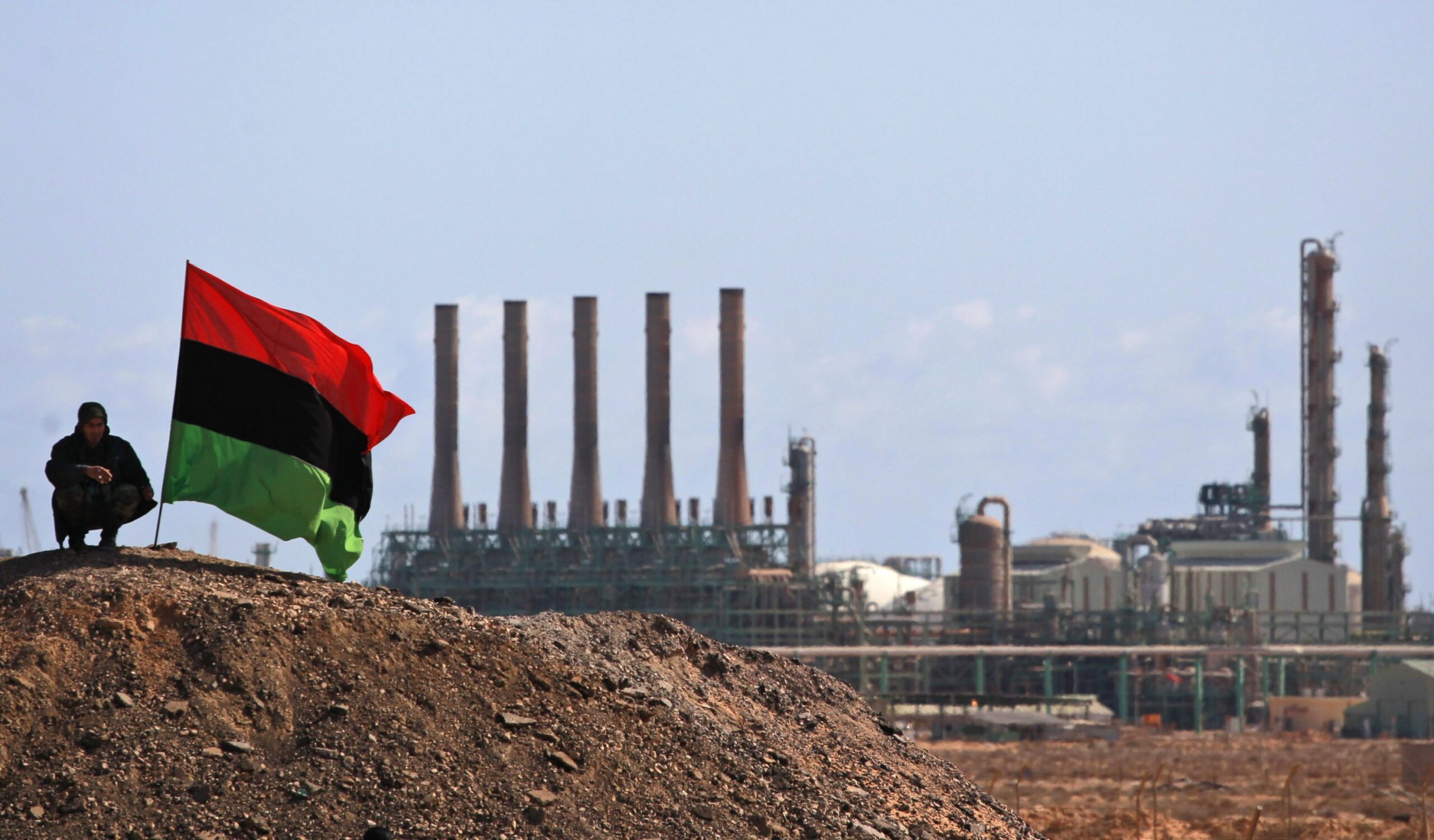
Oil crisis deepens in Libya as factions clash over central bank
The blockade has caused severe economic hardship and threatens to destabilize the entire country.

South Africa’s platinum industry faces irreversible decline
South Africa’s platinum mining industry is facing an irreversible decline due to low prices and decreasing demand caused by the rise of battery electric vehicles.

Nigeria seeks operators for state-owned refineries
Nigeria aims to engage operators who can ensure the reliability and sustainability of these refineries to support the nation’s fuel supply and energy security

Ghana’s gold industry gets a boost with new mines
The Cardinal Namdini mine is expected to produce over 350,000 ounces of gold annually.

South Africa’s economic outlook improves as reforms take hold
South African Reserve Bank governor believes that successful reforms could lift the country’s economic potential beyond its current growth rate.

Egypt’s money supply grows rapidly despite IMF pressure
Despite IMF pressure, the central bank continues to support the government’s spending.

China’s lending to Africa increases for the first time in 7 years
From 2012 to 2018, Africa received over $10 billion annually in loans from China, driven largely by President Xi Jinping’s Belt and Road Initiative (BRI)
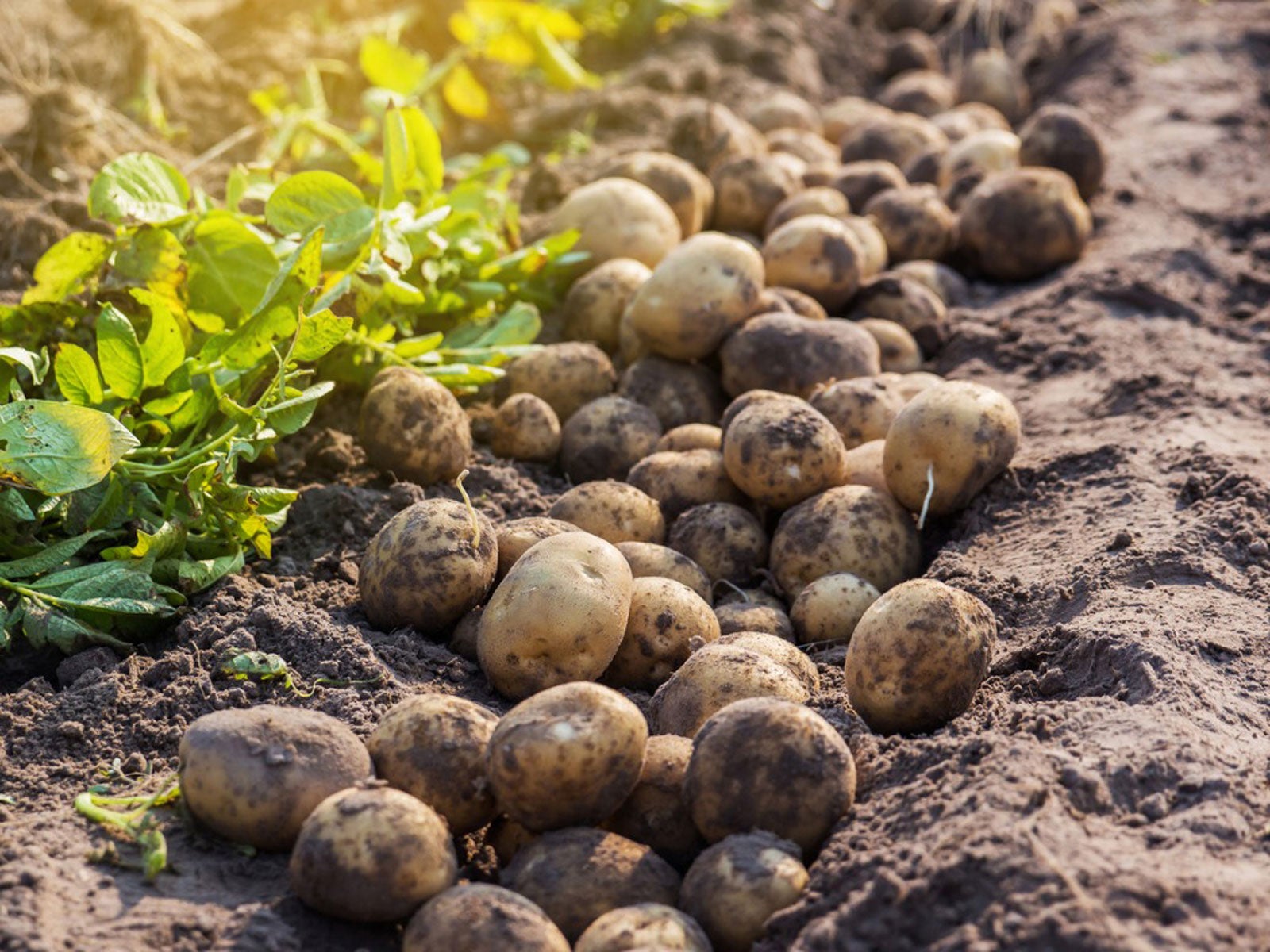
South African potato prices soar due to frost damage
A frost in Limpopo, South Africa, has damaged potato crops, leading to a 15% increase in potato prices nationwide.