

Over 20 killed in central Mali attacks
The tragic incident highlights the ongoing security challenges faced by Mali, which has been grappling with an insurgency for years.
Over 20 killed in central Mali attacks Read More »
The tragic incident highlights the ongoing security challenges faced by Mali, which has been grappling with an insurgency for years.
Over 20 killed in central Mali attacks Read More »
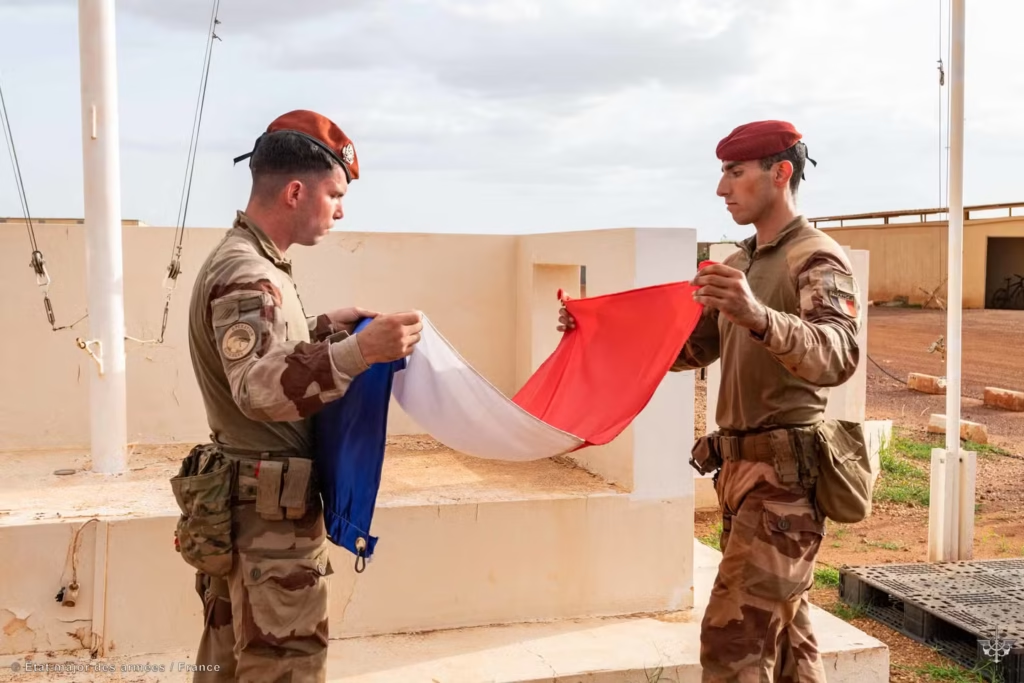
French President Emmanuel Macron has emphasized the importance of the French military base in Djibouti, describing it as a key “projection point” for France’s evolving military operations in Africa.
France redefines Djibouti base as key military hub Read More »

Chad’s President, General Mahamat Idriss Déby Itno, has been elevated to the rank of Marshal, the highest military title in the country.
Chad leader elevated to marshal, following father’s footsteps Read More »
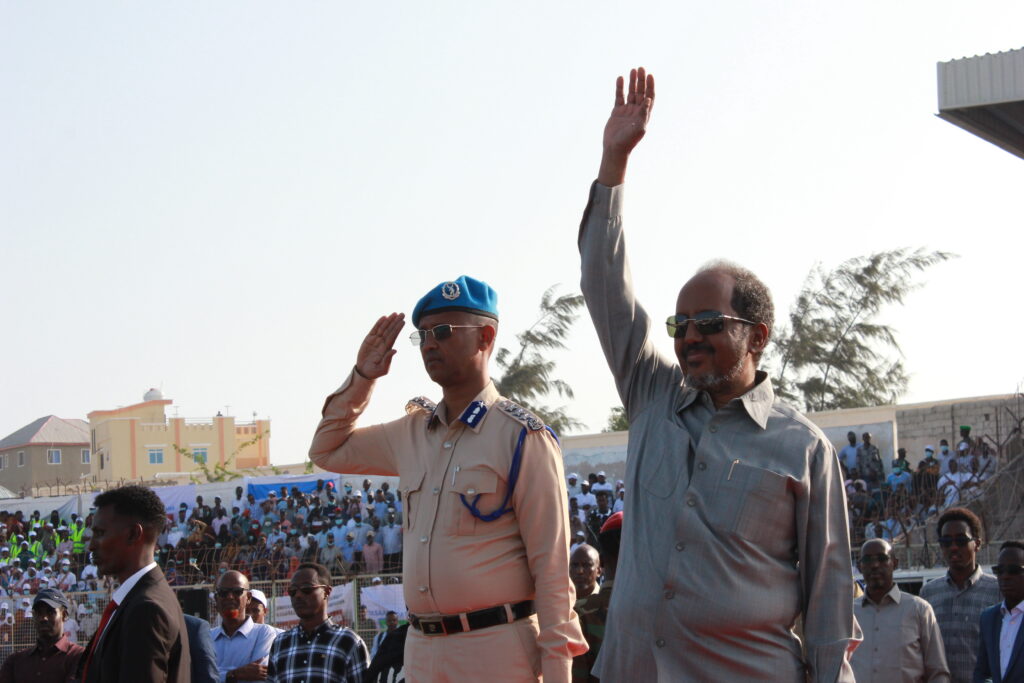
In a historic move for Somalia, President Hassan Sheikh Mohamud officially launched the “New Mogadishu” development initiative on Thursday, aiming to transform the capital’s economic landscape. The initiative includes the construction of a modern airport, a new port, and an economic zone designed to drive growth and attract investment. During the launch, President Mohamud praised the resilience of Somalia’s business community, highlighting their role in providing essential services despite challenging circumstances. “Somali businessmen have proven their commitment to the nation’s progress,” he said. The initiative is also expected to create thousands of jobs, with Mohamud emphasizing that it’s not just about infrastructure, but about creating opportunities for the youth and uplifting local communities. “This project marks a significant milestone for Somalia as we work to revitalize the capital and build investor confidence, paving the way for a brighter economic future,” Mohamud added. Fardowsa Osman Egal, Somalia’s Minister of Transport and Aviation, spoke about the new airport’s importance, noting that it would alleviate the limitations of the current Mogadishu airport. “This new international airport will help increase international flights, supporting the creation of a financial zone to attract both local and international investors.” Valued at around $650 million, the New Mogadishu project is poised to significantly boost Somalia’s economy. On behalf of the business community, Mohamud Abdikarim Gabeyre, chairman of the Somali Chamber of Commerce and Industry, welcomed the project, expressing hope that local businesses would benefit from the new investment. In addition to the New Mogadishu initiative, President Mohamud also inaugurated the $400 million Gateway Complex project on Wednesday. This ambitious development includes Somalia’s first five-star hotel, an international convention center, a modern hospital, premium hotel apartments, and a shopping complex, aiming to transform Mogadishu’s skyline. Despite ongoing security challenges, including threats from the al-Shabab terrorist group, the launch of these projects marks a major step toward rebuilding Somalia’s infrastructure and economy.
Somalia launches “New Mogadishu” development project Read More »

Two suspected witchdoctors were apprehended in Lusaka, Zambia’s capital, Friday for allegedly attempting to “bewitch” President Hakainde Hichilema, police said. Police spokesman Rae Hamoonga said in a statement the suspects had been formally arrested and charged with professing knowledge of witchcraft, possession of charms, and cruelty to wild animals. “The suspects, identified as Jasten Mabulesse Candunde, 42, and Leonard Phiri, 43, were found in possession of assorted charms, including a live chameleon and are alleged to be practicing witchdoctors,” Hamoonga said, adding that preliminary investigations revealed that the duo was engaged by Nelson Banda, the younger brother of Emmanuel, a former independent member of parliament, to use the charms to harm Hichilema. He said Nelson Banda was currently on the run. Police said the suspects disclosed that they were promised a payment of 2 million Zambian Kwacha (over $7,000) after the execution of their mission.
Two witchdoctors arrested for plotting against Zambian president Read More »

Central and East Africa are facing severe health crises as Mpox and the Marburg virus continue to spread, overwhelming healthcare systems. The Democratic Republic of Congo (DRC) remains at the epicenter of the Mpox outbreak, with over 13,000 cases and 450 deaths reported, underscoring the urgency of the situation. Neighboring countries like Cameroon, Burundi, and Uganda are also experiencing new cases. Despite efforts to contain the virus, limited testing capacity and strained healthcare infrastructure have made it difficult to control the spread. In August 2024, the World Health Organization (WHO) declared Mpox a public health emergency due to the escalating number of cases, operational challenges, and the need for coordinated global action. “Mpox has been a recurring issue in the DRC for over a decade, with cases steadily rising each year. This year, the number of cases has already surpassed last year’s total, with over 14,000 cases and 524 deaths,” said WHO Director-General Tedros Adhanom Ghebreyesus. Mpox symptoms include fever, swollen lymph nodes, and a rash that typically begins on the face before spreading. Though often mild, the disease can lead to severe complications, particularly for individuals with weakened immune systems. The virus spreads through close contact with infected individuals or animals, which poses particular challenges in densely populated regions. “A person is infectious from the onset of symptoms until the skin lesions crust over and new skin forms. Transmission primarily occurs through respiratory droplets or direct contact with bodily fluids, lesions, or contaminated items,” explained Dr. Olivia Kasirye, Public Health Officer for Sacramento County. Compounding the health crisis, Rwanda is dealing with its first outbreak of the Marburg virus, with over 60 confirmed cases, including several healthcare workers. The virus’s high fatality rate has increased the urgency for an immediate and coordinated response from national and international health organizations. Insufficient Vaccines and Global Support Needed Nearly 900,000 Mpox vaccine doses have been distributed across Africa, but experts warn this is far from sufficient. The Africa CDC estimates that more than 10 million doses are necessary to control the outbreak. Vaccination efforts are ongoing with support from global partners, but substantial challenges remain. As Africa battles both Mpox and Marburg, the call for increased investment in testing, surveillance, and healthcare infrastructure is more urgent than ever. While local communities are working tirelessly on the ground, sustained global support is critical to addressing these overlapping health crises.
Mpox and Marburg outbreaks strain Africa’s health systems Read More »
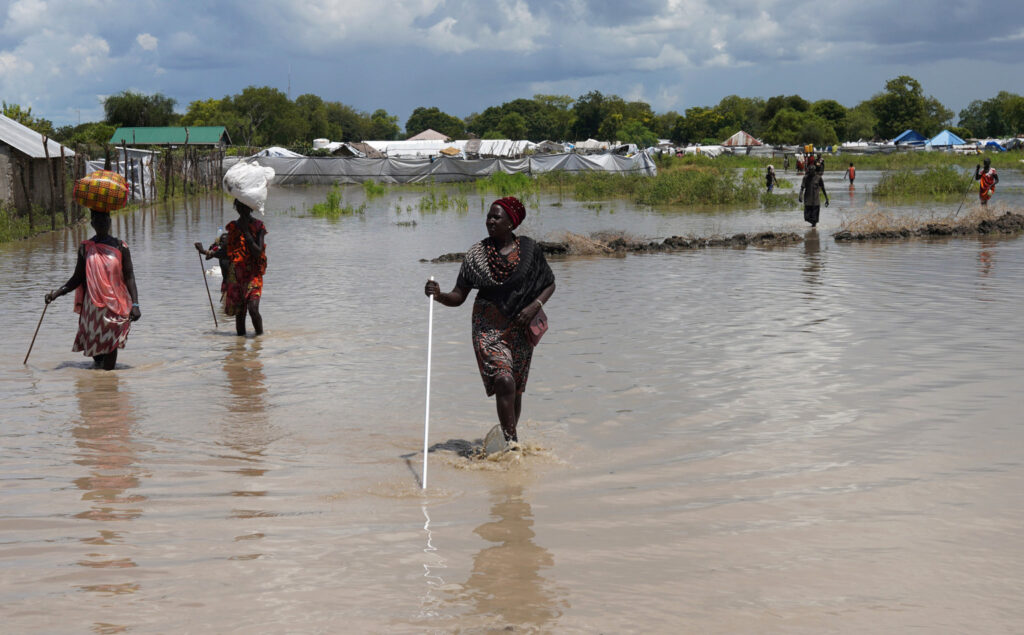
Floods have become a yearly occurrence in South Sudan, forcing thousands of people to flee their homes.
Families struggle to survive amidst South Sudan floods Read More »

Morocco and Mauritania have reiterated their commitment to strengthening bilateral ties and promoting joint strategic projects, including the Afro-Atlantic gas pipeline.
Joint projects at Morocco-Mauritania summit Read More »

The United Nations Security Council has voted to extend the mandate of the UN peacekeeping mission in the Democratic Republic of Congo (DRC) for another year.
Security council renews mandate for UN mission in DRC Read More »

Niger has summoned the Nigerian charge d’affaires, accusing Nigeria of “serving as a rear base” to destabilize the country.
Niger accuses Nigeria of destabilization efforts Read More »