

Kenyan governor, MP arrested amid deadly clashes
A Kenyan regional governor and a member of parliament were arrested after deadly clashes in Tana River County claimed 18 lives.
Kenyan governor, MP arrested amid deadly clashes Read More »
A Kenyan regional governor and a member of parliament were arrested after deadly clashes in Tana River County claimed 18 lives.
Kenyan governor, MP arrested amid deadly clashes Read More »

Kenya and Haiti’s leaders called on international partners on Friday to fulfill their commitments to the U.N.-backed peacekeeping mission in Haiti, highlighting the need for more resources as the budget is set to run out in March 2025. Kenya is leading the mission to address escalating gang violence in Haiti, having deployed nearly 400 officers, alongside around 20 police and soldiers from Jamaica. However, this falls short of the 2,500 personnel pledged by various countries, including Chad and Bangladesh. During a meeting in Nairobi, Kenyan President William Ruto announced plans to send an additional 600 officers next month. The U.N. has received $68 million of the $85 million pledged for the mission. Ruto expressed optimism about the mission’s success based on recent operations, while Haitian Prime Minister Garry Conille indicated ongoing discussions with countries like Brazil and Mexico to bolster support. Gang violence has surged in Haiti since the assassination of President Jovenel Moïse in July 2021, with gangs reportedly controlling up to 80% of the capital. This has triggered a violent backlash from civilian vigilante groups. In early October, the U.N. Security Council unanimously extended the mandate of the Kenya-led multinational force but declined Haiti’s request to transition it into a U.N. peacekeeping mission.
Kenya and Haiti seek more support for on going violence Read More »
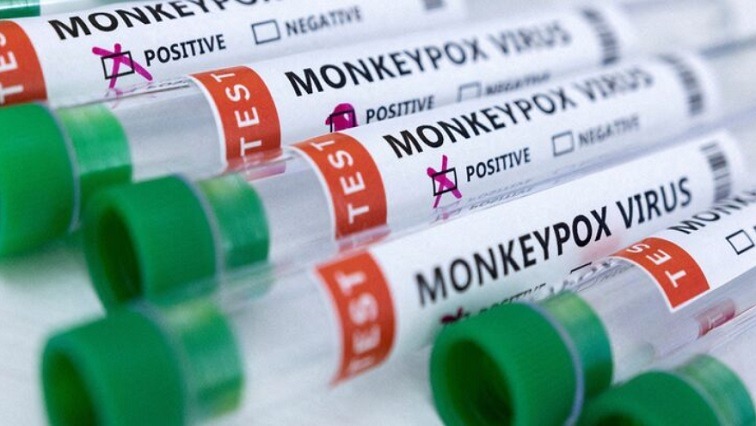
Mpox is still a major public health issue in Africa, the head of the Africa Centres for Disease Control and Prevention (Africa CDC) said Thursday amid surging new cases. A total of 3,186 new cases were reported in the past week, with 489 confirmed and 53 deaths, Jean Kaseya said at a news conference. “We don’t see a decrease in terms of death, but we see an increase when we compared with previous weeks,” he said, adding there is a need to accelerate several interventions, including vaccination, to stop the spread. In 2024, more than 38,300 cases have been recorded in 16 countries on the continent to go along with 979 deaths, according to the latest data from Africa CDC. Ghana and Zambia are the latest countries to report an outbreak of mpox on the continent. The World Health Organization declared mpox a global public health emergency in August for the second time in two years, following the spread of a new variant of the viral infection from the Congo to neighboring countries. Kaseya said a vaccination campaign launched last weekend in Congo, the most affected country in the region, is on track with more than 1,600 people vaccinated, mainly in the east. Nigeria, which has received an allotment of 10,000 doses of a vaccine from the US, is to start vaccination in the coming days, according to Africa CDC. Africa expects to receive 10 million doses from partners. Mpox exhibits flu-like symptoms and pus-filled lesions.
African health body says mpox still major health issue as cases rise Read More »

Historic impeachment hearings for Rigathi Gachagua will commence next week in the Kenyan Senate after a decisive vote by the National Assembly.
Kenyan senate to begin impeachment hearings for Gachagua Read More »

Kenya’s central bank has lowered its benchmark lending rate to 12.00% from 12.75% to stimulate credit and address a slowdown in economic growth.
Kenya reduces benchmark rate as inflation falls Read More »
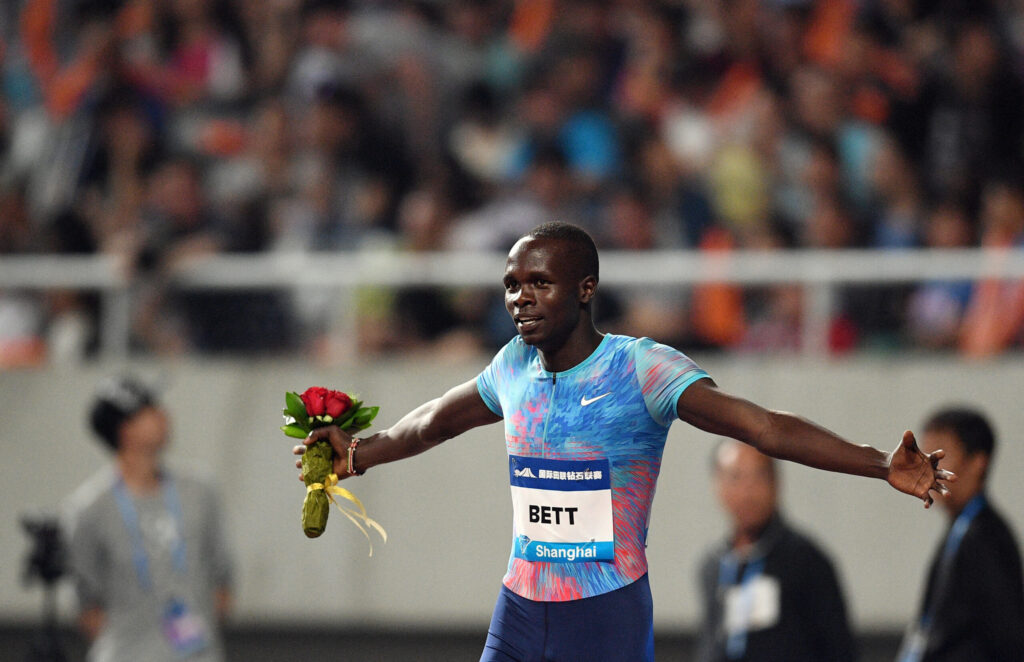
Kenyan athlete Kipyegon Bett, who won a bronze medal in the 800m at the 2017 World Championships in London, has died at 26 due to renal and hepatic failure. Bett first gained prominence at the U20 World Championships in 2016 in Bydgoszcz, Poland, and was considered one of Kenya’s top middle-distance runners. However, his career faltered in 2018 when he was suspended for doping after testing positive for erythropoietin (EPO), a claim he consistently denied. After serving his suspension, Bett faced ongoing mental health issues, including depression and alcohol addiction, which his sister reported. He was hospitalized last week in his hometown of Kericho and was readmitted on Friday as his condition worsened. Despite significant investments in anti-doping measures since the 2016 Rio Olympics, over 70 Kenyan athletes have been banned in the last three years. Recently, the World Anti-Doping Agency raised concerns over severe budget cuts to the Anti-Doping Agency of Kenya (Adak), which may jeopardize the integrity of Kenyan athletics.
Kenyan athlete Kipyegon Bett dies at the age of 26 Read More »

Kenya’s Deputy President Gachagua files petition to stop impeachment motion against him by lawmakers amid political tension.
Kenya’s Gachagua files court petition against impeachment Read More »

While Israel’s main benefactors during its ongoing war on Gaza have been major Western nations, it has also found support in parts of the African continent, including the East African nation of Kenya. The Kenyan government has consistently backed Israel with words and diplomatic actions, including votes at the UN, despite a clear divide in public opinion within the country. This support is rooted in diplomatic relations dating back to the 1960s, but the two countries have deepened ties in various sectors over the years, including security, technology and agriculture, while Israel is also viewed as a strategic counterterrorism ally in East Africa. Kenya’s relationship with Israel has existed “long before it became official,” going back to the days when apartheid still plagued South Africa and many African nations were vocally opposed to Israel, according to Herman Manyora, a political analyst and University of Nairobi lecturer. “Kenya has a very interesting relationship with Israel. Long before this relationship became official, when Israel was not recognized by most of Africa, Kenya had silent relations with Israel and apartheid South Africa,” he told Anadolu. However, while Kenya “came out strongly in support of Israel” after the Hamas-led Oct. 7 attack, the government was forced to “quickly retract, seeing as it wasn’t sitting well with many African countries,” he said. On multiple occasions, the Foreign Ministry issued statements condemning rocket attacks on Israeli cities, framing Israel’s military response as legitimate self-defense, while President William Ruto has reaffirmed that Kenya views Israel as a “great friend.” - Divisions within Kenya’s close relationship with Israel has, at times, drawn muted criticism within Africa, particularly when it comes to Nairobi’s diplomatic support to Tel Aviv. On several resolutions brought before the UN General Assembly and Human Rights Council condemning Israel’s actions in Gaza, Kenya either abstained or voted against the motions, aligning with Western powers. Standing with Israel, which is accused of genocide at the International Court of Justice (ICJ), has made Kenya an outlier in Africa. Esther Mwai, a political analyst based in Nairobi, said Kenya “has suffered negatively across Africa” because of its support to Israel. “Many African countries have traditionally supported Palestine, and Kenya’s position placed it at odds with the broader African consensus,” she said. Public opinion within Kenya is also divided as many feel a strong sense of solidarity with the Palestinian cause, seeing parallels between their struggle and Africa’s own historical battles against colonialism and oppression. “I’m disappointed that our government continues to support Israel despite the atrocities being committed in Gaza,” said Movicks Ogalo, 29, a laboratory technician in Nairobi. “The images we see every day of children and families suffering are heartbreaking. It feels like we’ve abandoned our principles of fighting for justice and human rights.” Ogalo’s sentiments are shared by many in Kenya’s civil society and activist groups, but not all Kenyans are critical of the government’s position. Some view Israel as an important ally in Kenya’s fight against terrorism, particularly in dealing with groups like al-Shabaab, which operates across the region. “I fully support our government’s stance with Israel,” said Vincent James Kamau, a businessman in Nairobi. “Israel has helped Kenya with intelligence-sharing and counterterrorism efforts.” Kamau’s views echo those of Kenya’s political establishment, which sees Israel as a key partner in ensuring regional stability and security cooperation between the two nations, especially in intelligence and military training, as critical in combating terrorism threats. – A diplomatic pivot? Despite the government’s initial support for Israel, recent events suggest that Kenya may be reassessing its position. During a UN General Assembly session last month, Kenyan Ambassador Ekitela Lokaale condemned the humanitarian atrocities in the Middle East, particularly in Gaza. This marked a significant departure from Kenya’s position, suggesting that the government may be moving toward a more balanced approach. While the Kenya Foreign Ministry did not respond to multiple Anadolu queries on the subject, analysts see a potential shift as a response to growing international and domestic pressure over the humanitarian catastrophe in Gaza, where Israel has killed or wounded more than 140,000 Palestinians, most of them women and children. The relentless Israeli assault has devastated almost the entire Gaza Strip, displacing hundreds of thousands of Palestinians, while it has also imposed a crippling blockade on food, water, medicine and all essentials. “Kenya has always been an ally and friend of Israel, even when many African countries are against it,” said Manyora. However, he emphasized that recent actions such as the government backtracking on its post-Oct. 7 support to Israel reflect “a need to align with broader African sentiment.”
1 year of Gaza genocide: Will Kenya change tack on supporting Israel? Read More »

Emmaculate Anyango Achol, who set 2nd-fastest 10-kilometer time in history earlier this year, faces provisional ban after testing positive for testosterone and EPO, says Athletics Integrity Unit
Kenyan athlete Achol suspended for doping violation Read More »
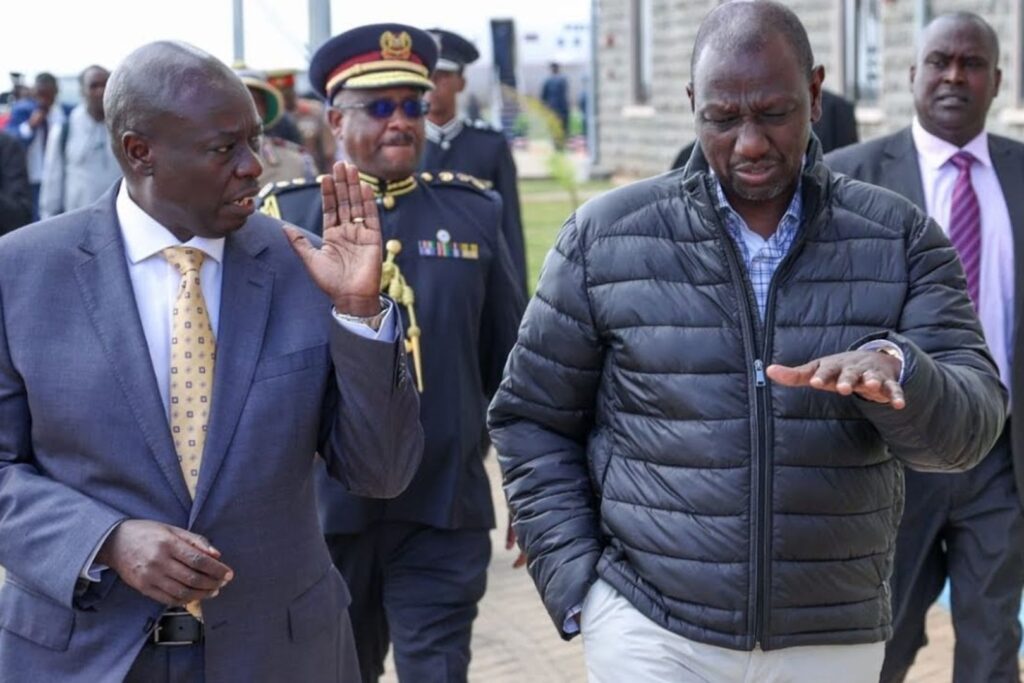
Gachagua, who played a key role in Ruto’s 2022 election victory, now finds himself politically isolated as lawmakers prepare to push for his removal
Kenya’s deputy president faces impeachment amid fallout with president Read More »