

Kenya’s Supreme Court upholds controversial tax hike
Apex court clears path for Finance Act 2023, sparking public outrage, concerns over rising costs
Kenya’s Supreme Court upholds controversial tax hike Read More »
Apex court clears path for Finance Act 2023, sparking public outrage, concerns over rising costs
Kenya’s Supreme Court upholds controversial tax hike Read More »

Thirteen inmates, including Collins Jumaisi, the prime suspect in the gruesome murders of 42 women on Tuesday morning, escaped from a Nairobi police cell, authorities have confirmed. Speaking to local media, Kenya police spokesperson Resila Atieno Onyango confirmed the daring breakout occurred at the Gigiri Police Station in the Kenyan capital Nairobi. Jumaisi, who had confessed to killing 42 women, including his wife, had been awaiting trial for his heinous crimes, police said he escaped along with 12 other inmates and a massive manhunt involving various security agencies is currently underway. The director of criminal investigations, Mohamed Amin, confirmed the escape and stated, “It is very unfortunate, and our officers are pursuing the group.” Jumaisi, known for the Mukuru murders, where the bodies of his female victims were found in a water-filled quarry in Nairobi’s Embakasi area, missed his scheduled court appearance last Friday. This has intensified public outrage and raised concerns about the effectiveness of the justice and security systems. The apparent ease of the breakout from Gigiri Police Station, which is known for its high security due to its proximity to several embassies, has led to speculation about potential security breaches or collusion.
Kenyan serial killer who confessed to 42 murders escapes custody Read More »
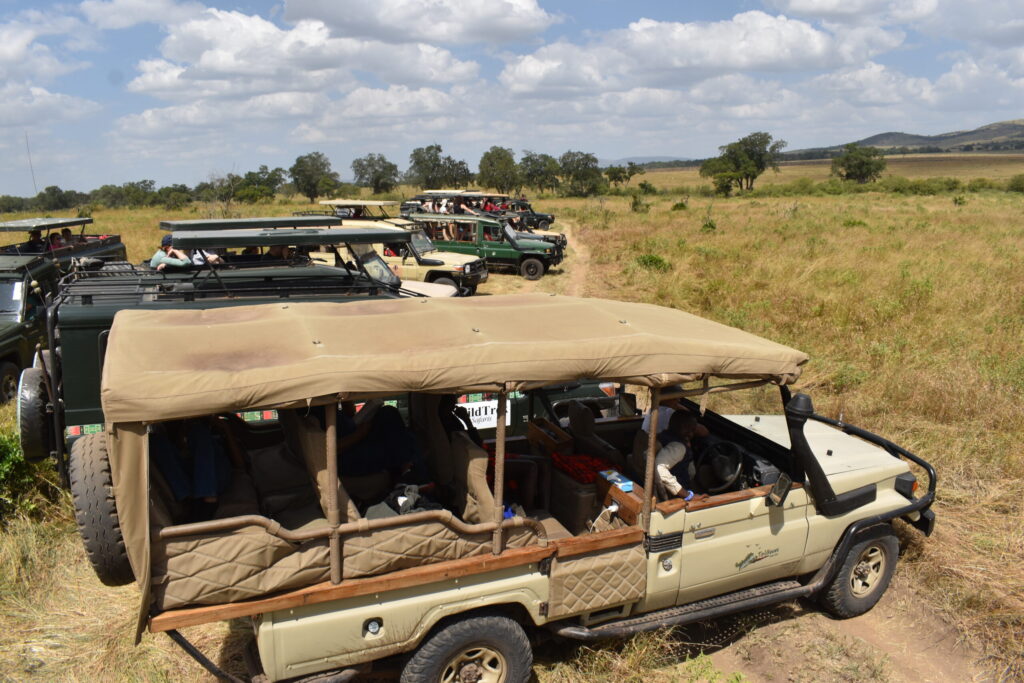
Scores of tourists are converging to Kenya’s Maasai Mara national Reserve to witness the annual spectacle of wildebeest migration. Interspersed among the wildebeest were large numbers of zebras and even hippos. The migration over the Mara River culminates when wildibeast jump to cross the crocodile-ridden water. Wildebeests begin to migrate in troops from early July when Tanzania’s northern Serengeti Park gets dry. Water and pasture are available in the neighbouring Maasai Mara Park during the same period. The yearly event peaks in August before it settles in October when the animals return to Serengeti. Kenya’s rich wildlife resource is one of the key economic pillars of the country. The Masai Mara park located in southern western Kenya along the Great Rift Valley area is a tourist hotspot. It presents plenty of opportunities for the guests to enjoy its lush vegetation, idyllic setting and presence of iconic land mammals like elephants and rhinos.
Kenya: Wildebeest migration attracts numerous tourists Read More »

A price war between Uber, Bolt, and local rivals has pushed Kenyan taxi drivers to the brink.
Nairobi taxi drivers demand higher pay, ignore app fates Read More »

Kenya will soon present a revised eco-levy tax in Parliament. Treasury Secretary John Mbadi announced that “about 49 measures” are under consideration as part of the tax amendment bill. The new eco-levy aims to address pollution and waste management at both the office and household levels, but will exclude sanitary towels—a change from the initial proposal. Companies will still face scrutiny, including a 10 percent levy on locally manufactured plastics, despite opposition from Coca-Cola. Mbadi defended the tax, emphasizing that environmental harm should be compensated. The government is also extending the tax amnesty period by six months. This revision follows the cancellation of Kenya’s Finance Bill 2024 in June due to protests, which led President William Ruto to explore alternative revenue sources. Opposition leaders are now urging the Judiciary to resist any attempt to reintroduce the rejected bill.
Kenya: revised eco-levy tax to be reviewed in parliament Read More »
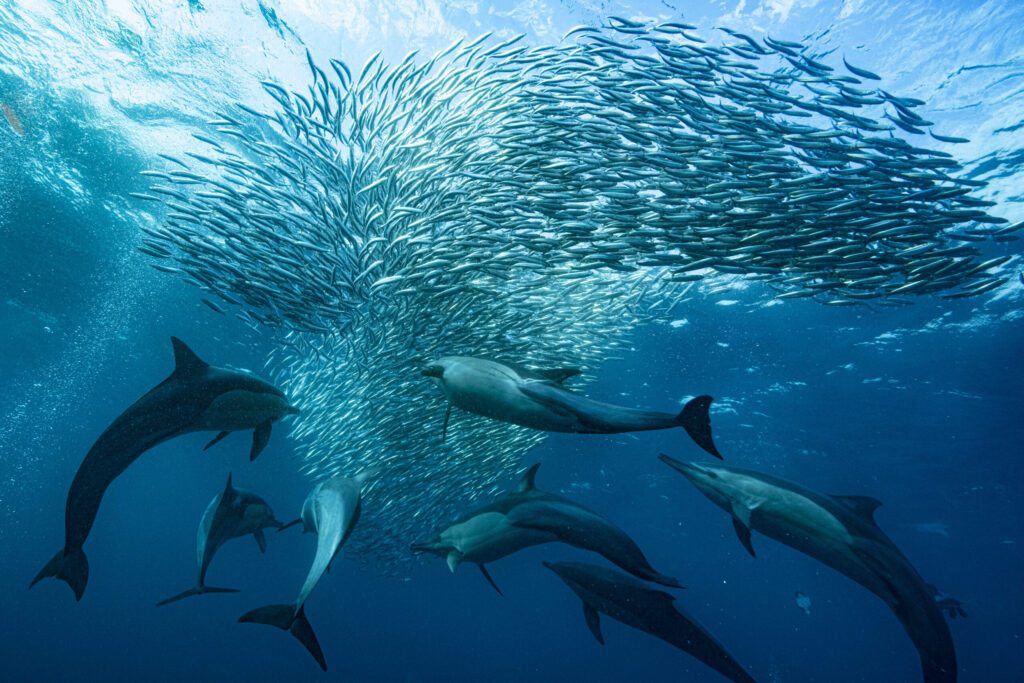
Experts warn that the number of fish participating in South Africa’s sardine migration, the largest animal movement in the world by biomass, may decline due to warming sea temperatures driven by the climate crisis. Known as the “KwaZulu-Natal Sardine Run,” this massive, one-way migration spans 1,500 kilometers from temperate regions to the Indian Ocean and involves billions of sardines. According to an article titled “The Mass Migration of Sardines in Southeast Africa: An Ecological Trap,” prepared by academics from various South African universities and research centers, the migration occurs along the Agulhas Current—a swift ocean current also supporting various predatory birds and marine life. This migration is crucial for local economies as it provides significant commercial income. Professor Lorien Pichegru from Nelson Mandela University’s Coastal and Marine Research Institute highlighted that the migration remains mysterious in many aspects. He described the Sardine Run as the largest animal movement in the world by biomass, underscoring its importance for numerous predators, particularly seabirds. Pichegru explained, “Cape gannets, for example, time their breeding cycles to coincide with the sardine run, ensuring that their young hatch during a period of abundant and easily accessible food. Many animals synchronize their life cycles with the sardine run.” He also noted that sardines do not thrive in warm waters and that climate change is adversely affecting them. “Sardines are declining in Africa due to climate change and overfishing pressures. Their 2-3 year lifespan means their survival depends on the successful development of their eggs and larvae, which is directly impacted by sea temperatures. Higher temperatures make it harder for larvae to grow and mature, leading to a potential decline in sardine numbers. This could halt the sardine run in the coming years, affecting many animals, including sharks, and further endangering the already threatened Cape gannet. Fishermen dependent on these fish for their livelihood would also be impacted, disrupting the entire food chain.” Pichegru further pointed out that ongoing oil and gas exploration in the region affects the habitat, with seabed excavation creating significant noise pollution that harms marine life. Concerns about potential oil spills were also raised. “The Agulhas Current, one of the fastest currents globally, could spread the effects of a potential spill over a large area,” Pichegru warned. The 1 Ocean Foundation, established under the French National Center for Scientific Research (CNRS) and supported by UNESCO, is documenting this migration with scientists, artists, and activists through their project “The Great Migration of Life.” Alexis Rosenfeld, an underwater photographer and co-founder of the foundation, stated that their project aims to “make the invisible visible” and emphasize the importance of biodiversity. The project name reflects its significance. Rosenfeld explained that their motivation stemmed from concerns over natural gas and oil exploration off South Africa’s coast. Rather than directly opposing the projects, they chose to illustrate the potential consequences through their film. Rosenfeld said, “We believe in the power of positive narratives. By showcasing the endangered ecosystem and the great migration of life, we aim to highlight its beauty, which is a more impactful approach than direct confrontation.” He also noted that climate change is a significant factor affecting their project. “Climate change has a substantial impact on ocean currents, influencing migrations. While the sardine migration typically happens every year, we observed it less frequently in recent years and now see it restricted. This is a direct result of climate change.” Rosenfeld concluded by emphasizing the migration’s scale: “Sometimes, you can’t see in front of you because the view is filled with animals. You might find yourself surrounded by millions of sardines, dozens of swimming birds, and 20-30 dolphins, making you forget where you are and what you’re doing.”
Warming sea waters in South Africa threaten fish migration Read More »
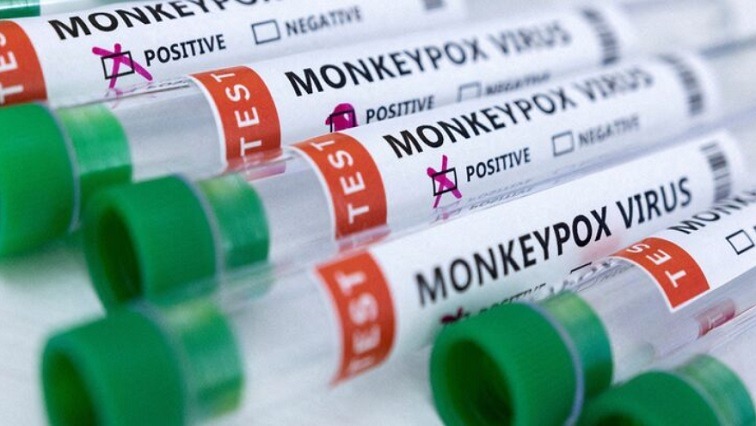
On Tuesday, the African Union’s health authority declared a public health emergency in response to a rising outbreak of mpox, which has been increasing since July. In an online briefing, Jean Kaseya, head of the Africa Centres for Disease Control and Prevention (Africa CDC), emphasized the need for urgent and robust measures to combat the outbreak. As of August 4, the Africa CDC reported 38,465 mpox cases and 1,456 deaths across the continent since January 2022. The outbreak has affected multiple African nations, with significant impacts in the Democratic Republic of Congo (DRC), and cases have now been confirmed in nearly all East and Central African countries. Mpox is transmitted through close contact and can cause rashes, flu-like symptoms, and pus-filled lesions. While most cases are mild, there have been confirmed fatalities. Additionally, the World Health Organization will convene its emergency committee on Wednesday to consider whether to declare a Public Health Emergency of International Concern (PHEIC).
Africa CDC declares mpox a public health emergency Read More »

The floods currently impacting Central and West Africa have already affected more than 700,000 individuals, according to the United Nations Office for the Coordination of Humanitarian Affairs (OCHA). This severe situation follows torrential rains that have struck the region just two months into the rainy season. Farhan Haq, Deputy Spokesperson for the UN Secretary-General, expressed concern during a press conference: “The Office for the Coordination of Humanitarian Affairs is troubled by the flooding in the region, which has impacted over 700,000 people across the Central African Republic, Chad, Ivory Coast, the Democratic Republic of Congo, Liberia, Niger, Nigeria, Mali, and Togo.” In response to the disaster, the United Nations, in partnership with various organizations, has ramped up aid to the affected countries. This support includes food distribution, shelter, and water and sanitation services. Additionally, the United Nations Central Emergency Response Fund has allocated $10 million this year to Congo, the Democratic Republic of Congo, and Niger to help mitigate the impacts of climate-related shocks, including ongoing floods threatening millions across sub-Saharan Africa.
Floods in Central and West Africa impact over 700,000 people Read More »

Communities around the world observed World Elephant Day on Monday, focusing on raising awareness about protecting elephants from various threats. At the Adventures with Elephants reserve in Bela Bela, South Africa, the annual event featured a herd of rescued elephants grazing and cooling off by the water in the heat. Managing Director Sean Hensman highlighted the significant pressures on elephant habitats, noting, “It’s a day to celebrate elephants and consider their broader conservation needs. Elephants face immense pressure due to shrinking land as human populations surge. Africa’s population is expected to reach 3 to 4 billion by 2050, reducing land available for elephants.” Elephant handler David Mupupu pointed out the drastic decline in African elephant numbers since 1920, from 4 million to just 400,000 today, representing a 90 percent decrease. “We must take care of our elephants,” he emphasized. The World Elephant Day Society reports that both African and Asian elephants are increasingly endangered by poaching and habitat destruction. The organization plans to work with conservation groups to develop effective policies to combat poaching and protect elephant habitats. World Elephant Day, established in 2012, is observed annually on August 12.
World elephant day highlights urgent need for conservation ffforts Read More »

A British national, Jermaine Grant, has been deported to the UK following the completion of a lengthy prison sentence in Kenya. Grant, 41, was arrested upon arrival at London’s Heathrow Airport on Thursday after flying in from Nairobi. Grant’s legal troubles began in 2011 when Kenyan authorities discovered bomb-making materials in his apartment in Mombasa, a coastal city. At the time of his arrest, he was believed to be sharing the residence with Samantha Lewthwaite, infamously known as the “White Widow.” Lewthwaite is wanted in connection with the 7/7 bombings in London. Kenyan police accused Grant of planning to bomb tourist hotels along the country’s coast. Although he was acquitted of conspiracy charges in 2019, a court found him guilty of possessing bomb-making materials. On Friday, the UK’s Metropolitan Police confirmed that Grant had been detained under the Terrorism Act. “We can confirm that on 8 August, officers from the Met Police arrested a 41-year-old man wanted on recall to prison for breaching licence conditions linked to a previous conviction,” said the force in a statement. Grant was arrested at Heathrow Airport upon his return from Kenya. His licence conditions had been revoked in August 2005 following an initial breach. In addition to his arrest, Grant is also suspected of being a member of al-Shabab, an Islamist militant group based in Somalia. He remains in police custody. Samantha Lewthwaite, who has been on the run since 2011, is still wanted by police in both Kenya and the UK. Dubbed the “White Widow” after the death of her husband, London suicide bomber Germaine Lindsay, Lewthwaite is a Muslim convert who grew up in Aylesbury, Buckinghamshire. She is suspected of having links to al-Shabab and involvement in several attacks. Grant is believed to have become radicalized while serving time in prison with Richard Reid, the notorious “shoe bomber.” Reid is currently serving a life sentence in the US for attempting to blow up a transatlantic flight using explosives hidden in his shoe.
UK terror suspect deported from Kenya after prison term Read More »