

Hezbollah chief Hassan Nasrallah is dead — group
Hezbollah leader Hassan Nasrallah was killed in an Israeli airstrike, sending shockwaves throughout Lebanon and the region.
Hezbollah chief Hassan Nasrallah is dead — group Read More »
Hezbollah leader Hassan Nasrallah was killed in an Israeli airstrike, sending shockwaves throughout Lebanon and the region.
Hezbollah chief Hassan Nasrallah is dead — group Read More »

The historic meeting at the White House between Biden and UAE President Sheikh Mohamed addresses vital regional issues, focusing on humanitarian crisis in Sudan.
Biden, Sheikh Mohamed discuss Sudan, Middle East conflicts Read More »

Biden criticized Netanyahu for not doing enough to secure the release of Gaza hostages, as the U.S. prepares a final proposal for a ceasefire deal.
Biden blames Netanyahu for not doing enough for Gaza hostages Read More »

Palestine plans to officially apply for membership in the BRICS group of emerging economies at the upcoming summit in Kazan, Russia.
Palestine eyes BRICS joining after Kazan summit Read More »

The UN is sounding the alarm on a deepening child malnutrition crisis in the Middle East, with one in three children affected.
UN warns of severe malnutrition crisis in Africa Read More »
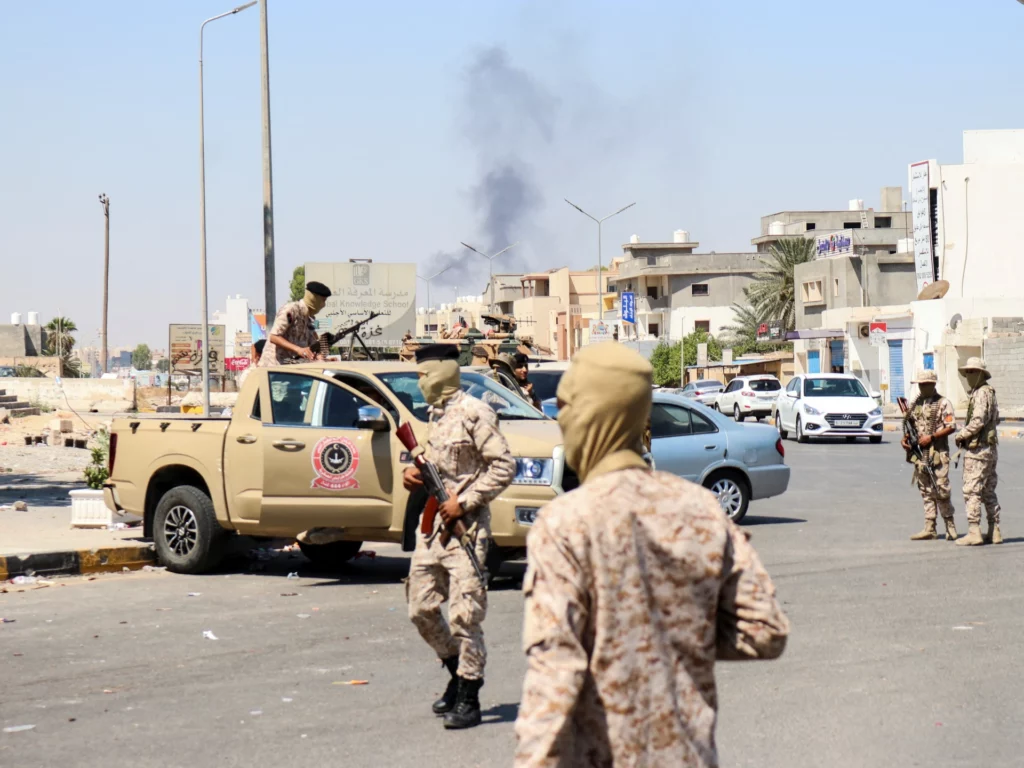
The UN and world leaders are urging dialogue and diplomacy to prevent a return to violence.
UN warns of new Libya conflict as tensions flare up Read More »

Heightened tensions in the Middle East risk a broader regional conflict, foreign ministers of the Group of Seven (G7) industrialized nations warned Sunday. “We, the G7 Foreign Ministers of Canada, France, Germany, Italy, Japan, the United Kingdom and the United States of America and the High Representative of the European Union express our deep concern at the heightened level of tension in the Middle East, which threatens to ignite a broader conflict in the region,” their joint statement said. Urging all involved parties to refrain from “perpetuating the current destructive cycle of retaliatory violence, to lower tensions and engage constructively toward de-escalation,” they said that “no country or nation stands to gain from a further escalation in the Middle East.” Commenting on the video conference by the G7 ministers, Italian Foreign Minister Antonio Tajani, who presided over it, said on X that “we called for a de-escalation and to end all violence.” Tajani said the countries also reaffirmed their commitment to an immediate cease-fire in Gaza and to humanitarian assistance to the besieged Palestinian enclave, adding “our priority is to restore peace in the Middle East.” Tensions have escalated between Lebanon’s Hezbollah and Israel since Tel Aviv assassinated the group’s senior military commander Fuad Shukr in an airstrike on a suburb of Beirut on July 30. Hamas political chief Ismail Haniyeh was assassinated in the Iranian capital Tehran the following day in an attack blamed on Israel, although Tel Aviv has not confirmed or denied its responsibility. Hamas and Iran have vowed to retaliate for Haniyeh’s assassination, while Hezbollah has pledged to respond to Shukr’s killing. Fears have grown over a full-blown war between Israel and Hezbollah amid a months-long exchange of cross-border fire. The escalation comes against the backdrop of an Israeli onslaught on Gaza which has killed nearly 39,600 people since last October following an attack by the Palestinian group Hamas.
G7: Heightened tensions in Middle East risk broader regional conflict Read More »

Oil prices increased on Thursday amid growing tension in the Middle East following the assassination of Ismail Haniyeh, the head of the Palestinian Hamas group’s political bureau, and positive demand outlook in the US, supported by inventory data from the Energy Information Administration (EIA). International benchmark Brent crude traded at $81.44 per barrel at 10.13 a.m. local time (0713 GMT), a rise of 0.74% from the closing price of $80.84 per barrel in the previous trading session. The American benchmark West Texas Intermediate (WTI) traded at $78.33 per barrel at the same time, a 0.53% increase from the previous session that closed at $77.91 per barrel. Haniyeh was killed in an Israeli airstrike on his Tehran apartment the day after attending Iranian President Masoud Pezeshkian’s inauguration, according to announcements made by Iran and Hamas on Wednesday morning. Though Israel has remained silent about Haniyeh’s death, Prime Minister Benjamin Netanyahu has hinted at Tel Aviv’s involvement in his assassination. Escalating geopolitical tensions in the regoin, home to a vast majority of global oil reserves, despite cease-fire negotiations, supported upward price movements by increasing supply risk in the markets. Meanwhile, data indicating a drop in crude stocks in the US, the world’s largest oil-consuming country, lent support to crude oil prices by suggesting that oil demand was increasing. According to data released by the EIA late Wednesday, US commercial crude oil inventories decreased by 3.4 million barrels to 433 million barrels during the week ending July 26. The drop in inventory was well above the market prediction of a 1.6 million barrels fall. However, the rise of the US dollar against other currencies limited further price rises. Strong dollar ramped up prices for non-US currency holders and discouraged investors. The US dollar index rose by 0.09% to 104.18 at 9.58 a.m. local time (0658 GMT), compared to the previous trading session.
Oil up amid growing geopolitical conflicts in Middle East Read More »

US and Saudi negotiators prioritize a bilateral security accord, part of a broader effort to enhance regional stability amid ongoing challenges.
US, Saudi Arabia closing in on security, nuclear deal Read More »

Saudi Arabia, amidst the ongoing war in Gaza, officially announced the beginning of the Muslim holy fasting month of Ramadan on Monday.
Ramadan start amid Gaza war Read More »