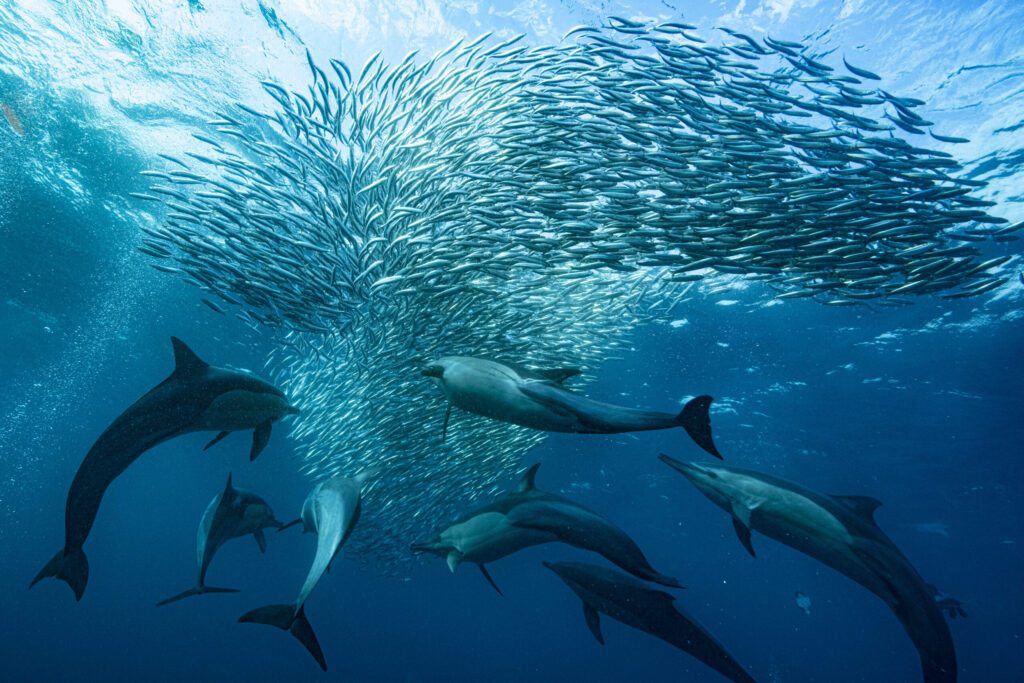
Experts warn that the number of fish participating in South Africa’s sardine migration, the largest animal movement in the world by biomass, may decline due to warming sea temperatures driven by the climate crisis. Known as the “KwaZulu-Natal Sardine Run,” this massive, one-way migration spans 1,500 kilometers from temperate regions to the Indian Ocean and involves billions of sardines. According to an article titled “The Mass Migration of Sardines in Southeast Africa: An Ecological Trap,” prepared by academics from various South African universities and research centers, the migration occurs along the Agulhas Current—a swift ocean current also supporting various predatory birds and marine life. This migration is crucial for local economies as it provides significant commercial income. Professor Lorien Pichegru from Nelson Mandela University’s Coastal and Marine Research Institute highlighted that the migration remains mysterious in many aspects. He described the Sardine Run as the largest animal movement in the world by biomass, underscoring its importance for numerous predators, particularly seabirds. Pichegru explained, “Cape gannets, for example, time their breeding cycles to coincide with the sardine run, ensuring that their young hatch during a period of abundant and easily accessible food. Many animals synchronize their life cycles with the sardine run.” He also noted that sardines do not thrive in warm waters and that climate change is adversely affecting them. “Sardines are declining in Africa due to climate change and overfishing pressures. Their 2-3 year lifespan means their survival depends on the successful development of their eggs and larvae, which is directly impacted by sea temperatures. Higher temperatures make it harder for larvae to grow and mature, leading to a potential decline in sardine numbers. This could halt the sardine run in the coming years, affecting many animals, including sharks, and further endangering the already threatened Cape gannet. Fishermen dependent on these fish for their livelihood would also be impacted, disrupting the entire food chain.” Pichegru further pointed out that ongoing oil and gas exploration in the region affects the habitat, with seabed excavation creating significant noise pollution that harms marine life. Concerns about potential oil spills were also raised. “The Agulhas Current, one of the fastest currents globally, could spread the effects of a potential spill over a large area,” Pichegru warned. The 1 Ocean Foundation, established under the French National Center for Scientific Research (CNRS) and supported by UNESCO, is documenting this migration with scientists, artists, and activists through their project “The Great Migration of Life.” Alexis Rosenfeld, an underwater photographer and co-founder of the foundation, stated that their project aims to “make the invisible visible” and emphasize the importance of biodiversity. The project name reflects its significance. Rosenfeld explained that their motivation stemmed from concerns over natural gas and oil exploration off South Africa’s coast. Rather than directly opposing the projects, they chose to illustrate the potential consequences through their film. Rosenfeld said, “We believe in the power of positive narratives. By showcasing the endangered ecosystem and the great migration of life, we aim to highlight its beauty, which is a more impactful approach than direct confrontation.” He also noted that climate change is a significant factor affecting their project. “Climate change has a substantial impact on ocean currents, influencing migrations. While the sardine migration typically happens every year, we observed it less frequently in recent years and now see it restricted. This is a direct result of climate change.” Rosenfeld concluded by emphasizing the migration’s scale: “Sometimes, you can’t see in front of you because the view is filled with animals. You might find yourself surrounded by millions of sardines, dozens of swimming birds, and 20-30 dolphins, making you forget where you are and what you’re doing.”