UN

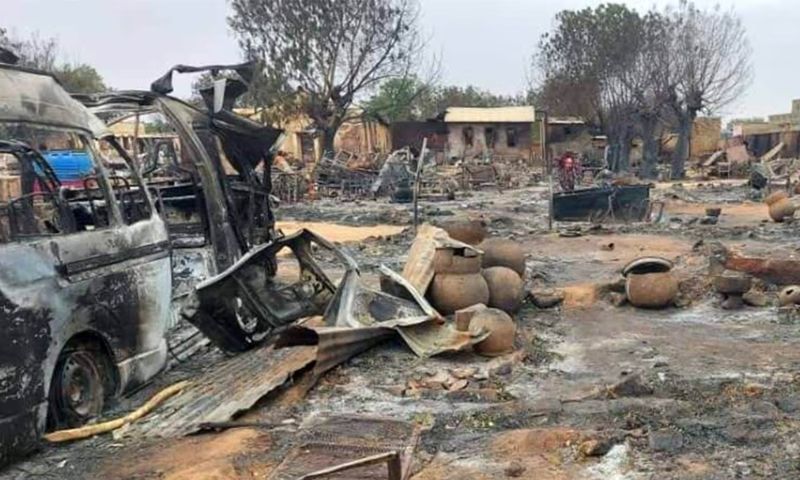
UN delegates call for immediate end to hostilities in the Middle East

During the UN General Assembly, foreign ministers from Indonesia, Denmark, and Trinidad and Tobago urged an end to hostilities in the Middle East. Danish Foreign Minister Lars Løkke Rasmussen emphasized the dire situation, stating, “Hundreds of thousands have been displaced, and there is a very real risk of an all-out regional war that would impact us all. This must end, and it must end now.” The Trinidad and Tobago foreign minister echoed his concerns, expressing distress over the escalating conflict and the ongoing war in Gaza, describing the situation as deeply troubling. UN Secretary-General Antonio Guterres has consistently called for an end to the violence, warning that Lebanon must not become “another Gaza.” These calls for peace come amid a sharp increase in fighting between Israel and Hezbollah, with recent Israeli strikes in Lebanon resulting in hundreds of casualties. An airstrike in Beirut reportedly killed Hassan Nasrallah, the leader of Hezbollah, prompting Iran’s Supreme Leader to vow retaliation.

UN delegates call for immediate end to hostilities in the Middle East Read More »
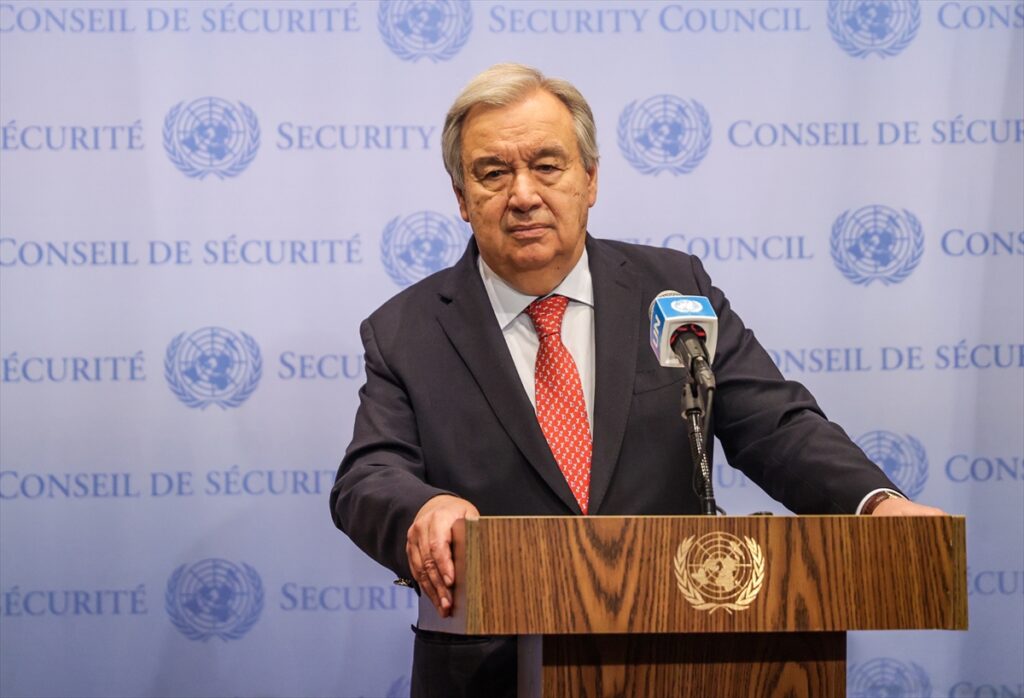
UN: World cannot afford Lebanon to become another Gaza

 UN Secretary-General Antonio Guterres said on Wednesday that the world cannot afford Lebanon to become another Gaza, emphasizing that an all-out war “must be avoided at all costs.” “The people of Lebanon, as well as the people of Israel and the people of the world, cannot afford Lebanon to become another Gaza,” Guterres told a UN Security Council meeting on the Middle East situation. He called for an immediate cessation of hostilities and urged all parties to take concrete steps toward implementing UN Security Council Resolutions 1559 and 1701. “Civilians must be protected. Civilian infrastructure must not be targeted,” he added. The UN chief also emphasized the need for the safety and security of all UN personnel, saying international law must be respected by all sides. “Let us say in one clear voice, stop the killing and destruction, tone down the rhetoric and threats step back from the brink. An all-out war must be avoided at all costs. It would surely be an all-out catastrophe,” he warned. The UN chief highlighted that recent exchanges of fire between Lebanon and Israel have repeatedly violated Security Council Resolution 1701, as has the daily use of weapons by non-state armed groups, which also violates Resolutions 1559 and 1701.  Guterres also revealed that escalating violence has forced nearly 200,000 people in Lebanon and over 60,000 people in northern Israel to flee their homes since October of last year. “The communities of northern Israel and southern Lebanon must be able to return to their homes and live in safety and security without fear,” he said, noting that many lives have been lost.  The secretary-general underscored the need for respecting Lebanese sovereignty and allowing the Lebanese state to exercise full control over weapons within its borders. He reaffirmed the UN support for strengthening the Lebanese Armed Forces to help stabilize the region. “All of this must stop,” Guterres said, reiterating the urgent need for peace and stability in the region. Israel has launched waves of deadly airstrikes on Lebanon since Monday morning, killing nearly 610 people and injuring over 2,000 others, according to Lebanese health authorities. Hezbollah and Israel have been engaged in cross-border warfare since the start of the Israeli war on Gaza, which has killed over 41,400 people, mostly women and children, following a cross-border attack by Hamas last Oct. 7. The international community has warned against the strikes on Lebanon, as they raise the specter of spreading the Gaza conflict regionally.

UN: World cannot afford Lebanon to become another Gaza Read More »

Nigeria advocates for permanent African seat on UN security council

Nigeria has joined the growing call among African leaders for permanent representation on the United Nations Security Council. During the 79th U.N. General Assembly in New York, Nigerian Defense Minister Mohammed Badaru emphasized that such a change would enhance fairness and inclusivity. “Having participated in 41 different U.N. missions globally, Africa deserves a permanent seat on the Security Council for justice and equity,” he stated. Other African leaders are echoing this sentiment. South African President Cyril Ramaphosa recently remarked that relying on a select few for global security is “unjust and unsustainable.” Kenyan President William Ruto also criticized the current multilateral system as inadequate. Historically, many African nations were still under colonial rule when the Security Council was established. In 2005, the African Union adopted the Ezulwini Consensus, advocating for at least two permanent and five non-permanent seats for Africa on the council. Currently, the U.N. General Assembly elects five new members for two-year terms, with Africa holding three rotational seats on the 15-member council. Patrick Agbambu, founder of Security Watch Africa Initiative, noted that Africa’s lack of unity is a major barrier to securing representation. “Without a united front, Africa cannot effectively advocate for a permanent seat,” he said, highlighting the divisions within the African Union. Recently, the United States, a permanent member of the Security Council, expressed openness to two African seats, though without veto power. Security analyst Senator Iroegbu acknowledged the need for African representation but cautioned that it won’t resolve all issues. “Nigeria, as Africa’s most populous nation with significant economic potential, is well-positioned, but Security Council membership alone won’t ensure stability unless underlying issues are addressed,” he said.

Nigeria advocates for permanent African seat on UN security council Read More »

Gang violence spreading across Haiti 

Gang violence is still spreading across Haiti, while the UN-backed mission to combat crime in the Caribbean country continues to lack sufficient funds to act, UN human rights expert William O’Neill warned on Friday. O’Neill, who concluded a visit to Haiti this week, said gangs are invading new territories as weapons and ammunition enter the country despite an international embargo. “Areas previously not impacted by gang violence are now directly impacted, with galloping inflation, lack of basic goods and flows of internally displaced people,” O’Neill warned at a news conference in Port-au-Prince. “The human rights and humanitarian consequences are dramatic.” He warned that the UN-backed mission, led by 400 Kenyan police officers who arrived in Haiti at the end of June, has deployed less than one-quarter of the promised contingent and has less than two weeks left in their initial one-year mandate. “The equipment it has received is inadequate, and its resources are insufficient,” he said. At least 2,900 troops were promised by countries including Antigua, Barbados, Bangladesh, Belize, Benin, Chad, Bahamas and Jamaica to help Haitian police. More than 1,379 people were killed or injured in Haiti, and 428 kidnapped from April to June, according to the UN. “The solutions are there, and they already exist. But efforts must be redoubled immediately,” said O’Neill. He pointed out that the population continues to suffer from sexual violence, displacement and children are being forcibly recruited into gangs. The children, he said, are “being used to carry out attacks against public institutions and police operations.” “Youth are losing hope of a better future,” he said. Less than one-third of Haiti’s health services are functioning normally, and almost 5 million people are suffering from hunger.

Gang violence spreading across Haiti  Read More »

UN warns developing regions may fall behind in digital progress

UN officials have warned that as the digital landscape evolves, developing regions risk being left behind. While celebrating progress in digital government, UN Assistant Secretary-General for Economic Development, Navid Hanif, noted ongoing disparities between regions. “The development of digital government is on the rise globally, enhancing government services and public engagement,” Hanif stated. However, he emphasized that 1.37 billion people still lack access, remaining on the wrong side of the digital divide. The UN also presented data highlighting the world’s top digital performers, with Denmark leading the pack. Vincenzo Aquaro, Chief of the UN Department of Economic and Social Affairs Digital Government Branch, pointed out that Germany, Spain, and Saudi Arabia are also among the top 18 countries. The UN is urging increased support for developing nations, particularly in Africa, to help bridge digital inequalities.

UN warns developing regions may fall behind in digital progress Read More »

Scroll to Top