
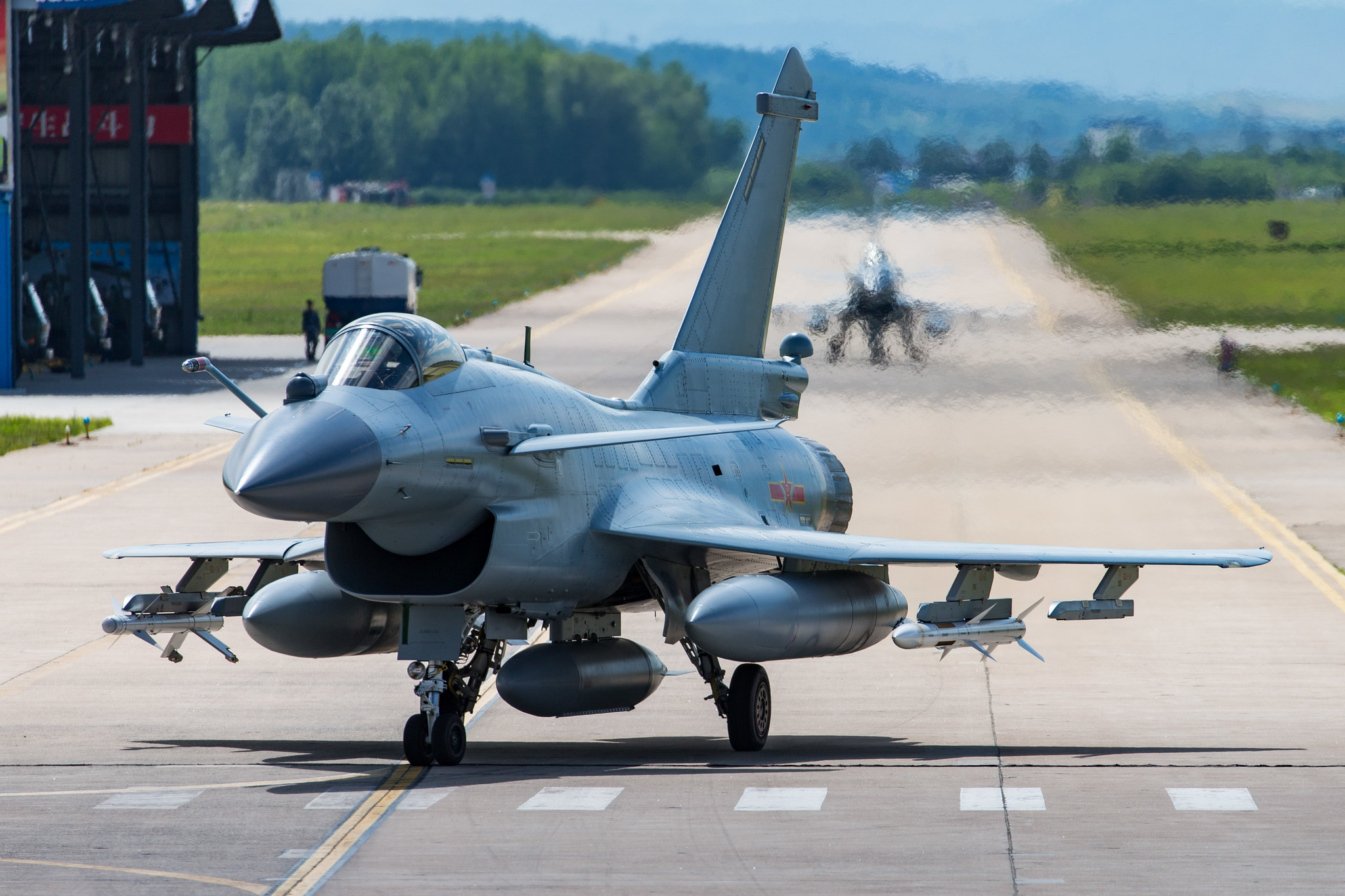
The Algerian Air Force is reportedly preparing to induct Chinese-made military aircraft to modernize its fleet.
Reports indicate Algiers may acquire Chengdu J-10C multirole fighters and Shaanxi KJ-500 airborne early warning platforms.
If officially confirmed, aircraft deliveries scheduled for 2027 will profoundly alter the balance of airpower across North Africa.
The potential acquisition marks a strategic departure for Algeria, whose combat fleet traditionally relies heavily on Russian-manufactured systems.
Algiers currently operates Russian platforms, including Su-30MKA fighters, Su-35s, Su-34M strike jets, and incoming advanced Su-57 stealth aircraft.
Integrating Chinese hardware allows Algeria to maintain operational readiness while reducing structural dependence on war-strained Russian supply chains.
The advanced J-10C fighter introduces cutting-edge active electronically scanned array radar and formidable PL-15 long-range air-to-air missiles.
This platform significantly enhances Algerian capabilities in regional interception, maritime strike coordination, and modern air-defense suppression missions.
Meanwhile, the KJ-500 platform introduces unprecedented airborne command architecture to maximize regional network-centric warfare capabilities.
Deploying early warning aircraft allows real-time data synchronization between fighters, surface-to-air missile batteries, and terrestrial command networks.
These airborne sensors will dramatically expand strategic surveillance over the Mediterranean Sea, the Sahara, and porous southern borders.
Connecting distinct Chinese software and datalinks with an overwhelmingly Russian-dominated fleet presents considerable long-term logistical challenges.
Training personnel, synchronizing communications, and managing dual supply pipelines will introduce deep complexity into Algerian military infrastructure.
However, Algeria possesses the robust financial capacity to absorb these integration costs with annual defense spending topping twenty billion dollars.
For Beijing, exporting high-end battlespace management systems signals an evolution from supplying cheap hardware to delivering advanced warfare networks.
Securing a major Mediterranean reference customer substantially elevates China’s growing military and defense-industrial footprint across the African continent.
Ultimately, the procurement supports Algeria’s pursuit of strict military autonomy without accepting restrictive Western political conditions.
By balancing Russian assets with Chinese technology, Algiers safely insulates its defense capabilities against shifting global geopolitical pressures.