
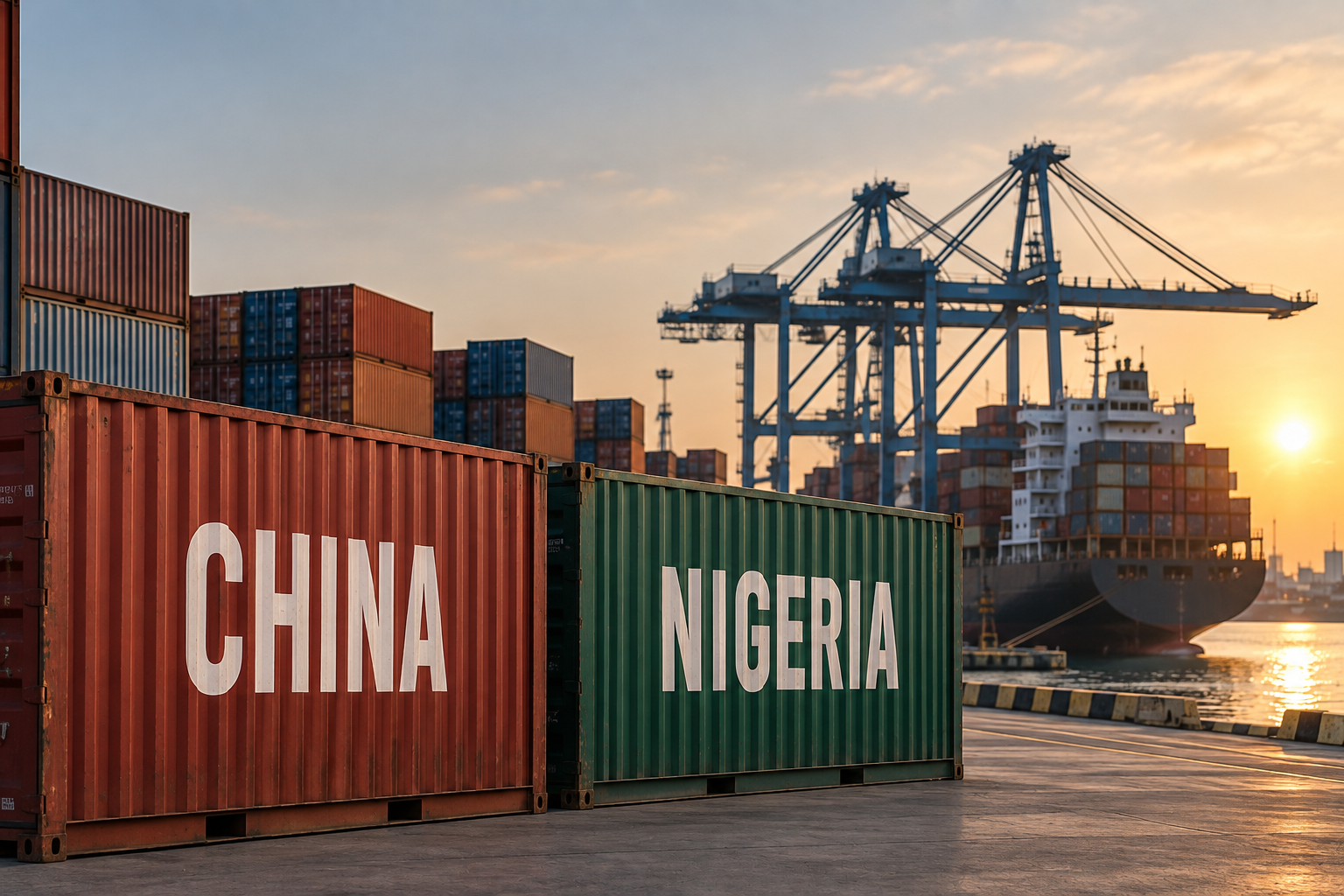
China supplied nearly 40% of Nigeria’s imports during the first half of 2026, according to official trade figures.
Goods imported from China reached N11.01 trillion, or more than $8 billion.
The figures highlight China’s growing position as one of Nigeria’s most important trading partners.
However, they also reveal a large trade imbalance between the two countries.
Nigeria China trade reaches new levels
Figures from Nigeria’s National Bureau of Statistics show Chinese goods dominated imports during the first six months of 2026.
According to Business Insider Africa, Nigeria imported N5.10 trillion worth of Chinese goods during the first quarter.
That figure increased to N5.92 trillion in the second quarter.
Chinese products accounted for more than 41% of Nigeria’s total import bill during the second quarter alone.
By comparison, imports from the United States stood at N2.81 trillion in the first quarter.
They then fell to N1.01 trillion during the second quarter.
What does Nigeria import from China?
Nigeria imports a wide range of products from China.
Major shipments included solar panels and telecommunications equipment.
Agricultural machinery and industrial materials were also among the main imports.
These products support several important sectors of Nigeria’s economy.
China has therefore become an important supplier of equipment and manufactured goods to the country.
Nigeria records large trade deficit with China
The trade relationship remains heavily weighted towards Chinese exports to Nigeria.
Nigeria exported around N1.09 trillion worth of goods to China during the same six-month period.
As a result, Nigeria recorded a trade deficit of approximately N9.92 trillion with China.
The country imported more than ten times the value of goods it exported to the Chinese market.
Regulators raise concerns over counterfeit goods
The growth in trade has also brought concerns over counterfeit and substandard products.
Nigeria’s National Agency for Food and Drug Administration and Control has raised concerns about foreign networks allegedly involved in counterfeit goods.
Business Insider Africa, citing The PUNCH, reported that NAFDAC officials said some foreign counterfeit operators had established operations inside Nigeria.
Local business representatives have also warned that fake products can hurt legitimate companies.
They say counterfeit goods can reduce sales and damage the reputation of established brands.
However, concerns over illegal goods should be distinguished from the much larger volume of legitimate trade between Nigeria and China.
The latest figures show that China remains a major source of machinery, technology and other products for Africa’s most populous country.