


Nigeria launches Malaria vaccination campaign for young children
Nigeria has begun implementing a malaria vaccination programme in an effort to ease the world’s highest burden of the mosquito-borne disease which last year killed some 200,000 people. The vaccination schedule targets young children, with the first dose administered at five months. One of the first areas where the programme is being rolled out is the southern state of Bayelsa, which has one of the country’s highest rates of malaria. Rebecca Godspower brought her six-month-old baby to a clinic for the vaccination after having twice treated him for malaria. “Now that there’s a vaccine for malaria, at least I’m happy, I am glad that stress won’t be there again,” she said. A view echoed by another mother, Esther Michael, who also visited the clinic. “I’m happy to bring my child to the health centre to take a vaccine because we hear that malaria is killing other children.”
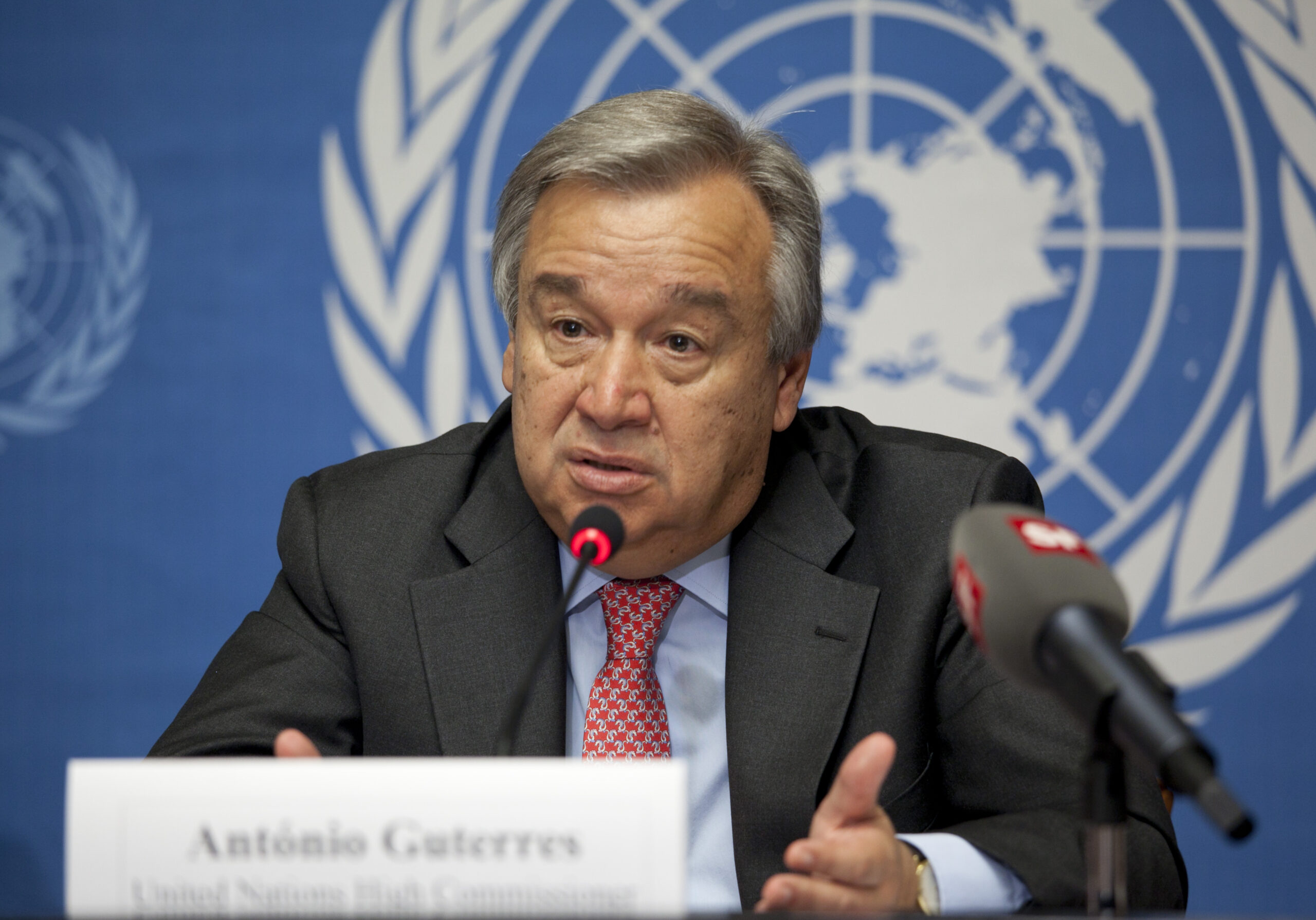
Guterres calls for climate justice in Africa during G20 visit
UN Secretary-General António Guterres visited South Africa during its G20 Presidency, emphasizing the urgent need for climate justice. He stressed that Africa, with its young and growing population, rich cultural and natural diversity, and entrepreneurial spirit, continues to face the lingering injustices of its colonial past. “I am here at a critical time as South Africa assumes the G20 presidency. Africa’s potential is undeniable… but it needs climate justice. The continent is on the frontlines of the climate crisis. Despite contributing minimal emissions, climate change is wreaking havoc on your people and economies. Africa is warming faster than the global average. We must limit global temperature rise to 1.5°C to prevent this crisis from spiraling further,” Guterres said. The UN chief also expressed concern about the escalating chaos in the Middle East, particularly following the recent ousting of Syrian President Bashar Al-Assad, though he maintained a sense of cautious optimism about the region’s future.

Tensions rise as Madagascar opposition battles in city hall elections
Madagascar’s opposition faces a crucial battle in city hall elections amid tensions and irregularities, as President Rajoelina seeks to consolidate power.

German president meets Nigerian leader to enhance energy ties
German President Frank-Walter Steinmeier visited Nigeria to discuss enhancing the energy partnership and economic reforms with Nigerian President Bola Ahmed Tinubu.

Nigeria launches malaria vaccine program for young children
The program prioritizes young children, with the first dose administered at five months of age

Is a jihadist coup brewing against al-Burhan?
This latest critique follows a similar outburst by Youssef during a forum in Istanbul last week, where he accused al-Burhan of betrayal

SAF airstrikes kill nearly 200 civilians in Sudan, targeting markets
The most deadly strike occurred in Kabkabiya, where 86 people were killed, many of them local traders

Sierra Leonean girl, 11, survives three days at sea after shipwreck
The rescue took place when the crew of Germany’s CompassCollective was en route to another emergency and heard cries for help from the water

Malaria cases surge in 2023, African children hit hardest: WHO
Malaria cases surged by 11 million in 2023 compared to the previous year, reaching an estimated 263 million, the World Health Organization (WHO) reported on Monday. Deaths remained steady at 597,000, with African children under five bearing the brunt of the disease. “Malaria remains a preventable and treatable disease, yet it disproportionately affects the most vulnerable—especially young children and pregnant women in Africa,” said WHO Director-General Dr. Tedros Adhanom Ghebreyesus. While cases and deaths dropped significantly between 2000 and 2015, progress has since stalled and reversed, exacerbated by setbacks during the COVID-19 pandemic. The infection rate climbed from 58 to 60.4 cases per 1,000 at-risk individuals between 2015 and 2023, far exceeding WHO’s target. Similarly, deaths per 100,000 at risk reached 13.7, more than twice the target. Innovative tools such as two vaccines and next-generation bed nets offer hope, but challenges persist, including climate change, displacement, drug resistance, and funding shortfalls. In 2023, $4 billion was allocated to fight malaria—less than half of the $8.3 billion required, the WHO noted. Despite these barriers, progress in some regions highlights the potential to combat this enduring global health threat.

Terrace farming: An African innovation revolutionizing agriculture
Terrace farming is a groundbreaking agricultural technique pioneered by ancient African civilizations

Mozambique unrest disrupts South32’s Mozal plant
Post-election protests in Mozambique have disrupted operations at South32’s Mozal Aluminium smelter and impacted chrome exports from South Africa.

South Sudan president fires top officials
In a significant shake-up, South Sudan’s President Salva Kiir has fired top officials, including the military chief, police chief, and central bank governor.

Zambian court bars Edgar Lungu from presidential run in 2026
The constitutional court of Zambia ruled Edgar Lungu ineligible for the 2026 election, citing his prior terms as a violation of the two-term limit.

Chinese mining threatens Congo’s endangered wildlife reserve
A Chinese mining company is operating illegally within the boundaries of Congo’s Okapi Wildlife Reserve, a protected World Heritage site, threatening its biodiversity and ecosystem.

Boko Haram kills over a dozen Nigerian fishermen in Niger
Boko Haram militants killed 14 Nigerian fishermen who had fled to Niger to escape the ongoing conflict in their home country.

At least 8 dead after building collapse in Cairo
The Health Ministry confirmed the deaths and reported that three others were injured and taken to the hospital for treatment.

France begins military withdrawal from Chad with Mirage departure
The jets, part of France’s 1,000-strong force in Chad, were sent back to a base in Nancy, eastern France, following a farewell ceremony attended by Chadian military officials

Uganda’s Besigye faces legal setbacks in court
Kizza Besigye, a prominent Ugandan opposition figure, is facing legal challenges as his trial has been adjourned.

Kenyan police crack down on women’s rights protest
Kenyan police used excessive force to disperse a peaceful women’s rights march in Nairobi, highlighting the ongoing issue of gender-based violence in the country.

French court convicts author Charles Onana for genocide denial
The Paris court found that Onana’s book, Rwanda, the Truth About Operation Turquoise, published in 2019, violated French laws against genocide denial and incitement to hatred

Congo’s Okapi wildlife reserve threatened by illegal gold mining
A UN-protected wildlife reserve in Congo is facing growing threats from illegal gold mining, with a Chinese company accused of significantly damaging the environment. For eight years, Kimia Mining, a Chinese-owned firm, has expanded its operations inside the Okapi Wildlife Reserve, a UNESCO World Heritage Site. Local communities and conservationists say the company’s activities are wreaking havoc on the area’s biodiversity. Established as a protected area in 1996, the Okapi Wildlife Reserve covers over 13,000 square kilometers (5,000 square miles) of rainforest and is home to unique species, including the okapi, a forest giraffe. The reserve holds about 15% of the world’s remaining okapi population, estimated at just 30,000 animals. It also plays a crucial role in mitigating climate change, as part of the Congo Basin rainforest, a major carbon sink. However, over the years, the boundaries of the reserve have been gradually reduced under unclear circumstances, allowing mining companies like Kimia Mining to operate within its limits. Despite being a protected area, the reserve has long been a site for illegal mining, with authorities cracking down only after the arrival of the Chinese firm. Kimia Mining has allowed limited access for locals to mine leftover materials, but many cannot afford the fees. Muvunga Kakule, a 44-year-old former artisanal miner, says he has lost nearly all his income since the Chinese arrived. He no longer mines or sells produce, as the company refuses to buy from local farmers. “Our life has not been the same since the Chinese came and chased us out of the bush. We can no longer work or send our children to school,” he says. Conservation groups are working to protect the reserve, but they face difficulties in enforcement due to unclear legalities surrounding the boundaries. Kimia Mining has recently renewed its mining permits until 2048, according to government records. While the Congo government’s mining registry claims it is working with the ICCN (the body responsible for managing protected areas) to update the reserve’s boundaries, it is unclear when action will be taken. An internal government memo from August indicated that all mining operations in the reserve, including Kimia Mining, would eventually be shut down, but no timeline has been set. Aime Vusike Kiruzi, director of Epulu Radio, based inside the reserve, expressed concern over the loss of wildlife. “We are no longer seeing some species that used to be well protected here,” he said. “In our time, we saw okapi, elephants, antelopes, even monkeys. But it is no longer easy to see them.” Kiruzi called on Congolese authorities to protect the reserve for future generations, so they can witness the same wildlife he saw growing up.

Thousands search for loved ones at Syria’s Saydnaya prison
Thousands of Syrians gathered on Monday outside Saydnaya military prison, just north of Damascus, hoping to find their loved ones. Civil defense workers and teams from the White Helmets were seen digging inside the prison, searching for hidden cells or underground chambers. The notorious prison, known as the “human slaughterhouse,” has long been a symbol of fear and suffering for the Syrian people. Ghazwan Hussein, who came to search for relatives, said, “We have detainees who were taken since 2011, 2012, and 2013.” During the early days of the Syrian conflict, as insurgents made rapid advances across the country, they broke into prisons and security facilities to release political prisoners and many of those who had disappeared since the war began. On Sunday, reports emerged of women detainees, some with children, screaming as men forcibly broke the locks off their cell doors. Syria’s prisons have gained a horrific reputation for their brutal conditions. Human rights organizations, whistleblowers, and former detainees report systematic torture, while secret executions have been carried out at more than two dozen facilities controlled by Syrian intelligence. Amnesty International estimates that up to 13,000 people were secretly executed at Saydnaya between 2011 and 2016. In 2013, a Syrian military defector known as “Caesar” smuggled out over 53,000 photographs, which human rights groups say provide clear evidence of widespread torture, disease, and starvation within Syria’s prison system.

Africa’s unexpected ski slopes
Africa is full of surprises, including some unexpected winter havens

Ethnic clashes claim lives in northern Cameroon
Three people were killed and several others injured in clashes between two ethnic groups in northern Cameroon over cattle theft.

Tanzania marks independence with mass prisoner release
Tanzania’s president pardoned 1,548 prisoners on Independence Day to mark the country’s liberation from British colonial rule.

Sudan appeals to Arab League to halt foreign involvement
General al Burhan-controlled government has officially requested an urgent Arab League meeting to address foreign interference in its internal affairs.

Herders attack village in Chad, leaving many dead
At least 11 people were killed in southern Chad during a clash between nomadic herders and farmers.