
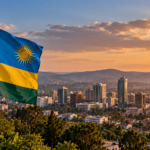

Tanzania marks independence with mass prisoner release
Tanzania’s president pardoned 1,548 prisoners on Independence Day to mark the country’s liberation from British colonial rule.

Sudan appeals to Arab League to halt foreign involvement
General al Burhan-controlled government has officially requested an urgent Arab League meeting to address foreign interference in its internal affairs.

Herders attack village in Chad, leaving many dead
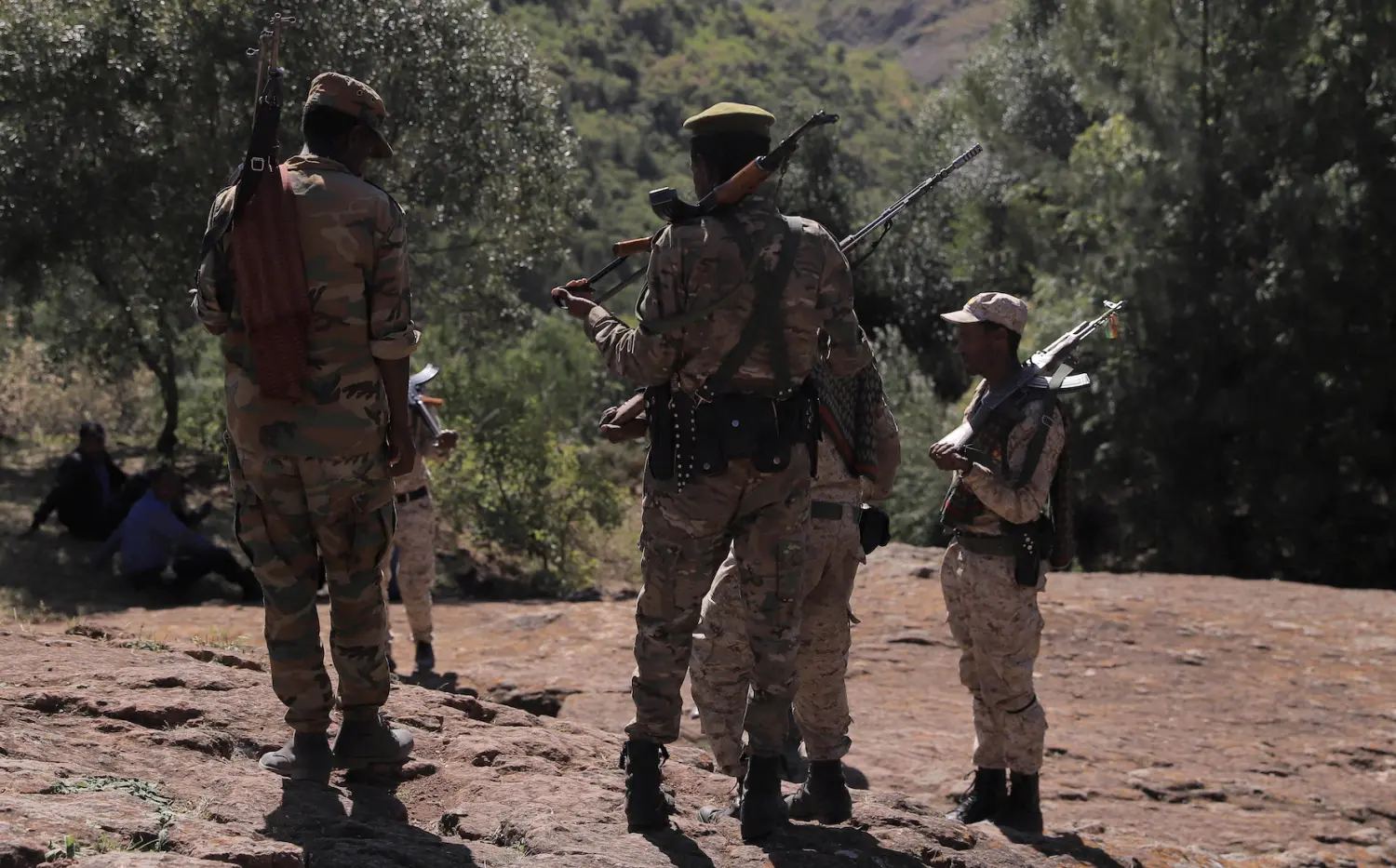
At least 11 people were killed in southern Chad during a clash between nomadic herders and farmers.

Fierce clashes in Sudan’s capital kill 31, Atbara Airport hit by drones agai...
The Khartoum Southern Belt Emergency Room reported that 28 people died and 37 were injured in a SAF drone attack on a fuel station near New Soug Sitta in the Mayo district

21 civilians killed by armed attackers in Niger
Attack occurred on Dec. 5 at border junction between Niger, Mali and Burkina Faso, reports state-run media

ICC prosecutors seek conviction of CAR militia leaders
Both men denied the charges at the start of their trial in 2021

Piri Piri: Africa’s spicy gift to the world
Love spicy food? One of the most iconic chili peppers, piri piri, traces its fiery origins back to Africa
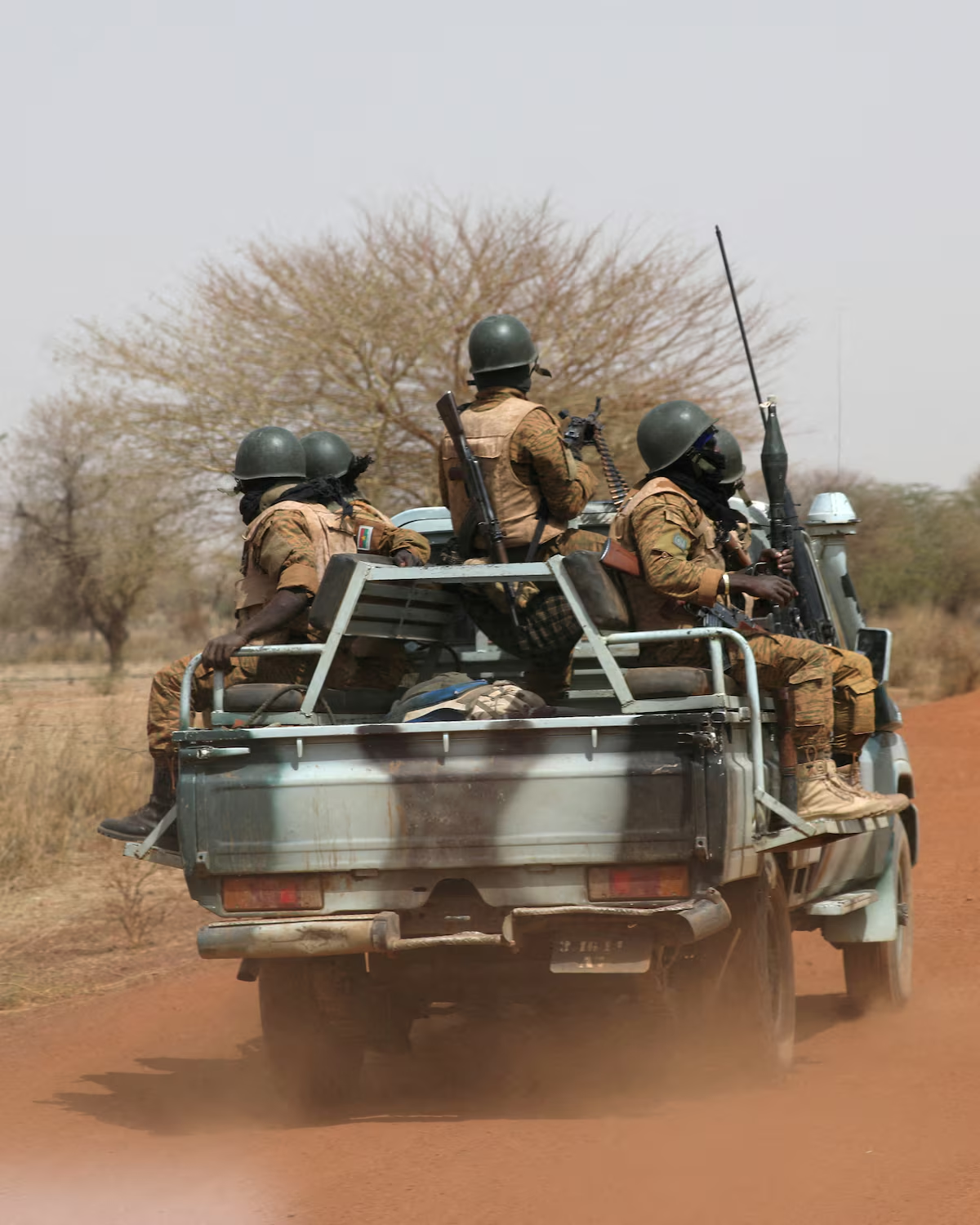
Two killed in Ghana presidential election violence
Gana’da 7 Aralık’ta düzenlenen cumhurbaşkanı ve milletvekili seçimlerinde yaşanan şiddet olaylarında 2 kişinin hayatını kaybettiği bildirildi. Bağımsız Seçim Hizmetleri Direktörü Benjamin Bano-Bio, yaptığı açıklamada, ülkede dün düzenlenen seçimler sırasında farklı seçim bölgelerinde şiddet olaylarının yaşandığını belirtti. Bano-Bio, çıkan olaylar nedeniyle dün başkent Akra ve Tolon bölgesinde 2 kişinin öldüğünü, çok sayıda kişinin de yaralandığını kaydetti. Diğer yandan, ulusal basındaki haberlere göre de Damango bölgesinde bugün oy sayımı sırasında yaşanan şiddet olaylarında 1 kişi hayatını kaybetti, bölgedeki seçim komisyonu ofisi kundaklandı. Resmi olmayan sonuçlara göre, ülkede dün yapılan seçimlerde ana muhalefetteki Ulusal Demokratik Kongre (NDC) adayı eski Cumhurbaşkanı John Dramani Mahama, oyların yüzde 55,1’ini alarak önde gidiyor. İktidardaki Ulusal Vatansever Partisi (NPP) adayı mevcut Cumhurbaşkanı Yardımcısı Mahamudu Bawumia ise yüzde 41,7 oyla ikinci sırada yer alıyor. Ülkede dün düzenlenen cumhurbaşkanı seçiminde 12 aday yarışmıştı.

Burkina Faso Junta appoints new prime minister
Lorem ipsum dolor sit amet, consectetur adipiscing elit, sed do eiusmod tempor incididunt ut labore et dolore magna aliqua. Ut enim ad minim veniam, quis nostrud exercitation ullamco laboris nisi ut aliquip ex ea commodo consequat. Duis aute irure dolor in reprehenderit in voluptate velit esse cillum dolore eu fugiat nulla pariatur. Excepteur sint occaecat cupidatat non proident, sunt in culpa qui officia deserunt mollit anim id est laborum.

50 Somali migrant survivors return to Mogadishu after tragedy
Nearly 50 Somali survivors of a migrant boat tragedy arrived in Mogadishu on Saturday, where they were greeted by government officials. The group had been rescued after two boats they were traveling on capsized off the coast of Madagascar, leaving around 25 people dead. Emotional scenes unfolded at the airport as survivors were reunited with family members. Haboon Deeqa, whose sister perished in the tragedy, expressed her grief: “I send my condolences to those who died, including my sister Hanan. I’m relieved my brother Ahmed has returned safely,” she said. “I’m very thankful to everyone who helped bring them home.” The survivors had spent nearly a month at sea, hoping to reach the French island of Mayotte, about 1,600 kilometers away. “We were 75 in total, and 28 people died. My cousin was among the victims. Forty-seven of us, myself included, survived,” said Ahmed Hussein Mahadalle. Many young Somalis are driven to undertake such perilous journeys due to unemployment, poverty, and drought in the Horn of Africa, hoping for a better life in Europe. Somalia’s foreign affairs minister recently urged youth to consider the risks and prioritize their safety. Maryan Yasin, Somalia’s presidential advisor on refugee affairs, expressed relief at the group’s safe return and emphasized the government’s commitment to addressing the root causes of such dangerous migration. “They assured me they will never take the same risk again,” she said, adding that solving the issue will require a collective effort. The United Nations has raised alarms about the increasing numbers fleeing conflict and drought in the Horn of Africa.

Deadly shelling targets fuel station in Sudanese capital
At least 28 civilians were killed in a shelling attack on a fuel station in Khartoum, Sudan.

Mahama declared Ghana’s president-elect as Bawumia concedes defeat
At 66, Mahama returns to power after a term as president from 2012 to 2016, during which he served as a prominent figure in Ghanaian politics

Niger’s uranium mine: A focal point in rising French-Niger tensions
Since the military coup in July 2023 ousted Niger’s pro-French President Mohamed Bazoum, the junta has blocked uranium exports, driving Somaïr toward financial collapse

Cassava: Feeding Africa and fueling tradition
Cassava, a humble root vegetable, holds a vital role in the lives of over 500 million Africans

Ethiopia recovers from six-hour power outage
Ethiopia experienced a nationwide power outage lasting nearly six hours, but power was fully restored.

Traore selects new PM following Burkina government shake-up
Rimtalba Jean Emmanuel Ouedraogo becomes Burkina Faso’s new prime minister as the junta-led government undergoes a major restructuring under Captain Traore.

Power outage leaves millions in Ethiopia without electricity
Ethiopia’s nationwide blackout caused by a grid failure highlights the challenges of maintaining a stable power supply for Africa’s second most populous nation.

RSF points to Manama, Jeddah agreements as key to ending Sudan war
During the workshop, RSF representative Ergani emphasized that Sudan’s current conflict should be the last one

Voting begins in Ghana’s key 2024 elections
Ghanaians cast ballots amid economic challenges

Africa: A continent of contrasts, from deserts to rainforests
Africa is a land of remarkable diversity, home to both vast deserts and lush rainforests

Guinea prosecutor orders probe into journalist’s arrest
A Guinean prosecutor has launched an investigation into the arrest of journalist Habib Marouane Camara, citing concerns over unauthorized actions by security forces under junta rule.
Burkina Faso junta dismisses PM, dissolves government
Burkina Faso’s military junta dismissed the prime minister and dissolved the government without providing a reason, continuing its struggle to address security challenges.

Burhan’s airstrike on mosque kills many in Sudan
An air strike on a mosque in Khartoum North killed seven civilians, marking a brutal continuation of the war between Sudan’s fighting rivals.

Two minibuses collide in Ivory Coast, over 50 casualties
A fiery collision between two minibuses in Ivory Coast killed at least 26 people and injured 28 others, prompting an investigation into the cause.

Sierra Leone begins nationwide ebola vaccination for frontline workers
Sierra Leone has launched a nationwide rollout of the single-dose Ebola vaccine, marking the first such campaign in West Africa since the deadly 2014 outbreak that killed thousands. The 2014 Ebola epidemic, the deadliest in history, primarily affected West Africa, with Sierra Leone suffering nearly 4,000 deaths out of over 11,000 globally. The country also lost 7% of its healthcare workforce to the virus. Cynthia Reffell, a health worker, explained that those most exposed to the disease, such as healthcare workers, police, military officers, and traditional healers, will be prioritized in the vaccination campaign. “We are targeting healthcare workers and front-line workers to prevent the spread,” Reffell said. The campaign, a collaboration between the Sierra Leone government, Gavi, the World Health Organization (WHO), and UNICEF, aims to vaccinate 20,000 frontline workers. Traditional healers have also been enlisted to help encourage community participation. In 2014, no approved Ebola vaccine existed, and the outbreak, which began in Guinea, spread to Sierra Leone and Liberia, causing widespread devastation. Although no new cases have been reported in Guinea for three years, officials remain cautious about ongoing risks in endemic regions.

Victoria Falls: The smoke that thunders
Victoria Falls, continues to captivate visitors with its awe-inspiring beauty

Five killed in protests across Mozambique over election dispute
At least five people were killed and three others seriously injured in protests across Mozambique, including in Maputo, Nampula, and Zambezia, according to police reports. Orlando Mudumane, spokesman for the Police General Command, stated that violent clashes erupted between police and protesters armed with stones, knives, and machetes. The demonstrations were reportedly organized by Venancio Mondlane, a defeated presidential candidate, who claimed that the October 9 election results were fraudulent and declared himself the winner. From his refuge in South Africa, Mondlane called for a nationwide protest from December 4 to 11, aiming to block key infrastructure such as roads, railways, ports, and airports to “restore the truth” about the elections. Outgoing President Filipe Nyusi warned that the unrest could disrupt public sector salary payments, particularly for teachers and nurses, due to Mozambique’s lack of external financial support. Protests escalated in Matola after a 13-year-old boy was fatally shot by a plainclothes police officer. In response, residents blocked access to the Beleluane Industrial Park, home to the Mozal aluminum plant, temporarily halting the company’s truck operations.