Nigeria

Warming sea waters in South Africa threaten fish migration

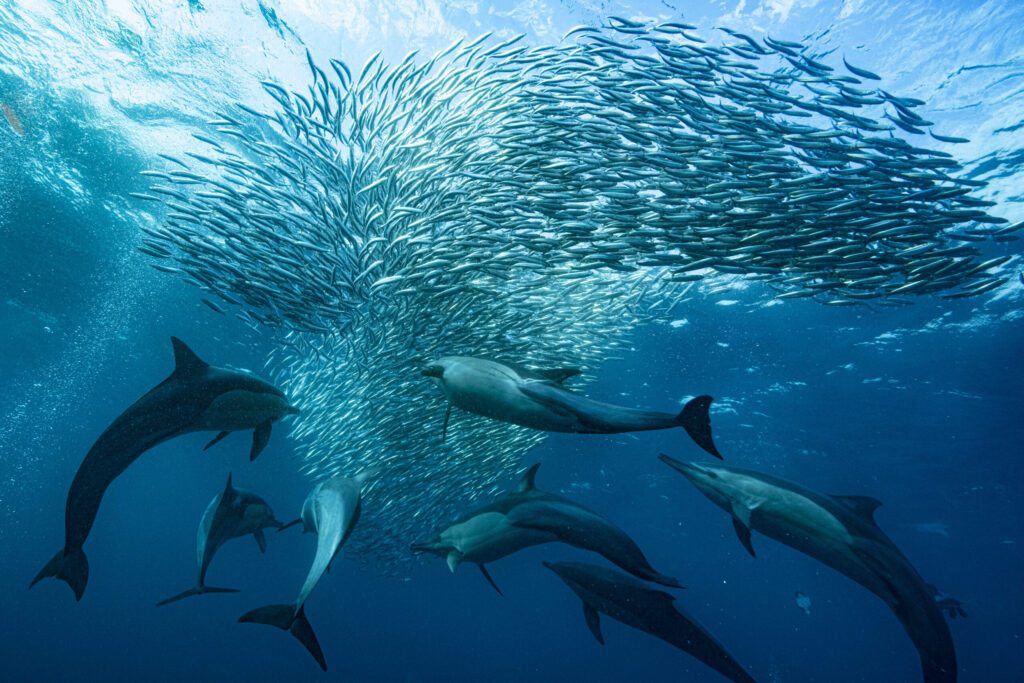
Experts warn that the number of fish participating in South Africa’s sardine migration, the largest animal movement in the world by biomass, may decline due to warming sea temperatures driven by the climate crisis. Known as the “KwaZulu-Natal Sardine Run,” this massive, one-way migration spans 1,500 kilometers from temperate regions to the Indian Ocean and involves billions of sardines. According to an article titled “The Mass Migration of Sardines in Southeast Africa: An Ecological Trap,” prepared by academics from various South African universities and research centers, the migration occurs along the Agulhas Current—a swift ocean current also supporting various predatory birds and marine life. This migration is crucial for local economies as it provides significant commercial income. Professor Lorien Pichegru from Nelson Mandela University’s Coastal and Marine Research Institute highlighted that the migration remains mysterious in many aspects. He described the Sardine Run as the largest animal movement in the world by biomass, underscoring its importance for numerous predators, particularly seabirds. Pichegru explained, “Cape gannets, for example, time their breeding cycles to coincide with the sardine run, ensuring that their young hatch during a period of abundant and easily accessible food. Many animals synchronize their life cycles with the sardine run.” He also noted that sardines do not thrive in warm waters and that climate change is adversely affecting them. “Sardines are declining in Africa due to climate change and overfishing pressures. Their 2-3 year lifespan means their survival depends on the successful development of their eggs and larvae, which is directly impacted by sea temperatures. Higher temperatures make it harder for larvae to grow and mature, leading to a potential decline in sardine numbers. This could halt the sardine run in the coming years, affecting many animals, including sharks, and further endangering the already threatened Cape gannet. Fishermen dependent on these fish for their livelihood would also be impacted, disrupting the entire food chain.” Pichegru further pointed out that ongoing oil and gas exploration in the region affects the habitat, with seabed excavation creating significant noise pollution that harms marine life. Concerns about potential oil spills were also raised. “The Agulhas Current, one of the fastest currents globally, could spread the effects of a potential spill over a large area,” Pichegru warned. The 1 Ocean Foundation, established under the French National Center for Scientific Research (CNRS) and supported by UNESCO, is documenting this migration with scientists, artists, and activists through their project “The Great Migration of Life.” Alexis Rosenfeld, an underwater photographer and co-founder of the foundation, stated that their project aims to “make the invisible visible” and emphasize the importance of biodiversity. The project name reflects its significance. Rosenfeld explained that their motivation stemmed from concerns over natural gas and oil exploration off South Africa’s coast. Rather than directly opposing the projects, they chose to illustrate the potential consequences through their film. Rosenfeld said, “We believe in the power of positive narratives. By showcasing the endangered ecosystem and the great migration of life, we aim to highlight its beauty, which is a more impactful approach than direct confrontation.” He also noted that climate change is a significant factor affecting their project. “Climate change has a substantial impact on ocean currents, influencing migrations. While the sardine migration typically happens every year, we observed it less frequently in recent years and now see it restricted. This is a direct result of climate change.” Rosenfeld concluded by emphasizing the migration’s scale: “Sometimes, you can’t see in front of you because the view is filled with animals. You might find yourself surrounded by millions of sardines, dozens of swimming birds, and 20-30 dolphins, making you forget where you are and what you’re doing.”

Warming sea waters in South Africa threaten fish migration Read More »

Algeria and Niger have agreed to “revive” their relations

Algeria and Niger have agreed to “revive” their bilateral relations based on the principles of “good neighborliness, brotherhood, and friendship.” According to the official Algerian news agency, Algerian President Abdelmadjid Tebboune met with a delegation led by Niger’s Prime Minister and Minister of Economy and Finance, Ali Mahamane Lamine Zeine. The delegation was sent by Niger’s President, General Abdurrahmane Tchiani, head of the National Council for the Safeguard of the Homeland (CNSP), and conveyed an important message to President Tebboune. Following their discussions, Algeria and Niger committed to restoring their relations on the foundation of “good neighborliness, brotherhood, and friendship.” Prime Minister Zeine highlighted that the relationship between the two countries had suffered due to the military coup that ousted former Nigerien President Mohamed Bazoum on July 26, 2023. He remarked, “The relations, which were harmed by these events, needed to be revived. Niger regards Algeria as a brotherly, neighboring, and friendly nation, and it should have supported us from the very beginning of the threat. We felt the absence of this brother and neighbor.” Zeine also noted that the two nations have reaffirmed their commitment to each other’s sovereignty by addressing any issues in their relationship. After the coup, Algeria had called for the restoration of constitutional order in Niger but opposed the West African Economic Community’s (ECOWAS) proposed military intervention. Algerian Foreign Minister Ahmed Attaf had previously visited Nigeria, Benin, and Ghana, urging them to “avoid using force against Niger.” Algerian state radio reported that on the day of the coup, Algeria refused to allow French warplanes to use its airspace for a potential military operation against Niger. The military regime, which took power under General Abdurrahmane Tchiani on July 26, 2023, announced in August 2023 that Bazoum would be tried for “high treason,” “financing terrorism,” and “conspiring against the state.” Bazoum and his wife Hadiza have been under house arrest since the coup.

Algeria and Niger have agreed to “revive” their relations Read More »

Africa CDC declares mpox a public health emergency

On Tuesday, the African Union’s health authority declared a public health emergency in response to a rising outbreak of mpox, which has been increasing since July. In an online briefing, Jean Kaseya, head of the Africa Centres for Disease Control and Prevention (Africa CDC), emphasized the need for urgent and robust measures to combat the outbreak. As of August 4, the Africa CDC reported 38,465 mpox cases and 1,456 deaths across the continent since January 2022. The outbreak has affected multiple African nations, with significant impacts in the Democratic Republic of Congo (DRC), and cases have now been confirmed in nearly all East and Central African countries. Mpox is transmitted through close contact and can cause rashes, flu-like symptoms, and pus-filled lesions. While most cases are mild, there have been confirmed fatalities. Additionally, the World Health Organization will convene its emergency committee on Wednesday to consider whether to declare a Public Health Emergency of International Concern (PHEIC).

Africa CDC declares mpox a public health emergency Read More »

Floods in Central and West Africa impact over 700,000 people

The floods currently impacting Central and West Africa have already affected more than 700,000 individuals, according to the United Nations Office for the Coordination of Humanitarian Affairs (OCHA). This severe situation follows torrential rains that have struck the region just two months into the rainy season. Farhan Haq, Deputy Spokesperson for the UN Secretary-General, expressed concern during a press conference: “The Office for the Coordination of Humanitarian Affairs is troubled by the flooding in the region, which has impacted over 700,000 people across the Central African Republic, Chad, Ivory Coast, the Democratic Republic of Congo, Liberia, Niger, Nigeria, Mali, and Togo.” In response to the disaster, the United Nations, in partnership with various organizations, has ramped up aid to the affected countries. This support includes food distribution, shelter, and water and sanitation services. Additionally, the United Nations Central Emergency Response Fund has allocated $10 million this year to Congo, the Democratic Republic of Congo, and Niger to help mitigate the impacts of climate-related shocks, including ongoing floods threatening millions across sub-Saharan Africa.

Floods in Central and West Africa impact over 700,000 people Read More »

Health of detained Binance executive worsens in Nigerian prison, wife says

Tigran Gambaryan, a detained Binance executive facing money laundering charges, is experiencing a severe decline in health, according to his wife. Gambaryan, who is a U.S. citizen and the head of financial crime compliance at Binance, is being held in a Nigerian prison where he faces allegations of laundering over $35 million. Binance, the world’s largest cryptocurrency exchange, along with Gambaryan and another executive, Nadeem Anjarwalla, who has since fled Nigeria, are charged with these offenses. Binance is also under investigation for tax evasion. Both Binance and Gambaryan deny the allegations. Gambaryan’s wife, Yuki Gambaryan, reported that his condition has deteriorated significantly, with a herniated disc worsening to a point that it may cause permanent damage and affect his mobility. She also stated that he has been denied access to legal representation since July 26. The Nigerian Correctional Service has not responded to inquiries about Gambaryan’s treatment. Binance had previously ceased all transactions and trading in Nigeria’s local currency due to regulatory actions targeting crypto exchanges. Judge Emeka Nwite ordered Gambaryan to be admitted to a hospital for 24 hours for medical assessment and treatment after he appeared in court in a wheelchair last month. The trial has been postponed to October 11.

Health of detained Binance executive worsens in Nigerian prison, wife says Read More »

World elephant day highlights urgent need for conservation ffforts

Communities around the world observed World Elephant Day on Monday, focusing on raising awareness about protecting elephants from various threats. At the Adventures with Elephants reserve in Bela Bela, South Africa, the annual event featured a herd of rescued elephants grazing and cooling off by the water in the heat. Managing Director Sean Hensman highlighted the significant pressures on elephant habitats, noting, “It’s a day to celebrate elephants and consider their broader conservation needs. Elephants face immense pressure due to shrinking land as human populations surge. Africa’s population is expected to reach 3 to 4 billion by 2050, reducing land available for elephants.” Elephant handler David Mupupu pointed out the drastic decline in African elephant numbers since 1920, from 4 million to just 400,000 today, representing a 90 percent decrease. “We must take care of our elephants,” he emphasized. The World Elephant Day Society reports that both African and Asian elephants are increasingly endangered by poaching and habitat destruction. The organization plans to work with conservation groups to develop effective policies to combat poaching and protect elephant habitats. World Elephant Day, established in 2012, is observed annually on August 12.

World elephant day highlights urgent need for conservation ffforts Read More »

Pollution in Nigeria’s sacred Osun River fails to deter worshippers

Despite rising pollution in the revered Osun river, worshippers continue to flock to its waters for spiritual rituals. Edaoto Agbeniyi, a local musician, has visited the river since childhood, but since 2018, the once-clear waters have turned milky due to toxic metals like mercury and lead from nearby gold mining. The river, a UNESCO Heritage site, remains a significant cultural and religious landmark for the Yoruba people in southwestern Nigeria. Although contamination has sparked concern among devotees and impacted tourism, it hasn’t diminished the spiritual pull of the river. Thousands attended the annual Osogbo festival this year. “I am angry and sad that the government hasn’t purified the water,” Agbeniyi told Reuters. However, he believes the river’s spiritual essence remains intact. Despite warnings from advocacy groups like Urban Alert, which found high levels of toxic metals in the river, worshippers like Ajoke Adekoya continue to find peace there, pledging to return next year. The government announced cleanup efforts last year, but the river remains polluted according to devotees and civil society organizations.

Pollution in Nigeria’s sacred Osun River fails to deter worshippers Read More »

Scroll to Top