Sudan

Was al-Burhan assassination a false flag operation?

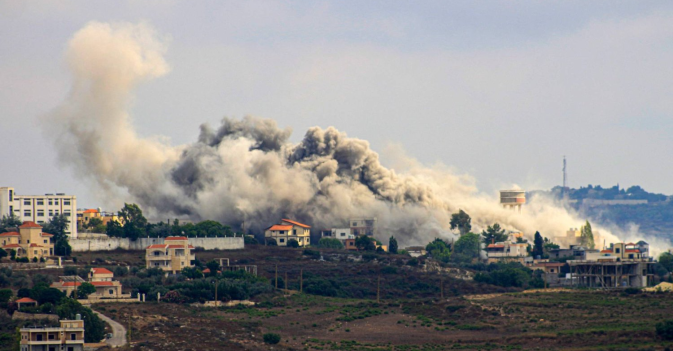
On Tuesday, General Abdel Fattah al-Burhan narrowly escaped an alleged assassination attempt, occurring just one day after his government hinted at a willingness to participate in US-backed ceasefire talks in Switzerland. During a military graduation ceremony on Wednesday, al-Burhan publicly rejected the proposed talks in Geneva and demanded global recognition of his authority over Sudan. His delayed response to US Secretary of State Antony Blinken’s invitation for the peace summit, scheduled for August 14, contrasts with his previous dismissals of international negotiations. The attempted attack reportedly took place in Red Sea State during a military parade and cadet graduation ceremony in Gebeit. Sources indicate that two suicide drones targeted the event, resulting in five fatalities and several injuries, according to a rapid press release from the Sudanese Armed Forces (SAF). This prompt communication is unusual for SAF, known for its typically slower updates in such situations. Following the incident, al-Burhan addressed his supporters with a resolute message, “one army, one people,” and visited the wounded at Gibeit Hospital, also attending the victims’ funeral. The attack has sparked comparisons with recent assassination attempts on high-profile figures, including US presidential candidate Donald Trump, with Sudanese social media users drawing parallels between Burhan and Trump. Speculation and Patterns There is significant speculation about the attack’s origins. Possibilities range from regime hardliners opposed to peace negotiations to potential involvement by the Rapid Support Forces (RSF). Despite this, the RSF’s lack of long-range drone technology makes them an unlikely culprit. However, recent Sudan-Iran relations and Tehran’s support for SAF suggest the possibility of Iranian drones being involved. The RSF would gain little from targeting Burhan, who is widely disliked. This incident follows a pattern of suspicious drone attacks in SAF-controlled regions, which some analysts view as potential “false flag” operations intended to bolster pro-war factions and undermine ceasefire efforts. Political Implications The alleged assassination attempt may politically benefit al-Burhan, potentially addressing criticisms of military inefficiency and justifying crackdowns on perceived opponents. These crackdowns have intensified, with thousands detained on accusations of collaborating with the RSF or opposing the war. The timing of the attack is significant, coinciding with Sudan’s foreign ministry’s request for consultations with the US on ceasefire talks. Despite Burhan’s public rejection of negotiations, his government showed some willingness for dialogue, a stance the RSF had already accepted. US Special Envoy Tom Perriello has been preparing for these talks with backing from the Arab League, IGAD, and the UN. The US State Department has condemned the violence but has not provided extensive comments on the attack. Lack of Visual Evidence As of Wednesday, there is no definitive visual evidence of the drone attack. Available footage shows only panicked reactions and smoke, without clear evidence of the drones, explosions, or casualties.

Was al-Burhan assassination a false flag operation? Read More »

Africa feels climate change effects more severely

The impacts of climate change on livelihoods are varying significantly across regions, with the most vulnerable areas, including many African countries, experiencing severe daily disruptions. According to the Intergovernmental Panel on Climate Change (IPCC), African countries, despite contributing minimally to greenhouse gas emissions, are among the hardest hit by human-induced climate change. Factors such as high dependence on rain-fed agriculture, inequitable access to financial resources, and weak adaptation capacity contribute to the heightened impact. The ND-GAIN index highlights that nine out of the ten most vulnerable and least resilient countries to climate change are in Africa, including Chad, the Central African Republic, Guinea-Bissau, Eritrea, the Democratic Republic of the Congo, Sudan, Niger, Zimbabwe, and Liberia. Climate change is causing rising ocean levels that threaten Africa’s coastal metropolises with reduced land area, increased coastal flooding, and stronger storm surges. The African coastline has been experiencing a steady rise in sea levels for the past four decades. Experts predict that if this trend continues, sea levels could rise by 0.3 meters by 2030, affecting 117 million Africans. The survival of Africa’s coastal ports, which handle an estimated 90% of the continent’s import and export trade, is at risk. This poses a concern for Africa’s rapidly growing population and urbanization in coastal areas. Rising sea levels reveal the stark and destructive impact of global warming on a continent already facing rapid population growth and land pressure. Coastal cities are also facing increased public health risks due to rising groundwater levels and the transformation of urban areas into wetlands. In addition, rising sea levels are causing severe flooding and erosion. The World Bank estimates that erosion, flooding, and pollution are causing approximately $3.8 billion in annual damage along 56% of the coastline in Benin, Ivory Coast, Senegal, and Togo. Alexandria, located in the Nile Delta, is among the densely populated coastal cities at risk of being submerged within 30 years. A sensitivity assessment for Alexandria, Rosetta, and Port Said predicts that a 0.5-meter rise in sea levels by 2050 could displace over 2 million people, result in 214,000 job losses, and cause over $35 billion in damages. A 1-meter rise could lead to $50 billion in damage solely in Alexandria. In Lagos, Nigeria, a city of over 20 million people, the total annual cost of river and water flooding is estimated at $4 billion. Some forecasts suggest that a 3-degree increase in global warming could force one-third of Lagos’s population to relocate due to rising sea levels. The World Bank reports that Dakar, Senegal, has $39 billion worth of economic assets vulnerable to flooding. The city of St. Louis in Senegal is disappearing under rising waters, displacing many residents. Mozambique’s coastal cities are also at risk, situated along a cyclone path that is expanding and intensifying due to rising sea surface temperatures.

Africa feels climate change effects more severely Read More »

Scroll to Top