Sudan

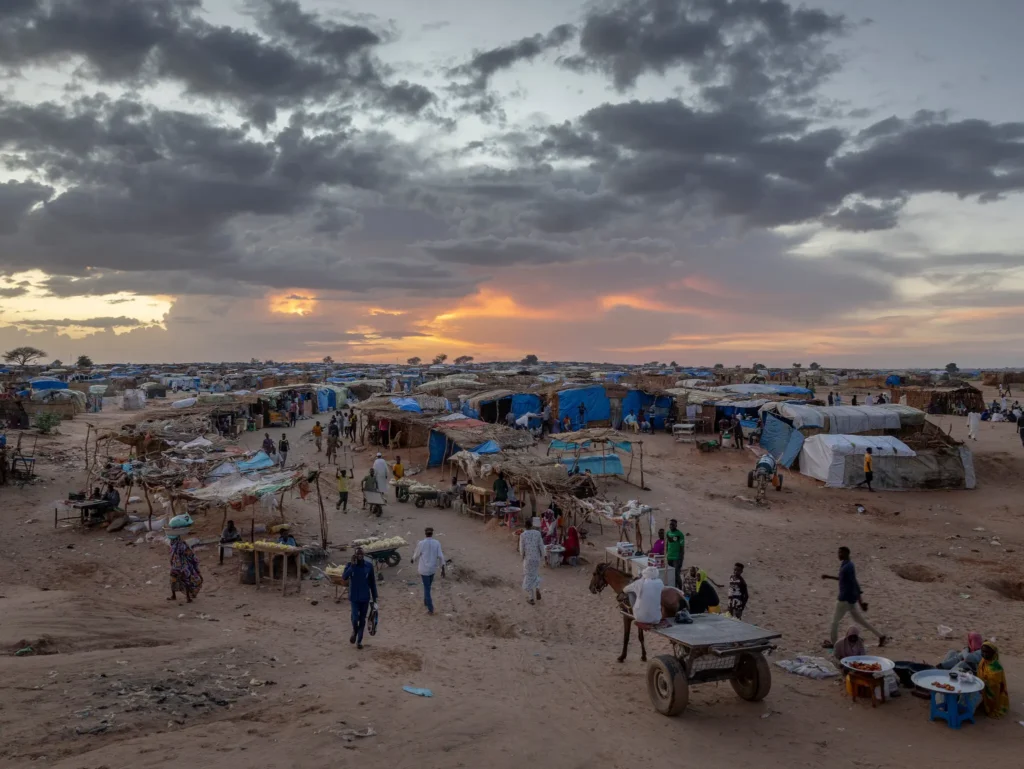
Flooding in Eastern Sudan’s Kassala province displaces residents

Flooding in Kassala Province, eastern Sudan, has exacerbated the plight of displaced individuals seeking refuge there. In the Industrial School area, one of Kassala’s largest displacement camps, residents are urgently appealing for aid. Ali Abdul Jabbar, an internally displaced person from Sennar, shared his situation: “We’ve been here for 20 days after fleeing Sennar. The rain and water conditions are evident. We’re facing issues with our accommodations, but once they’re repaired, we’ll move in. We urge authorities to address these conditions swiftly.” Another displaced resident, Merwan Abood from Sennar, described the situation as dire and called for immediate assistance: “I urge all compassionate individuals in Kassala, Sudan, and beyond to provide essential supplies such as equipment, shelter, blankets, clothing, and medicine.” In Kassala, people are navigating knee-deep floodwaters, holding onto their salvaged belongings, while some have resorted to resting on dry ground after abandoning their partially submerged tents. According to the Sudanese Ministry of Health, at least 12 people have died due to the flooding that began on Saturday, which has submerged homes and tents. The crisis follows last year’s upheaval in Sudan, where clashes between the military and the RSF in Khartoum and other regions led to widespread violence. The U.N. reports over 14,000 deaths and 33,000 injuries from the conflict, though activists believe the figures may be higher. This ongoing conflict has resulted in the largest displacement crisis globally, with over 11 million people displaced from their homes.

Flooding in Eastern Sudan’s Kassala province displaces residents Read More »

Activists urge action to address global food crisis

Activists and chefs worldwide joined a new campaign on Thursday (July 25) to spotlight the global food crisis. In Rio de Janeiro, Brazil, where G20 leaders were meeting for a two-day summit, campaigners staged a demonstration. Members of various NGOs distributed empty plates from a mock food truck. The CEO of Sustainable Development Goal 2 Advocacy explained the symbolism behind the empty plates: “We use these plates to represent the 733 million people worldwide who face hunger. We need urgent action and commitment to drive change, building on Brazil’s and the G20’s promises to create an alliance for this cause.” The protest came after Brazil committed to partially funding the global alliance against hunger and poverty.

Activists urge action to address global food crisis Read More »

Burhan-controlled army hampers famine relief efforts in Sudan

Sudan is on the brink of famine, with general Burhan-controlled SAF blocking the UN from delivering food through a crucial border crossing, a report revealed. This has cut off aid to hundreds of thousands during a severe civil war. Experts fear a catastrophic famine unless immediate action is taken. After 15 months of conflict, Sudan is nearing one of the worst famines in decades. Burhan-controlled SAF’s blockade prevents essential UN aid, risking up to 2.5 million deaths by year’s end. Darfur, particularly, is at high risk, with eight of 14 famine-threatened districts. The closed Adré border crossing from Chad to Sudan is critical for aid delivery. Despite the flow of refugees and goods, UN food trucks are banned, leaving 440,000 people in Darfur on the edge of starvation. Refugees cite hunger as their primary reason for fleeing. Burhan forces claim the blockade prevents weapon smuggling, yet arms and rival forces still cross the border. Though the rival army, Rapid Support Forces, controls the Sudanese side of Adré and the UN respects the army’s edict. However, this forces aid trucks on a perilous, lengthy detour to Tine. The detour, dangerous and inefficient, is significantly delaying aid. Since February, only a fraction of the needed aid has reached Darfur, with seasonal rains further complicating delivery. The US, the largest donor, deems the blockade unacceptable, stressing the urgent need to lift it to prevent mass starvation.

Burhan-controlled army hampers famine relief efforts in Sudan Read More »

UN: 733 million people globally faced hunger in 2023

Around 733 million people faced hunger in 2023, according to the latest State of Food Security and Nutrition in the World (SOFI) report published on Wednesday by five United Nations specialised agencies. Hunger affected one out of every eleven people in the world and one out of five in Africa, with the number rising on that continent. The report highlights that access to adequate food remains elusive for billions with around 2.33 billion people globally faced moderate or severe food insecurity in 2023. It add that this number that has not changed significantly since the sharp upturn in 2020, amid the Covid-19 pandemic. David Laborde, the Food and Agriculture Organization’s director of agri-food economics, says solving the problem is a political choice, and also depends on “how much money we are ready to put on the table”. “Today we produce enough food on this planet to feed everyone. So if we want to solve the position by 2030, it’s technically feasible,” he says. While there has been some progress in specific areas, hunger in places like Sudan and the Gaza Strip has been dramatically worsened by ongoing conflicts. And the report predicts that if current trends continue, about 582 million people will be “chronically undernourished by 2030″, half of them in Africa. Laborde said chronic hunger was a crisis impacting people not only right now, because its impact would still be felt in the future. “Pregnant women, kids that face malnutrition problem today, will pay the price all of their life. So by not solving the problem today, we are basically impoverishing these countries in the future,” he says. The report says food insecurity and malnutrition are worsening due to a combination of factors, including persisting food price inflation that continues to erode economic gains for many people in many countries. And major drivers like conflict, climate change, and economic downturns are becoming more frequent and severe. These issues, along with underlying factors such as unaffordable healthy diets, unhealthy food environments and persistent inequality, are now coinciding simultaneously, amplifying their individual effects. Achieving the Sustainable Development Goal of Zero Hunger, it says, requires a multi-faceted approach and targeted interventions. This includes transforming and strengthening agrifood systems, addressing inequalities, and ensuring affordable and accessible healthy diets for all. The UN agencies are calling for increased and more cost-effective financing, with a clear and standardised definition of financing for food security and nutrition.

UN: 733 million people globally faced hunger in 2023 Read More »

Scroll to Top