French student detained in Tunisia released
A 27-year-old French Ph.D. student was arrested in Tunisia and detained for several weeks.
French student detained in Tunisia released Read More »
A 27-year-old French Ph.D. student was arrested in Tunisia and detained for several weeks.
French student detained in Tunisia released Read More »
The verdict has sparked widespread condemnation from human rights groups and press freedom advocates.
Tunisia sentences critic over migrant comments Read More »
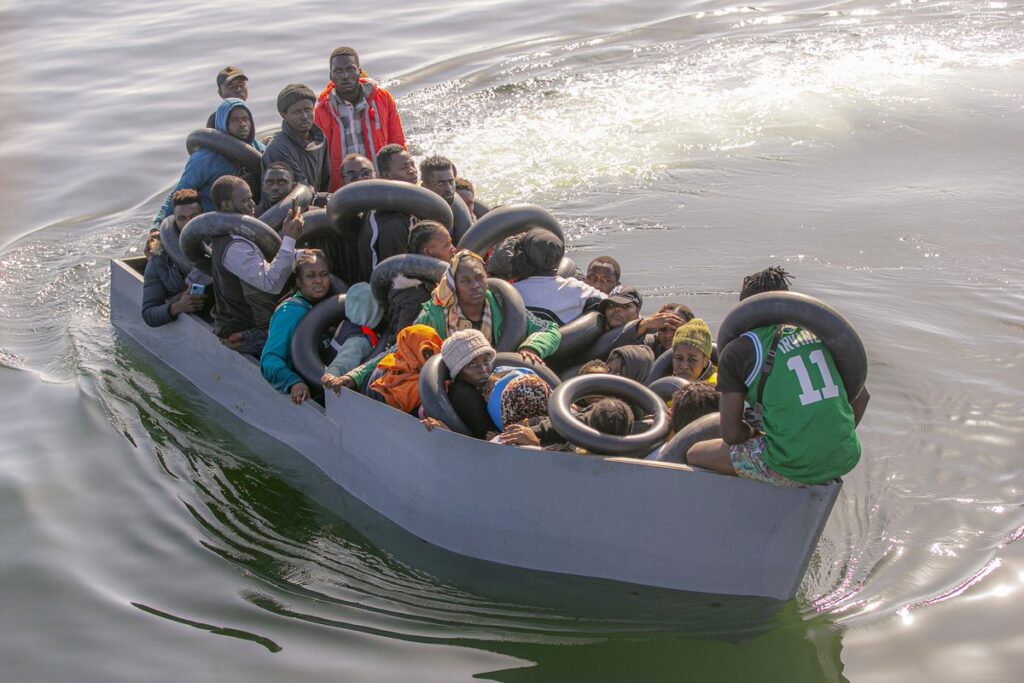
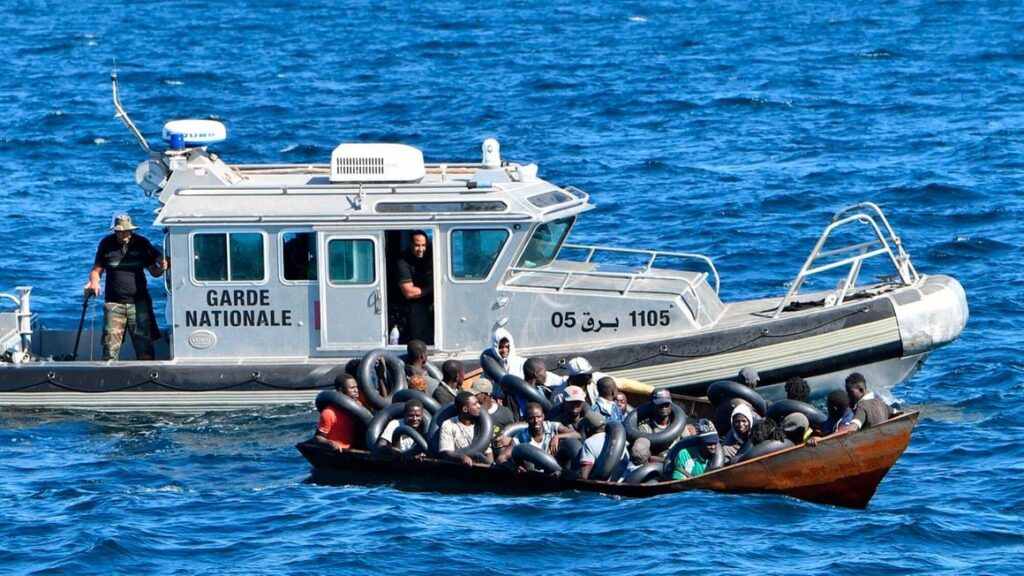
Shocking reports reveal horrific conditions faced by migrants in Tunisia, including human rights violations during rescue operations and forced transfers to dangerous border areas.
UN experts condemn Tunisia for migrant abuse Read More »
The EU is facing criticism for its inability to reclaim funds paid to Tunisia, where allegations of human rights abuses, including sexual violence against migrants, have surfaced.
EU unable to reclaim funds tied to Tunisian human rights abuses Read More »
Tunisia’s President Kais Saied has won a second term with 90.69% of the votes in the presidential election held on Sunday, the country’s electoral commission announced on Monday. At a press conference in the capital Tunis, the head of Tunisia’s Independent High Authority for Elections (ISIE), Farouk Bouasker, said the voter turnout was 28.8%. While Saied received 90.69% of the votes, his competitor Ayachi Zammel garnered 7.35%, and Zouhair Maghzaoui received only 1.97% of the votes, Bouasker added. Tunisia’s election took place amid political tensions, economic challenges, and a polarized nation.
Tunisian President Saied wins 2nd term Read More »
An exit poll indicates that incumbent Tunisian President Kais Saied has won a second term in elections held Sunday, receiving 89.2% of the vote. “The estimated results indicate Kais Saied’s victory in the presidential election with 89.2%, totaling 2,194,150 votes, said Hassan Zargouni, the director of polling company Sigma Conseil, speaking on Tunisian public television. The electoral authority announced the final list of candidates on Sept. 2, including three contenders: incumbent President Kais Saied, opposition candidate Ayachi Zammel, secretary-general of the Azimoun movement, and Zouhair Maghzaoui, secretary-general of the People’s Movement – a supporter of Saied. Zargouni added that Zammel received 6.9% with 169,727 votes, while Maghzaoui received 3.9% with 95,933 votes. Earlier on Sunday, the Independent High Authority for Elections in Tunisia announced that the preliminary voter turnout in the elections was 27.7% by the time polling stations closed at 6 p.m. local time (1700GMT). Farouk Bouaskar, the president of the authority, said at a press conference in Tunis that “the electoral process went smoothly, and we did not record any incidents that marred this election day, with a respectable turnout from Tunisians at polling stations both domestically and abroad.” “A total of 2,704,155 voters participated in the voting process today, resulting in a preliminary turnout of 27.7%,” he added. Bouaskar said the official and final turnout rates will be announced alongside the preliminary election results on Monday evening. On Sunday morning, the voting process began in Tunisia to elect a president for a five-year term, while voting abroad commenced on Friday in 59 countries. Tunisia’s election is taking place amid political tensions, economic challenges and a polarized electorate.
Exit poll shows President Saied winning Tunisia’s presidential election Read More »
On Friday, Tunisia’s parliament amended a law that limits the judiciary’s authority over decisions made by the election authority, which is appointed by President Kais Saied. This change comes just nine days before the presidential election and amid tensions between the election authority and the courts regarding the exclusion of three candidates from the ballot. The amendment sparked protests from opposition and civil society groups, who accuse the election authority of colluding with Saied to minimize competition for his re-election bid. Demonstrators gathered outside parliament to express their discontent. Since the Arab Spring, Tunisia has seen two presidential elections deemed democratic, but this year’s election cycle has been marred by disputes between the Independent High Authority for Elections (ISIE) and the judiciary. ISIE recently dismissed a court ruling that ordered the reinstatement of three candidates—Monther Zenaidi, Abdellatif Mekki, and Imed Daimi—claiming their campaign filings were incomplete. Parliament members criticized the judiciary’s neutrality, suggesting that judges were acting under foreign influence, reflecting Saied’s longstanding rhetoric against opponents. Zina Jiballah, an independent MP, accused some parties of receiving instructions from abroad. Saied, who won his first term in 2019, will face two relatively unknown candidates, Ayachi Zammel and Zouhair Maghzaoui, next weekend, as prominent opposition figures remain imprisoned. Zammel is currently incarcerated on election fraud charges.
Tunisia amends election law, provokes protests ahead of vote Read More »
Another tragic incident involving migrants attempting to reach Europe: 13 bodies are found washed ashore in Tunisia.
Tunisian authorities recover 13 migrant bodies Read More »
Opposition leaders in Tunisia have filed a second request with the ICC to investigate claims of migrant abuse and political repression by the government.
ICC urged to probe Tunisia’s crackdown on opposition, migrants Read More »
For a second week, crowds of Tunisians took to Tunis’ main avenue to denounce president Kais Saied, not long before the presidential election on October 6th. They’re accusing him of reinforcing authoritarian rule and suppressing political competition. The demonstration, which took place amid a heavy police protest, comes after lawmakers put forward a bill that would take away the administrative court’s power to adjudicate electoral disputes. The opposition insists that this would discredit the upcoming election, and lay the groundwork for Saied to clinch another term in office. Earlier this month, the country’s electoral commission rejected a court ruling reinstating three presidential candidates, in what critics say is another example of Saied stamping out competition. The president has denied accusations that he is using the electoral commission and judiciary to ensure a victory in October. Rather, he says he is waging a battle against traitors and the corrupt. Political tensions in Tunisia have been on the rise since 2021, when Saied started to rule by decree. The opposition has called this move a ‘coup’.
Tunisians protest against president Said amid electoral tensions Read More »