US lawmakers seek tougher stance on Sudan conflict
The move comes as the humanitarian crisis in Sudan worsens, with millions facing starvation and displacement.
Refugees fleeing Sudan find hunger and hardship in Chad
Sudanese refugees fleeing war are facing dire hunger and harsh conditions in Chad as conflict and aid barriers worsen their plight.
Zimbabwe court rejects abortion ban for marital rape
Unsafe abortions claim many lives in Zimbabwe annually; a new court ruling now enables safe, legal abortion for girls under 18 and victims of marital rape.
Sudan’s cholera outbreak claims 1,200+ lives amid war
The international community is calling for urgent humanitarian aid to address the cholera outbreak in Sudan.
Ethiopia tightens restrictions on rights groups amid conflicts
Human Rights Watch has accused Ethiopia of silencing independent rights groups amid worsening conflict and growing international concern.
East Africa’s ancient role in Indian Ocean tade
Before colonization reshaped global commerce, East Africa played a pivotal role in the Indian Ocean Trade Network
Ramaphosa highlights Africa’s growth at G20 leadership launch
South Africa’s G20 presidency focuses on giving Africa a stronger voice in global economic policies, championing growth and equitable progress.
Unknown disease claims 143 lives in southwest Congo
Flu-like symptoms and rising fatalities from an unknown disease in Congo’s rural health zones have raised concerns among local and international health experts.
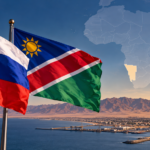
Namibia’s SWAPO party leads in election results
The release of results was delayed due to logistical challenges, including ballot paper shortages and technical issues at some polling stations
Biden’s Angola visit marks US reengagement with Sub-Saharan Africa
Biden’s agenda includes discussions with Angolan President João Lourenço, a visit to the National Slavery Museum, and a trip to Lobito to inspect a U.S.-backed railway project
Guinea declares three-day mourning after deadly stadium stampede
A three-day national mourning period has been declared for the victims of a deadly stadium stampede in southeastern Guinea. The government announced that the mourning period was declared in memory of the 56 people who lost their lives in the stampede during the General Mamadi Doumbouya Football Tournament, held in N’Zerekore, about 850 kilometers from Conakry. A delegation led by Prime Minister Bah Oury has traveled to N’Zerekore to investigate the incident. The violence broke out on Sunday during a match between the N’Zerekore and Labe teams, after the referee awarded a penalty to the home team. This decision sparked clashes within the stadium. To control the situation, police used tear gas to disperse Labe supporters who were attacking the referee, and the fans retaliated by throwing stones at the officers. The resulting stampede claimed the lives of 56 people, including children, and left hundreds more injured.
Egypt hosts conference on Gaza’s humanitarian crisis
On Monday, Egypt hosted an international conference in Cairo to garner humanitarian support for Gaza, which has been devastated by over a year of conflict between Hamas and Israel. The event was attended by numerous senior regional and Western officials, as well as UN Deputy Secretary-General Amina J. Mohammed and other top UN representatives, according to Egypt’s Foreign Ministry. The conference was convened amid a rapidly worsening humanitarian crisis in Gaza, particularly in the northern regions, which have been nearly cut off from the rest of the Strip for almost two months. Discussions at the conference focused on the political, security, and humanitarian challenges in Gaza, with a particular emphasis on supporting the operations of UNRWA, the UN agency responsible for Palestinian refugees. On Sunday, UNRWA announced it would suspend aid deliveries through the Kerem Shalom crossing, Gaza’s main cargo entry point, due to the threat of armed groups looting aid convoys. The agency cited the breakdown of law and order in Gaza, which it attributed to Israel’s policies. This move by UNRWA could exacerbate Gaza’s already dire humanitarian situation, as a second cold and rainy winter approaches. Hundreds of thousands of Palestinians remain in overcrowded and unsanitary tent camps, heavily dependent on international aid. Experts have warned of the potential for famine in Gaza’s northern regions, which have been almost entirely isolated by Israeli forces since early October. In response, Israel’s military body responsible for coordinating humanitarian aid to Gaza stated on X (formerly Twitter) that it would continue to work with the international community to increase aid deliveries through Kerem Shalom and other crossings. It also claimed that in November, UNRWA coordinated less than 10% of the aid that entered Gaza.
East African sailors harnessed monsoon winds to forge global trade routes
East African sailors played a pivotal role in ancient global commerce by mastering the monsoon trade winds
Senegal’s Sonko retains PM role after election win
Senegal’s ruling party, led by President Bassirou Diomaye Faye and Prime Minister Ousmane Sonko, has secured a landslide victory in the recent parliamentary elections.
ADF rebels kill civilians, abduct others in eastern DR Congo
slamic State-linked Allied Democratic Forces (ADF) rebels have killed at least 10 people and abducted others in an attack on a village in eastern Congo.
Angola to host summit on December 15 for DRC-Rwanda peace
A peace summit in December hosted by Angola will bring together DRC and Rwanda to find solutions to the ongoing conflict in eastern DRC, with the M23 rebel group and the FDLR militia as key issues.
Namibia’s female VP leads despite opposition complaints
Namibia’s presidential election sees female VP lead despite widespread opposition complaints.
Chad ends military pact with France, seeks independence
Chad has terminated its military pact with France, citing its outdated nature and the need for greater autonomy.
World AIDS Day: Africa commits to scaling up HIV response
African health officials committed Sunday to scaling up health care interventions aimed at curbing new HIV infections during World AIDS Day. The day was marked under the global theme “Take the rights path: My health, my right!” underscoring the link between human rights and health care access. Rwanda’s Health Minister Sabin Nsanzimana said while the country has made good progress in diminishing the impact of HIV, reducing new infections by 70% and AIDS-related deaths by 60% since 2010, AIDS remains a serious health challenge. “There are almost 10 new HIV infections in Rwanda every day. It is not a small number. And mostly they are young people 18 to 20 years old. This means we have a lot of work to do,” said Nsanzimana. “In the next months, we should be focused on areas where we can make a big impact. Number one is to make sure young people are well-informed, and communication is key,” he said. In Kenya, World AIDS Day was marked at Nyayo National Stadium with a call to action and a renewed commitment to eliminating HIV as a public health threat. Cabinet Secretary for Health Deborah M. Barasa in a statement highlighted the crucial role of men and boys in the fight against HIV, urging them to challenge stigma, promote health-seeking behaviors and lead community efforts. “The fight against HIV is a collective effort, and men and boys must be champions for change,” she said. Kenya has made significant progress in its HIV response, with 98% of adults living with HIV receiving treatment by the end of 2023 and 97% achieving viral suppression, according to official data. New HIV infections have dropped by 83% over the past decade, while AIDS-related deaths have decreased by 64%. HIV prevalence in Kenya stands at 3.3%. Matshidiso Moeti, the World Health Organization’s (WHO) regional director for Africa, said that HIV is a complex health challenge, inseparable from social factors such as poverty and gender inequality and complicated by stigma and discrimination. Protecting human rights is key to achieving universal HIV care, she added. According to the WHO, equal access to prevention tools and education are key to stopping new infections while stigma and discrimination undermine the fight against AIDS. Seven African nations have met the UNAIDS HIV 95-95-95 targets, a global benchmark to end HIV as a public health threat by 2030. The targets seek to ensure that 95% of HIV-positive people know their HIV status, 95% of people who know their HIV-positive status are on antiretroviral therapy and 95% of people on antiretroviral therapy maintain an undetectable viral load to reduce onward transmission. The small southern African nation of Eswatini, once facing one of the world’s worst HIV epidemics, is among the countries which have achieved the global HIV target. Eswatini Prime Minister Russell Dlamini said the kingdom will endeavor to put human rights first in the fight against HIV/AIDS while sustaining the gains. “I wish to reaffirm that Eswatini shall continue to engage with this year’s theme and ensure that no one is left behind in accessing HIV prevention services, treatment, care and support services,” he said, speaking in Mahlangatja in Manzini district, where the national commemoration took place. The Africa region has achieved an overall rating of 90-82-76, according to the WHO. In Uganda, Health Minister Jane Ruth Aceng raised concerns about the high number of new HIV infections registered in the country annually, which may hinder Uganda’s goal to end AIDS by 2030. “New HIV infections and AIDS-related deaths have been reduced. However, they are not being reduced fast enough to enable us to reach the targets we expected to get in 2025, and that also means that the country is at risk of not achieving the goal of ending AIDS by 2030,” she said during a World AIDS Day commemoration in Buyende District in eastern Uganda. She also said the HIV response is heavily donor-funded, but with shifting priorities, there has been a reduction in funding. The funding contributions for the response from the country’s main donor, the US President’s Emergency Plan for AIDS Relief (PEPFAR), declined from $426 million in the 2022/2023 financial year to $388 million in the 2023/2024 financial year after Uganda enacted the Anti-Homosexuality law in May 2023.
South Africa takes over G20 presidency
Pretoria says it will work to tackle inequality, also bring development priorities of African continent, Global South more firmly onto G20 agenda
Around 100 killed in violent clashes during football match in Guinea
The incident highlights the dangers of football hooliganism and the need for improved security measures at sporting events.
Sudan Conflict: RSF establishes civilian administration in Khartoum
Since April 2023, the RSF has expanded control across Sudan, including Khartoum and several other regions
UK reiterates call for ‘Syrian-led political solution’ in Syria
The UK has reiterated its “call for a Syrian-led political solution” in Syria. “Following recent developments in Syria, we urge all parties to protect civilian lives and infrastructure to prevent further suffering, the displacement of vulnerable people, and disruption to essential humanitarian aid,” a Foreign, Commonwealth and Development Office spokesperson said in a statement on Sunday. “We reiterate our call for a Syrian-led political solution to the conflict,” the spokesperson said, adding that the Bashar al-Assad regime created the “conditions for the current escalation through its ongoing refusal to engage in a political process and its reliance on Russia and Iran.” “The regime and all actors in Syria’s conflict must support and engage with negotiations as called for in UNSCR (UN Security Council Resolution) 2254,” the statement stressed. After opposition armed groups launched an operation against the regime forces in Aleppo on Nov. 27, the Syrian regime forces allied with the PKK/YPG and ceded certain areas to the terrorist group. The PKK/YPG, reinforced by additional forces from eastern Syria, began fortifying these areas. To counter the PKK/YPG’s move to establish a terrorist corridor between Tel Rifaat and Manbij, the Syrian National Army (SNA) initiated Operation Dawn of Freedom. Following the siege of Tel Rifaat district, the district center was liberated from terrorist control. Syria has been embroiled in a vicious civil war since early 2011 when the Assad Syrian regime cracked down on pro-democracy protests with unexpected ferocity.
Africa’s first G20 presidency: South Africa takes charge
The country will also work to amplify the voices of the Global South and address pressing global challenges such as climate change and pandemic preparedness.
Tanzania opposition leader allegedly kidnapped after local elections
Tanzania’s opposition ACT Wazalendo claims its youth leader Abdul Nondo was kidnapped by suspected security agents after contested local elections.
Biden pushes American interests with his Africa trip
Biden’s Africa trip focuses on promoting a US-backed railway project to challenge China’s dominance in critical mineral exports.
Madagascar welcomes back endemic animals rescued from trade
Endangered lemurs and tortoises trafficked to Thailand are being returned to Madagascar to aid conservation efforts.