




Heavy rains devastate Cameroon’s Mayo Danay: 10 dead
In recent weeks, relentless heavy rains have devastated Mayo Danay in Cameroon’s Far North region, with Yagoua experiencing the worst of the downpours. The damage is severe: at least ten people have died, entire neighborhoods are submerged, 185 primary schools and 13 high schools are flooded, and over 1,100 livestock have been lost. Residents face extreme hardships, with many struggling to find basic necessities like food and shelter. Litassou Daniel, a local affected by the floods, recounted the dire situation: “The rain hit us in the middle of the night. Our kitchen utensils and livestock are gone. Now, we are in the water, unable to even light a fire.” The humanitarian impact is profound. Over 200,000 people have been affected, and 8,000 homes have been destroyed. Displaced individuals are living in temporary camps outside the city, urgently needing more aid as they have lost everything. Boussate Lydie, a displaced resident, expressed frustration: “We face this flooding threat every year. Our situation never improves. The tents we get don’t last, and we’ve lost livestock and homes. We’re begging the authorities for more help.” Additionally, the floodwaters have destroyed a crucial bridge linking Maga to Yagoua, further isolating some neighborhoods. Cameroonian Minister of Urban Development, Célestine Ketcha Courtes, visited the site to assess the damage and promised immediate action: “The bridge is completely destroyed. We will mobilize companies by Monday to implement a temporary solution to reconnect Maga and ensure better movement for the population.” The government has pledged 350 million CFA francs in aid, though many locals feel this amount is inadequate given the scale of the disaster. For now, canoes are the primary means of transportation, and there are concerns the region could become completely cut off if urgent measures are not taken.

Rescuers fail to locate 64 drowned in Nigeria boat capsize
Rescue workers are unable to locate the bodies of 64 people who drowned after a boat capsized in Nigeria’s northwest Zamfara State, an official said on Sunday. Abubakar Umar, a spokesman for the Gummi Local Government in Zamfara State, told Anadolu that two bodies have been pulled from the river by rescue workers since the incident on Saturday morning. “So far, two dead bodies have been removed. We have yet to find the other victims in the water,” he said. A wooden boat carrying over 70 farmers across the Tsofo Kasuwa River to farmland in the Gummi district capsized. Local authorities confirmed that the captain of the boat and three others who could swim survived the accident. Police said they have yet to determine the number of farmers on the boat. “We are trying to compile the number of people on board the boat,” Yacid Abubakar, a police spokesman in Zamfara, told Anadolu over the phone. Boat accidents frequently occur in the area due to an increase in the water level following torrential rains. In May 2023, at least seven people were killed when a boat capsized on a river in the state.
Senegal’s president dissolves national assembly
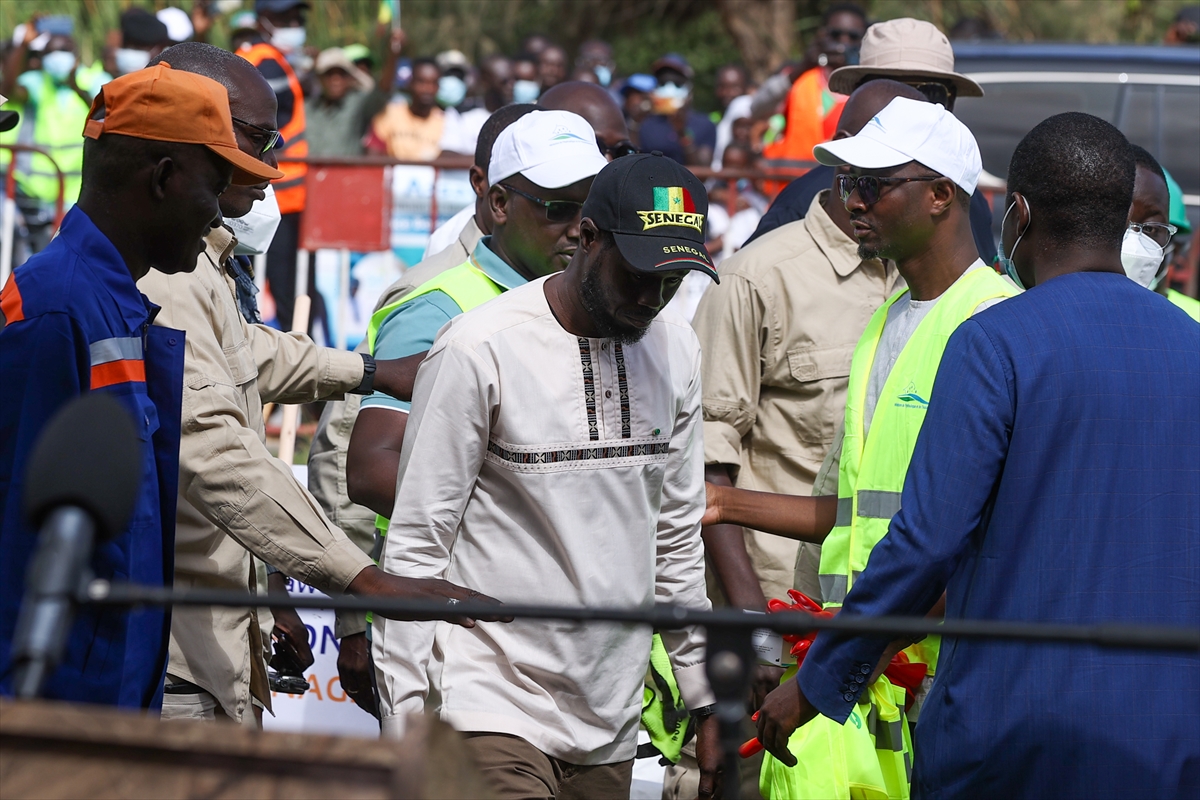
Senegal’s President Dissolves National Assembly Amid Political Tensions After weeks of escalating conflict between Senegal’s executive branch and the opposition-controlled Parliament, President Bassirou Diomaye has dissolved the National Assembly. This move, which aligns with the wishes of the president’s supporters, has ignited a heated debate among Senegalese citizens. Aïssatou Diallo, a local observer, views the dissolution as a strategic move: “The Assembly’s dissolution serves the president’s interests. However, the focus should be on giving the new government time to implement its programs for the people.” While Seydou Sow, a supporter of the decision, sees it as a legal and necessary step given the current political situation, the opposition views it as a tactical maneuver. They have expressed concerns about the rapid scheduling of elections and questioned the legality of bypassing the contentious sponsorship law. Opposition MP Moussa Diakhaté criticized the rushed timeline for elections: “They want elections in 60 days, but what about the sponsorship law and the Constitutional Council’s input? This seems like an attempt to manipulate and cheat in the upcoming elections.” As Senegal prepares for legislative elections on November 17, the stakes are high. The opposition aims to push for a power-sharing arrangement, but analysts warn that fragmented opposition lists might benefit the government in Senegal’s winner-takes-all system. André Bakhoum, a political expert, suggests that if the current majority persists after March 2024, the opposition will need to adapt its strategy. With both sides gearing up for a contentious electoral battle, the political future of Senegal remains uncertain.

West African nations to launch common passport
The Alliance of Sahel States (AES), a regional bloc that was established last September by the military leaders of Mali, Niger and Burkina Faso, announced Sunday that they will launch a common passport to enhance cooperation and security. AES Chair and Mali’s junta leader Col. Assimi Goita said in a TV address that the alliance would soon launch a common biometric passport that will also facilitate the mobility of citizens across the three nations. He made the statement to mark the one-year anniversary of the AES since its creation on Sept. 16 last year. Burkina Faso, Mali and Niger formed the AES and announced the creation of a joint military force to counter spiraling security challenges posed in their countries by terrorist groups. The three West African nations withdrew from the Economic Community of West African States (ECOWAS), which had threatened to intervene militarily in Niger following a coup in that country in July last year. The three countries, with a combined population of 72 million, are affected by instability caused by militant groups. In July this year, the leaders of the three military regimes held their first joint summit in the Nigerien capital of Niamey, where they announced the confederation of three Sahel states. Highlighting joint “significant victories” against terrorist groups in the region, Goita said the AES was “open to discussion with international partners as well as sub-regional partners.” “This enhanced cooperation has helped to significantly weaken these (terror) groups, thus contributing to an improvement in security in the region, he added. Goita said the AES will also launch a common TV station.
Heavy rains spark mass escape in Nigerian prison
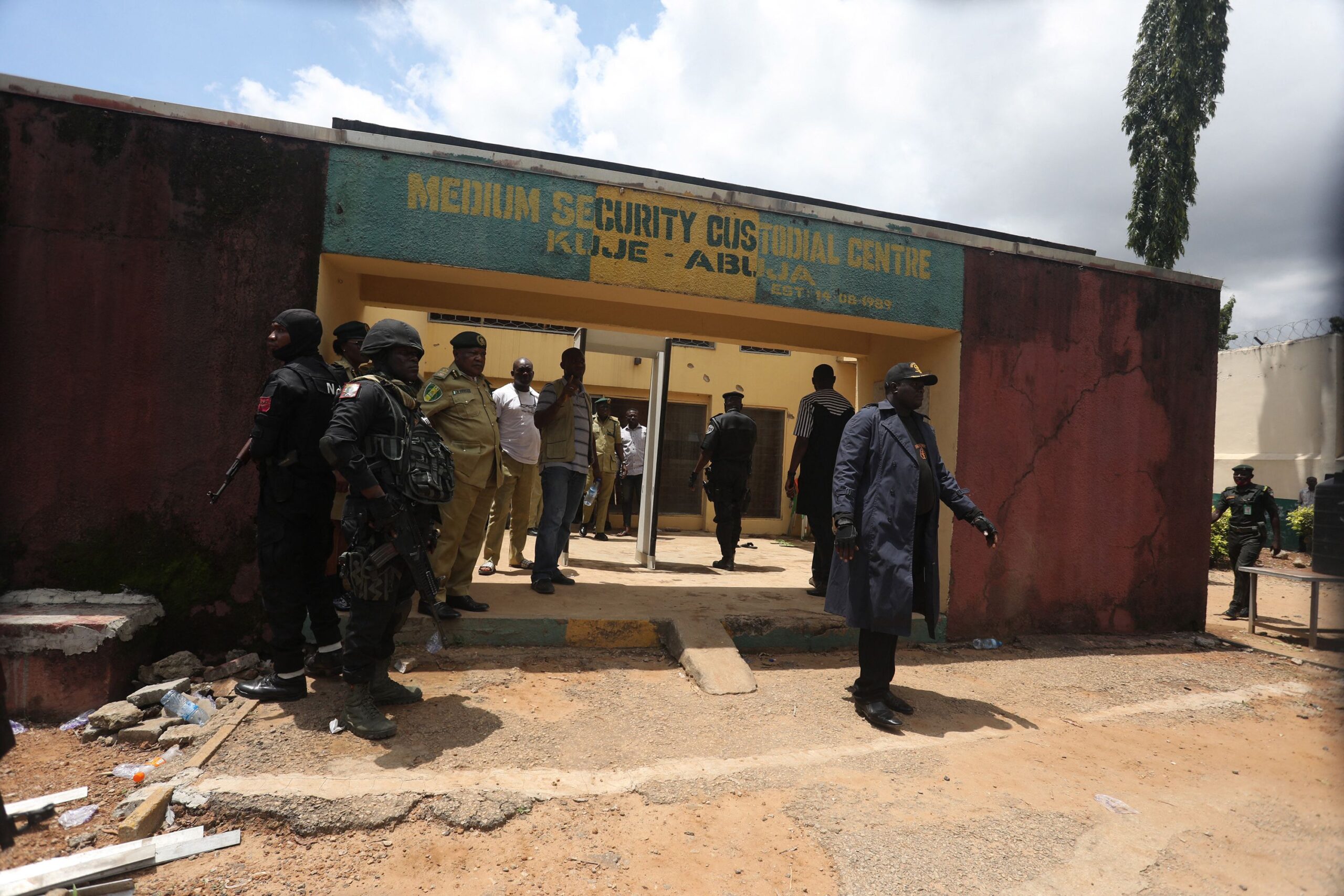
A major jailbreak occurred in Nigeria after floods damaged the prison infrastructure.

Israel offers residency to Africans in exchange for fighting in Gaza
Israeli is offering 30,000 African asylum seekers permanent residency in exchange for joining the army in the Gaza conflict, raising ethical concerns about exploitation.

UN calls for end to attacks on hospitals in Sudan’s Darfur
The UN has condemned the attacks on civilians and called for a peaceful resolution to the conflict.
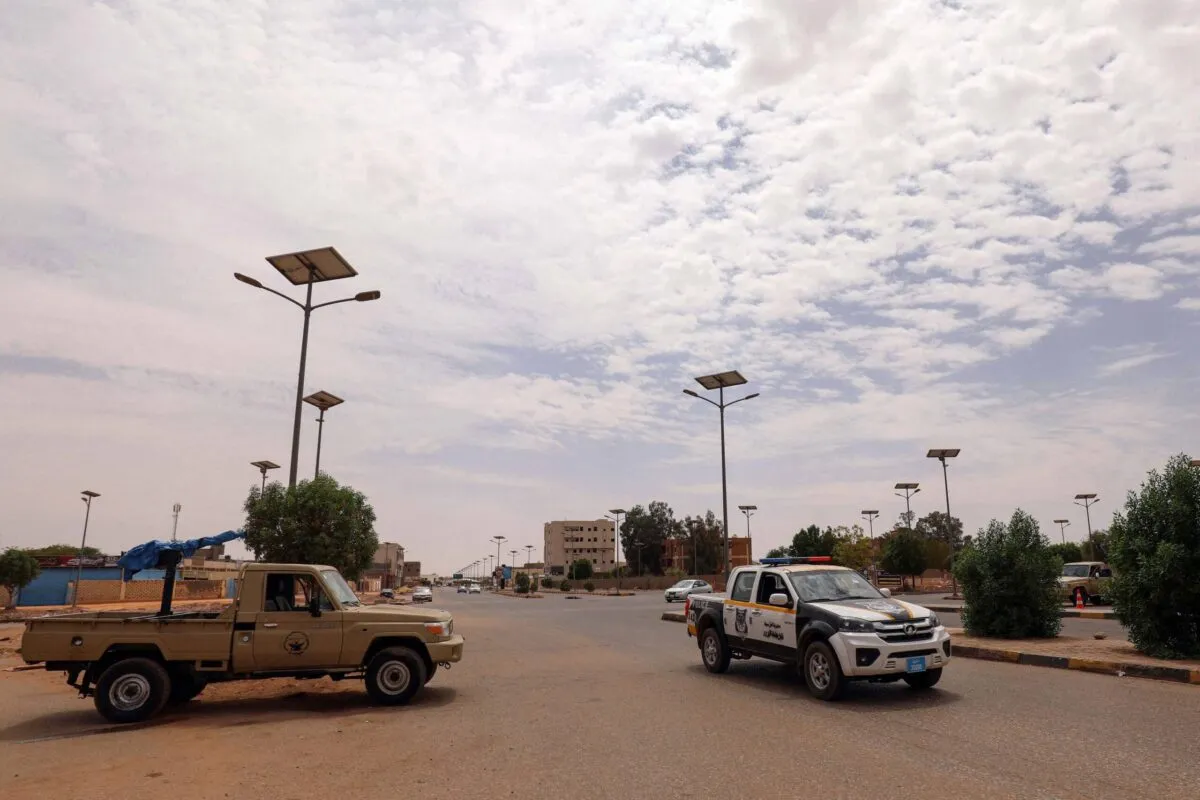
Heavy rains in Libya’s Sebha leave 2 dead, 40 injured
National Weather Center warns of severe thunderstorms, heavy rainfall in southern Libya

Uganda’s mpox cases reach double digits, health official reports
All of patients are infected with clade 1b strain of virus, which is believed to be deadlier variant that can spread through skin-to-skin contact, says director general health

Nigeria, Angola, and Algeria: Leading Africa’s oil production
Africa continues to solidify its position as a crucial player in the global energy market

Comoros president slightly injured in knife attack at funeral
The president of Comoros, an island nation in the Indian Ocean, sustained “slight injuries” in a knife attack during a religious leader’s funeral on Friday, according to his office. A bystander who tried to protect President Azali Assoumani was also injured. The president’s injuries were not severe, and he has since returned home. The attacker has been apprehended by security forces, though details about their identity and the circumstances of the attack remain undisclosed. The incident occurred in Salimani, near the capital city of Moroni. Government minister Aboubacar Said Anli reported that a civilian was injured while trying to shield the president, but there is no immediate information on the severity of these injuries. Assoumani, who was reelected in January amid allegations of election fraud, has faced political unrest, including a fatality linked to the post-election turmoil. The 65-year-old former military officer first seized power in a 1999 coup and has since served multiple terms. He recently extended his presidency into a fourth term by altering the constitution, removing term limits, and ending a rotational presidency system. His administration has been criticized for cracking down on dissent and banning peaceful protests. Comoros, an archipelago off Africa’s east coast, has experienced numerous coups and attempted coups since gaining independence from France in 1975.

Limited testing hampers mpox response in DRC
World Health Organization warns that limited testing capacity in the Democratic Republic of the Congo is fueling the spread of mpox.

70 farmers feared drowned in Nigeria river tragedy
Rescue teams are working tirelessly to locate survivors, as the death toll continues to rise.

Africa’s linguistic diversity: Over 2,000 languages spoken
Africa’s linguistic richness continues to be a sign to its cultural depth

Roadside explosions in Somalia kill five and wound eight
Witnesses report that the blasts occurred in a busy area where young people were taking photos.

South Africa’s deputy president recovers after collapsing during speech
Mashatile was addressing a crowd in Tzaneen, Limpopo province, about 412 kilometers (256 miles) northeast of Johannesburg

Uganda’s mpox caseload reaches ten, health official confirms
The first two cases in Uganda were confirmed in July

Tunisians protest election turmoil amid candidate bans and repression
Tunisians are set to protest on Friday against the turmoil surrounding the upcoming elections, where candidates have been arrested, barred from voting, or banned from politics for life. The Tunisian Network for the Defense of Rights and Freedoms aims to highlight what it sees as a “rise of authoritarianism.” Mohieddine Lagha, secretary general of the Tunisian League for Human Rights, stated that the demonstration is in response to widespread violations of rights and the exclusion of some citizens from running in the presidential election. Tensions have escalated between the Independent High Authority for Elections (ISIE) and judges over candidate eligibility for the October 6 vote. Critics argue that the commission, appointed by President Kais Saied, is biased and lacks independence. The ISIE has rejected election observer groups and excluded three candidates who had won court appeals. Former health minister Abdellatif Mekki, now running with his own party, Work and Achievement, was arrested in July and banned from politics for life. Although a court recently ordered his reinstatement, the ISIE has not complied with the ruling. Ahmed Neffati, Mekki’s campaign manager, urged mass participation in the protest to pressure for democratic reforms, asserting that Tunisians will not forfeit their right to free elections. President Saied has recently reshuffled his cabinet and intensified crackdowns on opposition figures. The International Crisis Group has labeled the situation as “deteriorating,” while Human Rights Watch has called for the reinstatement of excluded candidates, criticizing the election process as undermining democratic rights.

In US, South Africa’s foreign minister calls for solidarity with Palesti...
During his visit to the US, South Africa’s Foreign Minister Ronald Lamola on Friday called for global solidarity with Palestine. “We continue to call on the collective conscience of the global community to stand in solidarity with the people of Palestine… to call Israel to stop the genocide that is currently unfolding” in Gaza, Lamola said at the Congressional Black Caucus Foundation’s 53rd Annual Legislative Conference in Washington, D.C. “We will continue to do so, despite threats that come from across the globe, because we believe we are standing on principles,” he added. “The future of the world depends on the rule of law being protected” by all nations, said Lamola, who is on his first trip to the US after being appointed in July. He arrived in Washington on Thursday for a weeklong visit, amid reports that Israeli diplomats are lobbying US lawmakers to pressure South Africa into dropping its genocide case against Tel Aviv at the International Court of Justice (ICJ). His schedule during the trip released by his spokesperson Chrispin Phiri, however, did not indicate whether Lamola will have a bilateral meeting with his US counterpart. After his appointment, US Secretary of State Antony Blinken had a phone call with Lamola to congratulate him. The two had discussed Russia’s war on Ukraine as well as Israel’s war on Gaza. “We continue to champion human rights in Gaza. We stand with the people of Palestine,” Lamola told the audience in Washington, which included US lawmakers as well as prominent diaspora members of the African community. “This has been a historic position of the South African government,” he said, recalling words of anti-apartheid hero Nelson Mandela, who had said: “We know too well that our freedom is incomplete without the freedom of the Palestinians.” – ‘Disproportionate’ response from Israel The “whole world was quiet” when South Africa took the decision to take the Gaza case to the ICJ, Lamola said. Condemning last year’s Hamas attack, he, however, said: “The state of Israel’s response to the incident of Oct. 7 is disproportionate to the offense committed.” A trained lawyer himself, Lamola said: “It is going beyond self-defense as predicated by international law and it is against this background that we went to the International Court of Justice to call for a cease-fire, to stop maiming of innocent women and children, to stop the destruction of Gaza.” The court indicated that Israel “should cease its military operations, to cease the destruction of infrastructure,” Lamola, who served as justice minister in the previous term of President Cyril Ramaphosa, said, adding: “Despite the court’s ruling Israel continues to do so.” Pointing to the conflict in Ukraine, he said South Africa’s non-alignment position was a “catalyst for peace and democratic engagements.” “We are unequivocal about sovereignty and independence of all nations,” he said stressing that unlawful occupations “should not be allowed.” Reminding the Global North about the impacts of wars, Lamola said Africans were “most affected” due to the impact on value chains, including in the supply of food. – Mutually beneficial ties with US Taking no qualms, Lamola acknowledged “differences of opinion” with the US on “certain issues.” However, striking a positive note with a call for engagement “on the basis of constructive dialogue,” he said the bilateral relations “should not be based on threats but on mutual respect.” “We believe our relationship with the US is mutually beneficial and we value this relationship,” he emphasized. And Washington, he said, “also benefits from this relationship.” “It is a relationship that must be preserved,” Lamola said. “Let us engage on differences but we may agree to disagree,” he said, addressing the Joe Biden administration. “We will not tell the US what to do and we expect the US not to tell us what to do,” the South African foreign minister said. He added: “We will remain open to be persuaded and we are hopeful that we can also persuade the US on a number of issues in various multilateral platforms and this becomes a relationship of mutual respect.”

Zambia’s Hichilema unveils drought plan, anti-corruption measures
Zambia’s President Hakainde Hichilema said Friday his government has in place a response plan, with the provision of humanitarian assistance, for Zambians hard-hit by drought from erratic rains in the previous season. In a State of the Nation Address at the opening of the fourth session of the 13th National Assembly in Lusaka, Hichilema said the government was implementing recovery and resilience interventions to mitigate the effects of climate change, after drought wiped out more than 1 million hectares of crops, affecting nearly 10 million people and 6.6 million in need of direct relief in 84 of the country’s 116 districts. Having declared that the El Nino phenomenon introduced a national disaster and emergency in February, Hichilema applauded Zambians for their resilience and patience as well as local and international partners for humanitarian support. Hichilema said his administration was committed to upholding the rule of law, respecting human rights and the Constitution, as well as the core of good governance. His administration was determined to eradicate all forms of corruption, remaining committed to a zero-tolerance policy against the vice, he said. Hichilema said all cases of corruption were being thoroughly investigated and prosecuted in accordance with the law, with assorted properties worth more than 100 million Zambian Kwachas ($3.8 million) and cash amounting to $30.8 million and 56.6 million Kwachas forfeited to the state. He said through a foreign policy anchored on the pillars of peace, security and economic diplomacy; Zambia effectively presided over the Southern African Development Community Organ on Politics, Defence (SADC) and Security, fulfilling the bloc’s mandate of promoting regional peace, security and stability: ultimately creating more economic opportunities. This was in addition to successfully leading SADC electoral observer missions to Zimbabwe, Eswatini, Madagascar, Congo DR, Lesotho and South Africa. Hichilema also highlighted growth prospects in agriculture, mining, tourism, energy, manufacturing and technology, among other sectors.
Burhan’s SAF launched aerial assault on Sudanese compound — RSF
Al Burhan-controlled SAF used missiles with toxic gases on a refinery in Khartoum Bahri, resulting in severe respiratory problems and casualties among workers, RSF says.

Transitional period extended in South Sudan as elections delayed
The South Sudanese government has extended the transitional period and postponed elections until 2026.

Congo court convicts 37 in coup plot, including Americans
A Congo military court sentenced 37 people, including three Americans, to death for their involvement in a failed coup attempt.

Nigeria neutralizes dangerous bandit kingpin Halilu Sububu
A notorious bandit leader, Halilu Sububu, was killed in a military ambush in Nigeria, marking a significant victory in the fight against criminal gangs.

South Africa calls for full rights for Africa’s UNSC seats
Cyril Ramaphosa rejects the notion of limited veto power for Africa’s potential UNSC seats, emphasizing the need for full participation and equal status for the continent.

Kenya court sentences acting police chief to six months in prison
The High Court in Nairobi sentenced Kenya’s acting police chief, Gilbert Masengeli, to six months in prison for not revealing the location of three men taken by police.

Tanzania police ban opposition protest amid rising tensions
The government’s decision has sparked concerns about the country’s democratic progress.