



Eskom posts R55 billion loss, yet projects R10 billion profit by 2025
South Africa’s state utility, Eskom, reported a massive R55 billion ($3 billion) loss for the fiscal year ending March 2023, largely due to a one-time charge related to the separation of its transmission unit. Despite this setback, Eskom is optimistic about its future, projecting a R10 billion profit for the fiscal year ending March 2025. The utility is undergoing a major restructuring, splitting into three units—generation, transmission, and distribution—as part of President Cyril Ramaphosa’s 2019 reform plan. Eskom attributed its losses to underperforming coal power stations, unsustainable debt, rising municipal arrears, and insufficient tariffs. On a positive note, Eskom saw a 14% increase in revenue, reaching R295.8 billion for the year ending March 2024. However, sales volumes fell 3% due to 329 days of load-shedding, which has hampered South Africa’s economic growth. In a positive development, Eskom’s power supply has stabilized, with no power cuts in the past nine months, raising hopes for economic recovery. This improvement in reliability has enhanced business confidence, and Eskom is hopeful for a financial turnaround by 2025.

Algeria seeks milling wheat suppliers
While the nominal volume is 50,000 metric tons, Algeria typically purchases larger quantities in such tenders.

France supports swift resolution for Ethiopia’s debt
During his visit to Ethiopia, French President Emmanuel Macron pledged support for the country’s debt restructuring efforts.

France’s Orano files arbitration against Niger over mining dispute
The dispute centers on the Imouraren mine in northern Niger, which holds an estimated 200,000 tonnes of uranium

Joint projects at Morocco-Mauritania summit
Morocco and Mauritania have reiterated their commitment to strengthening bilateral ties and promoting joint strategic projects, including the Afro-Atlantic gas pipeline.

Nigeria opens new oil and gas block bidding
Nigeria is set to auction new oil and gas blocks in 2024, prioritizing natural gas development to support its commitment to sustainable development goals.

Nigeria approves Shell’s $2.4B asset sale to Renaissance
Renaissance welcomed the approval, calling it a key development since the announcement of the sale and purchase agreements earlier this year

Nigeria president forecasts lower inflation 2025
Nigerian President Bola Tinubu has predicted a sharp decline in inflation to around 15 percent in 2025.

West Africa-focused oil producers as Kosmos Energy walks away
The decision comes after the companies entered into early talks for a potential deal that would have created a major player in the West African oil and gas sector.

ECOWAS plans ‘eco’ currency for 2027
The move aims to boost intra-regional trade and reduce trade costs within the West African region.

Zambia nears end of debt restructuring
The deal follows a bilateral agreement with France, the first country to sign under the G20 common framework.

Ethiopia opens banking sector to foreign competition
The move is part of broader reforms under Prime Minister Abiy Ahmed, who has been gradually opening Ethiopia’s tightly regulated economy since taking office in 2018

Cameroon to host WTO ministerial conference in 2026
The World Trade Organization (WTO) has confirmed that its next ministerial conference will be held in Cameroon in early 2026.

Ghana president-elect vows cocoa sector overhaul
Ghana’s president-elect John Dramani Mahama plans major reforms in cocoa sector and regulator to improve farmer profits and efficiency

Morocco to double airport capacity for 2030 World Cup
The plan includes significant expansions at major airports like Casablanca, Marrakech, and Agadir, as well as investments in the country’s high-speed rail network.

China and US hold 7th economic dialogue in South Africa
The talks focused on supporting low-income countries, reforming multilateral development banks, and addressing global economic challenges.
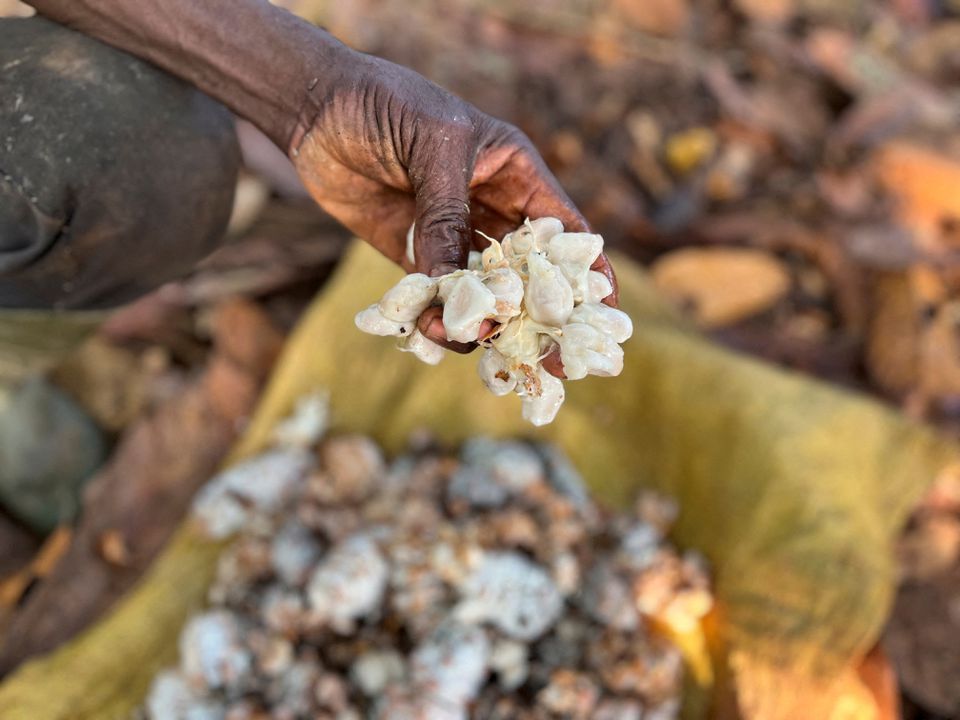
Dry weather threatens Ivory Coast’s cocoa crop
The lack of adequate rainfall and the strong Harmattan winds are causing worry among Ivory Coast’s cocoa farmers.

Shell invests in Nigeria’s Bonga North project
The Bonga North project is a significant development for Nigeria’s oil and gas industry, as it will help to ensure the long-term sustainability of the country’s hydrocarbon resources.
World economy to decelerate in 2025: Institute
World economic growth is expected to decelerate to 2.7% in 2025 from 2.9% in 2024, the International Institute of Finance (IIF) forecasted Wednesday. The IIF’s expectation for mature markets’ GDP rate for 2025 was at 1.3% on average, down from 1.5% in 2024. The expectation for the US was at 1.9%, 0.6% for the euro area, 3.8% for emerging markets (EMs), 1.7% for Russia, 2.5% for Türkiye and 4.2% for China. Capital flows to EMs are forecast to decline to $716 billion in 2025 from $944 billion in 2024, driven by weaker flows to China, said the institute. In 2024, China saw its first net foreign direct investment outflows in decades, with an equally disappointing forecast for 2025. Capital flows to non-China EMs will moderate to $781 billion in 2025 from $824 billion in 2024, the IIF said. Geopolitical tensions and US energy policies will add uncertainty to commodity prices, it noted.

German president meets Nigerian leader to enhance energy ties
German President Frank-Walter Steinmeier visited Nigeria to discuss enhancing the energy partnership and economic reforms with Nigerian President Bola Ahmed Tinubu.

Mozambique unrest disrupts South32’s Mozal plant
Post-election protests in Mozambique have disrupted operations at South32’s Mozal Aluminium smelter and impacted chrome exports from South Africa.

Commodity prices mixed, agriculture up last week
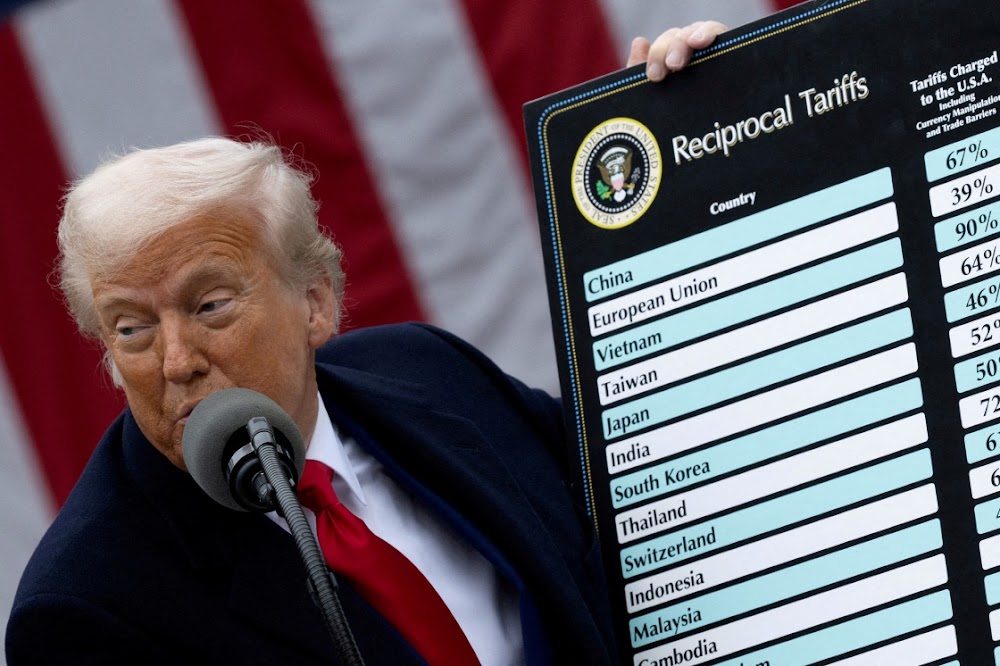
Commodity prices followed a mixed trend last week due to political turmoil and geopolitical tensions, with the agricultural sector diverging positively. South Korea imposed martial law on Dec. 3, which was short-lived as it was unanimously lifted the same night. Additionally, North Korea’s defense agreement with Russia officially came into force. Meanwhile, the French government collapsed following a no-confidence vote, prompting President Emmanuel Macron to accept the resignation of Prime Minister Michel Barnier. However, Macron announced that he would not resign and would instead appoint a new prime minister soon. Analysts noted that the US dollar gained strength due to positive labor market data and expectations of interest rate cuts. The US Dollar Index climbed to 106.1, further supported by President-elect Donald Trump’s announcement of 100% tariffs on BRICS nations in response to their efforts to de-dollarize trade. The US labor market exhibited mixed signals, with non-farm payrolls increasing by 227,000 in November, surpassing expectations, while the unemployment rate rose to 4.2% from 4.1%. Analysts stated that this increase in employment alleviated concerns about weakening labor demand and reinforced expectations for gradual Federal Reserve rate cuts. The OPEC group maintained its global economic growth forecast at 3.4% for 2024. Concurrently, China’s economy is projected to grow by 4.9% in 2024 and 4.7% in 2025, according to recent data. The People’s Bank of China (PBoC) also announced the resumption of gold purchases in November after a six-month hiatus, increasing its reserves from 72.80 million fine troy ounces to 72.96 million. JP Morgan projected that the average price of gold per ounce would reach $2,950 in 2025, potentially rising to $3,000, driven by a depreciating US dollar and inflationary economic policies. Silver and platinum are also expected to perform strongly in the coming years. Last week, gold fell 0.7% as the Indian rupee weakened and buyers sold physical gold at discounted prices. In contrast, silver gained 1.1%, while platinum and palladium declined by 1.7% and 2.2%, respectively. Nickel prices rose 1.7%, following Vale Base Metals’ $2.94 billion expansion of its Voisey’s Bay mine in northern Labrador. The project transitioned from open-pit to underground mining, boosting nickel concentrate production to 45,000 tons (40,823 metric tons) per year. Copper prices edged up 0.4%, driven by India’s copper demand, which increased 13% year-on-year in 2024, reaching 1,700 kilotons (1.87 million tons), according to the Indian International Copper Association. The US Treasury imposed sanctions on Russia’s Gazprombank, jeopardizing Uzbekistan’s $4.8 billion mine expansion project that aims to nearly double copper production. Zinc prices slipped 0.4% after the UK’s Critical Minerals Intelligence Centre added it to its critical minerals list. In the energy sector, OPEC+ announced a delay in planned production increases, extending current cuts of 2 million barrels per day (bpd) until the end of 2026. Total production by member countries is expected to remain at 39.7 million bpd for 2025 and 2026. Brent crude oil prices rose 1.9% last week, while natural gas prices fell 4.4% amid volatile weather conditions in the US and Europe. US commercial crude oil stocks increased by 1.2 million barrels last week, contrary to market expectations of a 2-million-barrel decline, according to the American Petroleum Institute. Oilfield services firm Baker Hughes also reported a rise in US oil drilling rigs, with the total reaching 482, up by 5 from the previous week. In the agricultural sector, wheat prices rose 1.7% after Sovecon revised its estimates for Russian grain and wheat exports for the 2024–2025 fiscal year downward, citing potential reductions in export quotas by the Russian Ministry of Agriculture. Corn prices increased by 1.6%, while soybeans and rice dropped by 0.5% and 1%, respectively. Coffee prices experienced sharp declines last week after reaching multi-decade highs in previous weeks. Increased selling by traders in Vietnam and higher export supplies from Brazil contributed to the drop. However, coffee still ended the week with a 3.9% gain. Cocoa prices surged 4.9% per ton (0.91 metric tons) due to dry weather conditions in West Africa, which are expected to impact the early development of mid-year cocoa crops harvested in April. Seasonal Harmattan winds are forecasted to exacerbate the situation, according to Maxar Technologies. Meanwhile, sugar prices rose 0.6%, and cotton gained 1.4%.

China vows economic reforms, global cooperation
Chinese Premier Li Qiang pledged Monday to deepen economic reforms and expand domestic demand while reinforcing international cooperation, according to statements released by China’s State Council. Li held a 1+10 Dialogue with the heads of major international economic organizations, including representatives from the New Development Bank, the World Bank, the World Trade Organization (WTO) and the International Monetary Fund (IMF). He emphasized that strengthening global cooperation is crucial “against the backdrop of an international landscape fraught with instability and changes.” Li expressed support for expanding cooperation with international financial institutions, signaling a willingness to collaborate on project financing, development loans and addressing global challenges like climate change. He stressed the importance of economic globalization and free trade while promising to contribute to global financial stability. He also indicated China’s commitment to supporting developing economies, particularly the BRICS group’s members, thorough economic initiatives.

ByteDance seeks US review to save TikTok
ByteDance and TikTok are seeking a temporary halt to a US law that would force the sale of TikTok or face a ban.

Deaf farmers find hope in South African project
A South African farming project is offering deaf individuals the chance to learn new skills and find employment in agriculture, addressing the challenges they face in the job market.

Morocco seeks billions for rail expansion
Morocco’s ONCF is targeting $8.8 billion to fund its rail network expansion, with plans to double city coverage and extend high-speed trains to Agadir by 2040.

Nigeria moves to criminalize corn exports amid food crisis
The legislation, which awaits presidential assent to become law, would impose penalties on violators, including fines equivalent to the value of the corn or up to a year in prison