



Zambia’s kwacha plummets as drought strains economy
On Wednesday, the kwacha was trading at 27.95 per dollar, just above its latest record low of 28.05 on Tuesday

Chinese funding boosts Nigerian railway construction
China Development Bank has released a $254.76 million loan to Nigeria for the construction of a railway line connecting Kano and Kaduna, a crucial project under China’s Belt and Road Initiative.

Kwacha weakens as drought impacts Zambia’s economy
Despite emerging from default last year, Zambia’s kwacha faces significant challenges, dropping to record lows due to drought pressures.

Disney appoints new president for Africa region
Disney has appointed Tony Chambers as president of its Europe, Middle East, and Africa (EMEA) region, overseeing streaming, ad sales, and other key business areas.

Sudan reopens oil pipeline to South Sudan
Sudan has lifted a force majeure on oil exports from South Sudan to Port Sudan, enabling the resumption of oil flow after nearly a year of disruptions due to the ongoing conflict within the country.

Google agrees to pay $100M for Canadian news content
Online News Act stopped Google from pilfering content for free

Egypt’s tourism sector achieves record $14B in revenues
Egypt’s tourism industry has set a new benchmark, generating over $14 billion in revenue during the past eleven months—a 7.8% increase from previous records, according to Mubasher Pulse. The rise is attributed to a 3.97% increase in tourist arrivals, reaching 14.3 million, and a 7.8% growth in tourist overnight stays, totaling 151.3 million nights. Saudi Arabia emerged as a key contributor, with Saudi tourists spending around $1.5 billion and accounting for half of all Arab visitors. In total, 1.5 million Saudi tourists visited Egypt, further cementing the strong ties between the two nations. Germany, England, and Russia also ranked among the top sources of visitors. Experts predict continued growth in 2025, provided regional geopolitical conditions remain stable. Sameh Saad, a former advisor to Egypt’s tourism ministry, highlighted the sector’s consistent positive growth trajectory for a second consecutive year. Tourism remains a vital pillar of Egypt’s economy, expanding by 8.2% in the first quarter of the fiscal year 2024/2025 and contributing significantly to the nation’s 3.5% overall economic growth.

Apple to pay $95M to settle claims of Siri eavesdropping on customers
Apple has agreed to pay $95 million to settle a civil lawsuit that alleges the privacy-focused company used its virtual assistant Siri to eavesdrop on people using its iPhones and other popular devices. The proposed settlement, which was filed Tuesday in a federal court in Oakland, California, would resolve a five-year-old lawsuit alleging that Apple secretly activated Siri to record conversations for over a decade, CBS News reported Thursday. Apple is not acknowledging any wrongdoing in the settlement, which still requires approval from US District Judge Jeffrey White. Lawyers involved in the case have proposed holding a court hearing in Oakland on Feb.14 to review the terms. If approved, the settlement would allow tens of millions of consumers who owned iPhones and other Apple devices between Sept. 17, 2014 and the end of last year to file claims. Each eligible consumer could receive up to $20 per Siri-enabled device covered by the settlement, though the payment amount may vary depending on the number of claims submitted. Court documents estimate that only 3% to 5% of eligible consumers are likely to file claims. Eligible consumers will be restricted to seeking compensation for a maximum of five devices.

Tullow oil wins ICC ruling, exempt from $320m tax in Ghana
Following an ICC ruling, Tullow Oil has avoided a $320 million tax bill on its Ghana operations.

Ivorian Cocoa smuggling to Guinea hits 50,000 tons in Q4 2024
The sharp rise in cocoa prices last year has provided an added incentive for smugglers

New oil exploration licenses to be offered in Uganda
Uganda’s Energy Minister announced plans to launch a third oil exploration licensing round in the 2025/2026 fiscal year.

Uganda to launch third oil licensing round in 2025/26
Uganda first discovered crude oil in the Albertine Graben basin near the border with the Democratic Republic of Congo nearly two decades ago

First gas flows from BP’s GTA project in Senegal and Mauritania
Greater Tortue Ahmeyim (GTA) gas project, developed by BP and partners, has achieved a significant milestone with the production of its first gas in Senegal and Mauritania.

Nigeria to launch credit guarantee company in May
Nigerian President Bola Tinubu has announced plans to establish a National Credit Guarantee Company in May 2025 to enhance credit access for businesses and individuals.

South Sudan aims to restart oil production after pipeline damage
South Sudan, heavily reliant on oil exports, is planning to restart production after the damage to a key pipeline caused by the conflict in Sudan. This move aims to revitalize the country’s economy.

Nigeria revives Warri Refinery, ending years of inactivity
Nigeria has taken a significant step towards energy independence with the resumption of operations at the Warri oil refinery, which has been shut down for nearly a decade.

Sasol cuts Mozambique gas production due to unrest
South African petrochemical company Sasol has reduced gas production in Mozambique due to post-election unrest, impacting gas supply to South Africa.

Egypt’s Suez Canal revenues plunge amidst regional instability
President Abdel Fattah al-Sisi announced that the Suez Canal suffered a significant revenue loss of approximately $7 billion in 2024 due to regional challenges.
Oil markets remain closed on Christmas
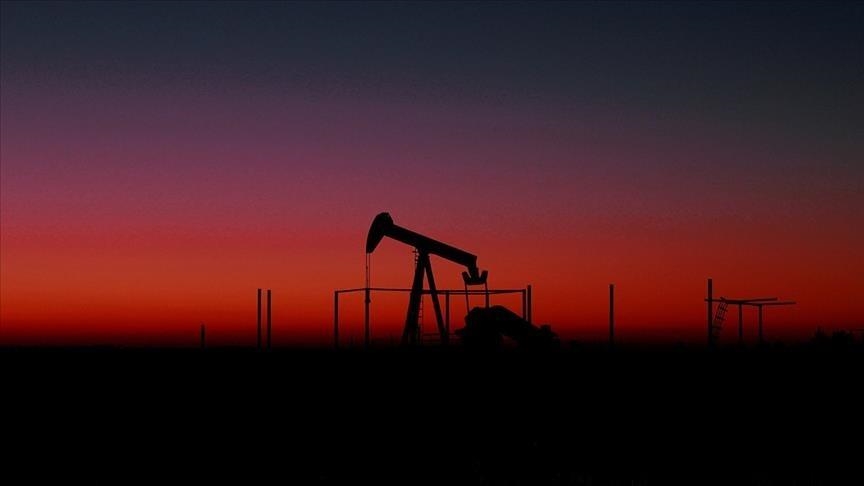
The majority of global markets remained closed on Monday due to the Christmas holiday break. The international oil benchmark of Brent crude increased by 1.3% to $73.58 per barrel on Tuesday, up from the previous session’s close of $72.63. The US benchmark West Texas Intermediate also rose by 1.2% to $70.10 per barrel, compared to $69.24 at the close of the prior session. Until the holiday, both benchmarks rose with stronger US economic growth data and expectations that global economic activity will drive oil demand upwards. Also, the US Federal Reserve (Fed) is expected to further ease its policy following lower-than-expected US inflation data. US stock markets closed early on Tuesday and will remain closed on Wednesday. Likewise, European stock markets had a half-day on Tuesday and will not trade on Wednesday. Hong Kong markets are also closed on Wednesday and Thursday, while South Korean markets remained closed on Wednesday.

Russian exporters push for lower costs in Egypt trade
Russian grain exporters are facing challenges in their wheat trade with Egypt due to Western sanctions and the establishment of a new importing agency.

Eskom posts R55 billion loss, yet projects R10 billion profit by 2025
South Africa’s state utility, Eskom, reported a massive R55 billion ($3 billion) loss for the fiscal year ending March 2023, largely due to a one-time charge related to the separation of its transmission unit. Despite this setback, Eskom is optimistic about its future, projecting a R10 billion profit for the fiscal year ending March 2025. The utility is undergoing a major restructuring, splitting into three units—generation, transmission, and distribution—as part of President Cyril Ramaphosa’s 2019 reform plan. Eskom attributed its losses to underperforming coal power stations, unsustainable debt, rising municipal arrears, and insufficient tariffs. On a positive note, Eskom saw a 14% increase in revenue, reaching R295.8 billion for the year ending March 2024. However, sales volumes fell 3% due to 329 days of load-shedding, which has hampered South Africa’s economic growth. In a positive development, Eskom’s power supply has stabilized, with no power cuts in the past nine months, raising hopes for economic recovery. This improvement in reliability has enhanced business confidence, and Eskom is hopeful for a financial turnaround by 2025.

Algeria seeks milling wheat suppliers
While the nominal volume is 50,000 metric tons, Algeria typically purchases larger quantities in such tenders.

France supports swift resolution for Ethiopia’s debt
During his visit to Ethiopia, French President Emmanuel Macron pledged support for the country’s debt restructuring efforts.

France’s Orano files arbitration against Niger over mining dispute
The dispute centers on the Imouraren mine in northern Niger, which holds an estimated 200,000 tonnes of uranium

Joint projects at Morocco-Mauritania summit
Morocco and Mauritania have reiterated their commitment to strengthening bilateral ties and promoting joint strategic projects, including the Afro-Atlantic gas pipeline.

Nigeria opens new oil and gas block bidding
Nigeria is set to auction new oil and gas blocks in 2024, prioritizing natural gas development to support its commitment to sustainable development goals.

Nigeria approves Shell’s $2.4B asset sale to Renaissance
Renaissance welcomed the approval, calling it a key development since the announcement of the sale and purchase agreements earlier this year